
Bangladesh Perspective on Digital Democracy, Information Integrity and Responsible AI Highlighted at WSIS Forum 2026
Global digital transformation requires inclusive governance, trusted information ecosystems, responsible innovation, and stronger collaboration among governments, civil society, technology communities, and citizens
Digital technologies are reshaping societies, economies, and governance systems at an unprecedented pace. While digital transformation has created new opportunities for inclusion, innovation, and development, it has also introduced complex challenges related to information integrity, digital inequality, cybersecurity, artificial intelligence governance, and online safety.
As countries move toward a more interconnected digital future, ensuring that technology serves humanity requires inclusive decision-making, responsible innovation, and meaningful participation from all stakeholders, particularly civil society and communities that experience digital transformation on the ground.
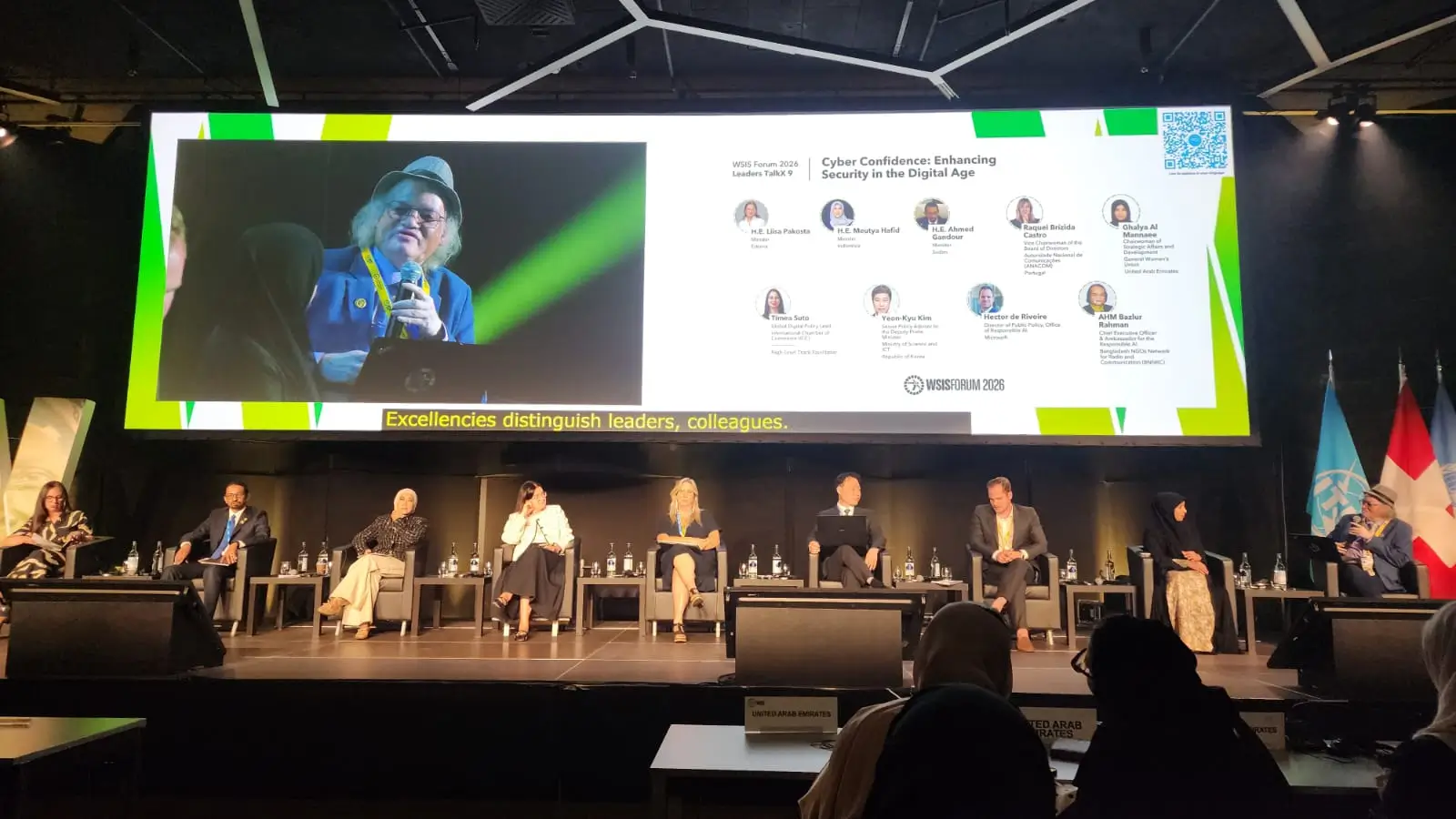
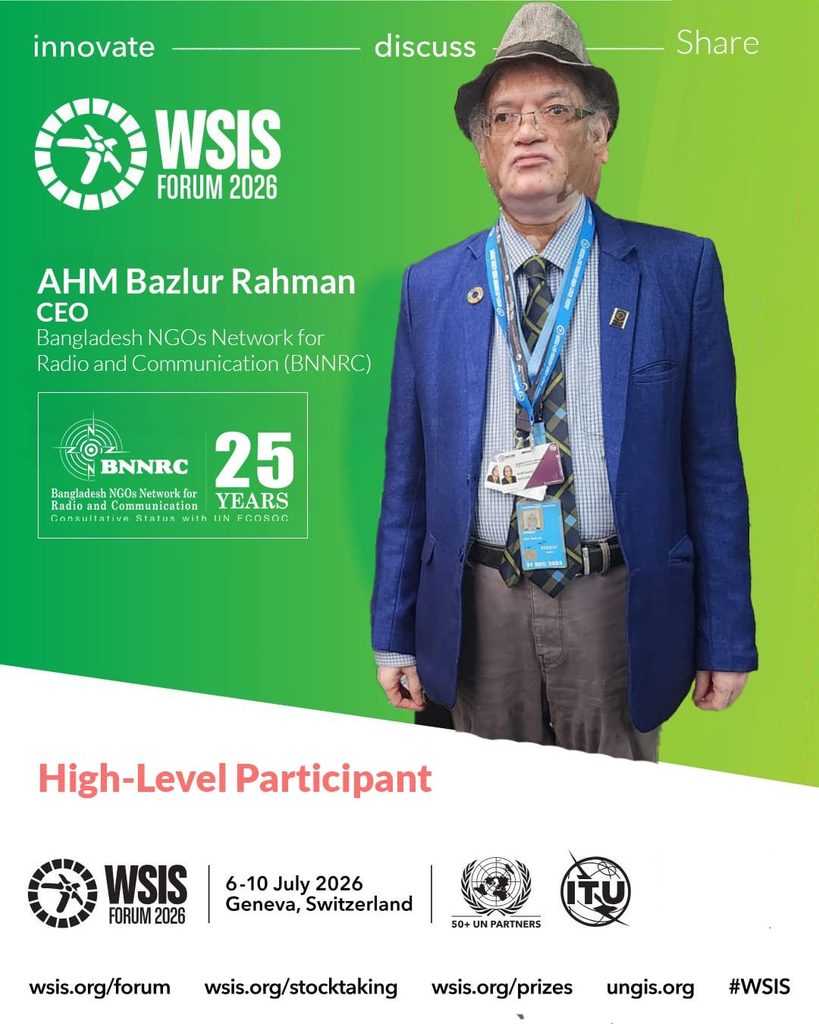
Against this global backdrop, AHM Bazlur Rahman, Specialist in Digital Democracy, Information Integrity & Media Development, Chief Executive Officer of Bangladesh NGOs Network for Radio and Communication (BNNRC), and Ambassador for Responsible Artificial Intelligence (AI) & Antimicrobial Resistance (AMR) for Bangladesh, participated as a high-level speaker at the World Summit on the Information Society (WSIS) Forum 2026.
The WSIS Forum 2026, held from 6 to 10 July 2026 in Geneva, served as a global platform for advancing digital cooperation, reviewing progress on the WSIS Action Lines, and strengthening multistakeholder collaboration in the evolving digital landscape.
The Forum was organized under the renewed mandate of the United Nations General Assembly and recognized as a central mechanism for reviewing and advancing the WSIS vision. Through UN General Assembly Resolution A/RES/80/173, the importance of the WSIS Forum as a global platform for digital cooperation and implementation of WSIS outcomes was reaffirmed.
The Forum was coordinated by the International Telecommunication Union (ITU) and co-organized by ITU, UNESCO, UNDP, and UNCTAD, in partnership with more than fifty United Nations entities, creating a comprehensive multistakeholder environment involving governments, private-sector leaders, civil society organizations, technical communities, academia, youth representatives, and international organizations.
The WSIS Forum continues to serve as a unique global space where policy commitments are connected with practical action. Through its High-Level Track, the Forum brings together ministers, regulators, ambassadors, chief executives, civil society leaders, mayors, and heads of UN agencies to discuss national priorities, share policy experiences, and identify pathways for collective action.
During the Forum, discussions focused on emerging opportunities and challenges shaping the digital future, including artificial intelligence, frontier technologies, digital public infrastructure, cybersecurity, digital inclusion, multilingual digital ecosystems, data governance, online safety, and information integrity.
Representing Bangladesh’s civil society and development perspective, AHM Bazlur Rahman highlighted the importance of ensuring that digital transformation remains inclusive, human-centred, and aligned with democratic values. He emphasized the need to strengthen information integrity, promote responsible AI, bridge digital divides, and ensure that communities are not only consumers of technology but active participants in shaping the digital future.
The WSIS Forum 2026 was particularly significant as it marked the first Forum following the WSIS+20 review process. The event provided an important opportunity for stakeholders to reflect on two decades of digital cooperation and discuss future priorities in line with renewed global commitments.
The Forum featured an expanded High-Level Track, ministerial discussions, thematic sessions, innovation showcases, the WSIS Prizes 2026, exhibitions, and a programme developed through an inclusive Open Consultation Process.
Participants highlighted that the next phase of digital development must address both opportunities and risks. While artificial intelligence and emerging technologies can accelerate development, improve public services, and expand access to knowledge, responsible governance frameworks are essential to address challenges related to misinformation, digital exclusion, privacy, cybersecurity, and ethical technology use.
The Forum reinforced the importance of a collaborative approach where governments, technology companies, civil society organizations, researchers, and communities work together to build a trusted and inclusive digital society.
The participation of BNNRC at WSIS Forum 2026 reflects Bangladesh’s continued engagement in global discussions on digital cooperation, information integrity, media development, and responsible technology governance.
At the conclusion of the Forum, stakeholders emphasized the need for continued action to:
- strengthen inclusive digital governance and multistakeholder cooperation;
- promote responsible and ethical artificial intelligence;
- protect information integrity and public trust;
- expand meaningful digital inclusion for underserved communities;
- enhance digital literacy and online safety;
- ensure that emerging technologies contribute to sustainable development and human well-being.
The WSIS Forum 2026 concluded with a shared commitment that the future of digital transformation must be built on trust, inclusion, accountability, and collaboration, ensuring that technology becomes a force for empowering people and advancing equitable development worldwide.