
Dhaka, 30 September 2026: Digital technology is now part of everyday life in Bangladesh, shaping how people communicate, learn, work, access services and participate in public life. But the same digital space is also being used to harass, threaten, shame, blackmail and silence women, adolescent girls and other vulnerable groups.
Technology-facilitated gender-based violence, or TFGBV, is therefore not only a digital safety concern. It is a question of dignity, rights, access to justice and equal participation. If online violence is left unaddressed, it can push women and girls out of digital spaces, restrict their voices and deepen existing gender inequalities.
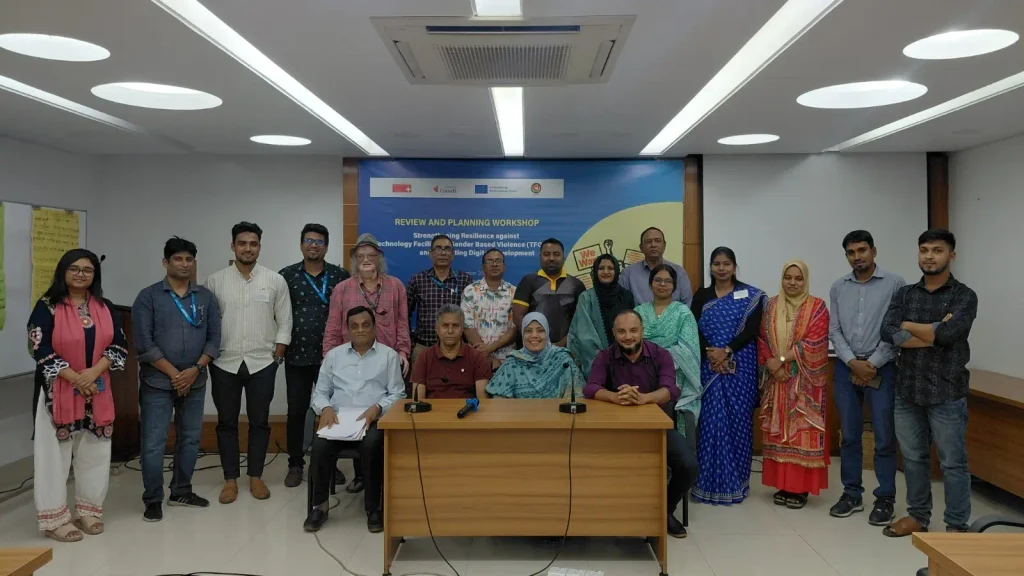
Against this backdrop, Bangladesh NGOs Network for Radio and Communication (BNNRC) organised a day-long review and planning workshop on Wednesday at the YWCA Training Centre in Mohammadpur, Dhaka. The workshop reviewed first-year experiences, achievements, challenges and lessons, and identified practical priorities for stronger implementation in the second year.
The workshop was organised under the project “Strengthening Resilience Against Technology-Facilitated Gender-Based Violence and Promoting Digital Development,” implemented under Nagorikata: Civic Engagement Fund (CEF) with funding from the Embassy of Switzerland, Global Affairs Canada and the European Union, and technical support from GFA Consulting Group.
The workshop brought together representatives from BNNRC, Nagorikata/GFA, local implementing partners from six districts and nine community radio stations. Participants assessed the effectiveness of community radio interventions, district-level activities and national-level engagement. They also worked on a practical second-year work plan, including responsibilities, timelines, coordination needs and follow-up mechanisms.
BNNRC Project Coordinator Hiren Pandit opened the workshop by presenting the day’s agenda and facilitating participant introductions. He then invited BNNRC Chief Executive Officer AHM Bazlur Rahman to deliver the opening remarks.
In his remarks, AHM Bazlur Rahman said that the second year of implementation should be guided by field realities, participant experience and lessons from the first year. He highlighted the importance of turning awareness into practical action at community level. He thanked Md. Nurul Islam, Capacity Development and Management Expert at Nagorikata: Civic Engagement Fund, for joining the workshop and sharing observations to strengthen the next phase of implementation. He also expressed appreciation to Nagorikata for its continued financial and technical support.
Md. Nurul Islam encouraged participants to share practical field experience, examples of positive change and implementation challenges. He noted that gender-based violence is no longer limited to physical or face-to-face spaces. With the expansion of technology, violence, harassment and harmful content are increasingly taking place through digital platforms and online communication.
He further observed that technology companies and social media platforms regularly revise their policies, making stronger coordination among government, civil society, media, technology actors and communities essential. Referring to digital content that ridicules, demeans or objectifies women, he cautioned that even when individual consent is present, such content can have wider social consequences by normalising discriminatory attitudes towards women.
During the experience-sharing session, district and community radio representatives presented examples of progress observed during the first year.
Mehedi Hasan, Senior Station Manager of Radio Pollikontho, said guests who participated in TFGBV-focused radio programmes responded positively and recognised the importance of continued public discussion on the issue.
Ziaul Ahsan of Pirojpur Gana Unnayan Samity proposed establishing a formal or informal coordination mechanism involving district and upazila administrations, BNNRC’s local network and relevant stakeholders. He said such a mechanism could help coordinate TFGBV-related initiatives and support services more effectively at local level.
Swadheen Chowdhury of Nishtha Unnayan Sangho in Mymensingh noted that participants are applying the knowledge gained through project activities, including preserving digital evidence, seeking legal assistance and creating awareness-raising content. He added that local administration representatives also highlighted the need to extend such activities to educational institutions, parents and young people.
Shubhankar Chakraborty of MAP Barishal drew attention to the limited representation of women in local journalism. He noted that, based on his observation, six of the eight women journalists working locally had participated in BNNRC’s district-level activities. He called for sustained learning opportunities for women journalists on TFGBV, sensitive reporting, digital safety and related issues.
Kamal Barman of Radio Sarabela shared an experience from Gaibandha, where a district ICT officer began discussing online violence with students at local schools and colleges after participating in a radio programme. The officer also encouraged students to listen to TFGBV-focused radio programmes. Participants identified this as a promising example of how community radio can connect local government actors with educational institutions.
Mamun Hossain of Radio Nalta reported that 45 local listeners’ clubs had been reactivated through engagement with BNNRC’s activities. Participants observed that listeners’ clubs and local volunteers can help take TFGBV messages beyond radio broadcasts and into communities.
Md. Shahed Uddin of Radio Sagargiri shared the case of a woman online entrepreneur who faced blackmail after her business Facebook page was hacked. When she approached the station for support, she was advised to contact Police Cyber Support for Women. She later regained access to her business page. The case showed how local media and community radio can connect affected individuals with relevant support services and complaint mechanisms.
Following the experience-sharing session, Md. Nurul Islam provided guidance on making BNNRC’s activities more structured, participatory and results-oriented during the second year and in future project phases.
BNNRC then presented an overview of first-year activities and progress. Focal representatives from six districts and nine community radio stations delivered two joint presentations covering achievements, challenges, lessons and future priorities.
The district-level presentation highlighted the need for sustained engagement with journalists and content creators, increased participation of women journalists, and systematic follow-up and documentation of commitments made by government officials. It also called for more structured engagement with local civil society organisations, community-based organisations, young people and volunteers, alongside broader outreach to remote areas and communities.
Community radio representatives emphasised the importance of using clear language and local examples, incorporating listeners’ questions and experiences into content planning, and producing short messages suitable for repeat broadcasts. They also highlighted the need to strengthen links with educational institutions, enhance the capacity of radio staff, and further activate listeners’ clubs and local networks.
After the lunch break, district-level civil society representatives and community radio representatives worked in separate groups. Through poster presentations, they identified second-year priorities, necessary adjustments and possible implementation approaches. The proposals were then consolidated and discussed in relation to responsibilities, timelines and activity priorities.
At the end of the workshop, one woman and one man participant shared their reflections on the day’s discussions. In the closing session, Ziaul Ahsan of Pirojpur Gana Unnayan Samity reaffirmed his commitment to improving the quality and effectiveness of activities in the coming year.
Participants agreed that the first year has helped create awareness, build local engagement and demonstrate the value of community radio in addressing TFGBV. At the same time, they stressed that awareness alone is not enough. Continued action is needed to strengthen referral information, promote responsible reporting, engage local authorities, support women journalists, activate youth and listeners’ clubs, and connect affected persons with appropriate services.
BNNRC and its partners will use the learning from the workshop to strengthen second-year implementation, with a focus on practical community engagement, better coordination, stronger documentation of results and continued advocacy for safer, more inclusive digital spaces for all.
As online platforms increasingly influence public attitudes and behaviour, digital creators are called upon to produce responsible, inclusive, and awareness-driven content to prevent technology-facilitated gender-based violence
Digital platforms have become powerful spaces for communication, creativity, entrepreneurship, and social change. However, the rapid expansion of online platforms has also created new risks, including harassment, misinformation, abuse, and Technology-Facilitated Gender-Based Violence (TFGBV), which disproportionately affects women, girls, and vulnerable communities.
Technology-enabled violence does not remain confined to the online world. It can have serious consequences for individuals’ dignity, mental well-being, personal security, and social participation. Addressing this challenge requires not only legal and institutional responses but also responsible digital practices, public awareness, and active engagement from influential online communities.
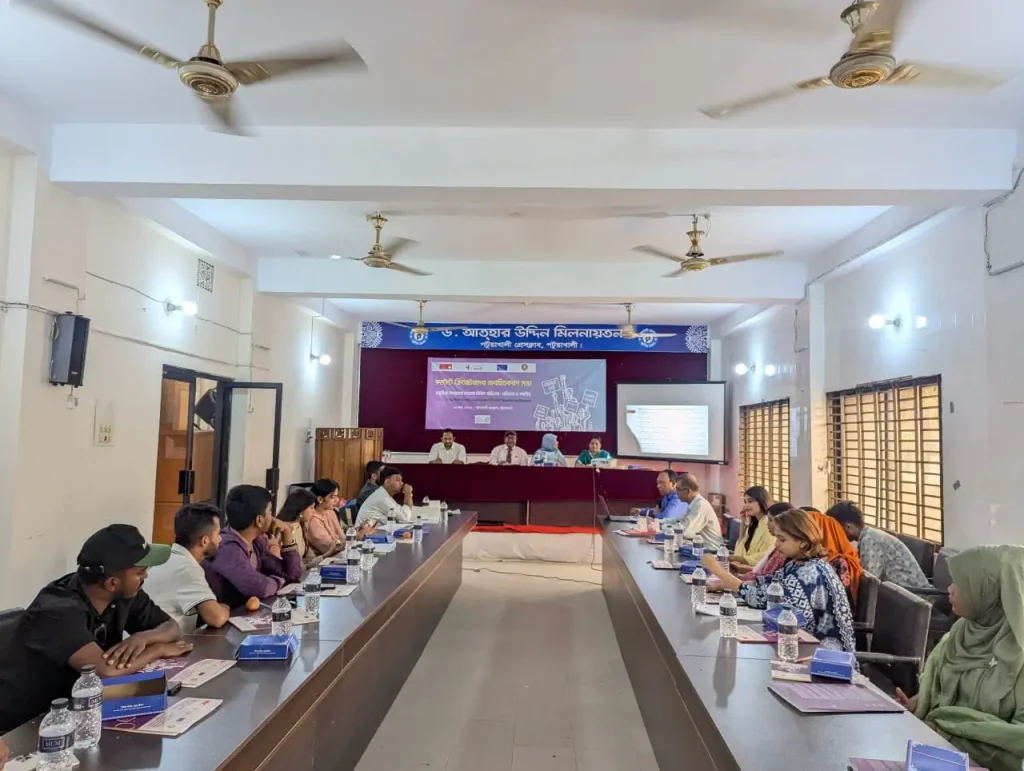
Recognizing the growing role of digital creators in shaping online culture, the Bangladesh NGOs Network for Radio and Communication (BNNRC) organized an orientation titled “The Role of Local Content Creators and YouTubers in Preventing and Mitigating Technology-Facilitated Gender-Based Violence (TFGBV) and Promoting Positive Digital Movements” at the Patuakhali Press Club.
The orientation brought together local YouTubers, content creators, and online entrepreneurs from the Patuakhali region to enhance their understanding of TFGBV, responsible content creation, digital ethics, and the role of online platforms in promoting a safer and more inclusive digital environment.
The orientation was organized under BNNRC’s project titled “Strengthening Resilience Against Technology-Facilitated Gender-Based Violence (TFGBV) and Promoting Digital Development.” The project is implemented under the Nagorikata: Civic Engagement Fund (CEF) Programme, funded by Switzerland, Global Affairs Canada, and the European Union, with technical assistance from GFA Consulting Group.
The event was chaired by Ms. Mahfuza Islam and moderated by Senior Journalist Firoz Ahmed, who presented the local context of TFGBV in Patuakhali, including its different forms, impacts, and challenges.
Mr. Mohammad Tarek Howlader, Additional Deputy Commissioner (ICT & Education), Patuakhali, attended the event as the Chief Guest.
During the orientation, participants discussed strategies for developing safe, gender-sensitive, and inclusive digital content. The session focused on ethical online behaviour, responsible storytelling, community standards of platforms such as YouTube and Facebook, and ways content creators can use their platforms to promote awareness and positive social change.
The discussion highlighted the growing scale of technology-facilitated violence. Speakers referred to data presented during the session indicating that TFGBV has become a significant concern in Bangladesh, with women and girls experiencing various forms of online abuse, including harassment, threats, privacy violations, and image-based violence.
Speakers emphasized that content creators and YouTubers have a unique opportunity to challenge harmful narratives, promote digital literacy, encourage respectful online behaviour, and connect communities with available support services.
The orientation included contributions from three panel speakers and 18 designated speakers, followed by an open discussion where participants shared their experiences, challenges, and recommendations. Participants committed to creating awareness-oriented content on their respective platforms to prevent and respond to TFGBV.
The session also highlighted available support mechanisms, including the Police Cyber Support for Women (PCSW) Helpline: 01320-000888 and email service cybersupport.women@police.gov.bd, encouraging creators to disseminate information about these services among their audiences.
In his remarks, Chief Guest Mr. Mohammad Tarek Howlader, Additional Deputy Commissioner (ICT & Education), Patuakhali, emphasized that addressing TFGBV requires collective action involving families, educational institutions, communities, administration, and digital platform users.
He highlighted the changing nature and complexity of technology-facilitated violence and stressed the importance of continuous awareness initiatives in schools, colleges, universities, and communities. He called upon YouTubers and content creators to become responsible digital ambassadors by producing positive, informative, and socially responsible content.
He further encouraged creators to avoid harmful or misleading content and focus on materials that contribute to public awareness and social development. He noted that many people become victims of cyber risks due to insufficient digital awareness, including unsafe practices such as clicking suspicious links or engaging with harmful online content.
The Chief Guest urged content creators to use respectful language, continuously improve their digital knowledge, and contribute positively to society through their online platforms.
At the conclusion of the orientation, participating content creators received certificates and expressed their commitment to using their digital platforms to:
raise awareness about TFGBV prevention and response;
promote responsible and ethical online behaviour;
create positive and inclusive digital content;
support safer online environments for women and girls;
contribute to digital development through meaningful engagement.
The orientation concluded with a shared commitment that local content creators and YouTubers can become powerful agents of change by transforming digital platforms into spaces for awareness, inclusion, respect, and social progress.
As digital transformation accelerates opportunities and risks, policymakers, media, technology leaders, law enforcement agencies, and civil society actors emphasise collective action to protect dignity, safety, and equal participation in the digital age
Bangladesh is experiencing a profound digital transformation. Over the past two decades, technology has reshaped how people communicate, access public services, conduct business, receive education, and participate in social and civic life. Digital platforms, mobile applications, e-governance services, and online communication tools have opened new pathways for inclusion, innovation, and economic opportunity.
However, every transformation creates new responsibilities. As millions of people move into digital spaces, the risks associated with technology misuse have become increasingly visible. The same platforms that connect communities and expand opportunities are also being exploited for harassment, blackmail, cyberbullying, identity theft, image-based abuse, privacy violations, and other forms of technology-enabled violence.
Among those affected, women and girls continue to experience disproportionate risks. Technology-Facilitated Gender-Based Violence (TFGBV) has emerged not simply as an online safety concern, but as a broader human rights, gender equality, social protection, and development challenge.
A woman’s experience of violence in digital spaces does not remain confined to the internet. The consequences often extend into her personal life, mental well-being, education, employment opportunities, social participation, and confidence to engage in public spaces. A society cannot achieve meaningful digital inclusion if a significant portion of its population feels unsafe, threatened, or excluded online.
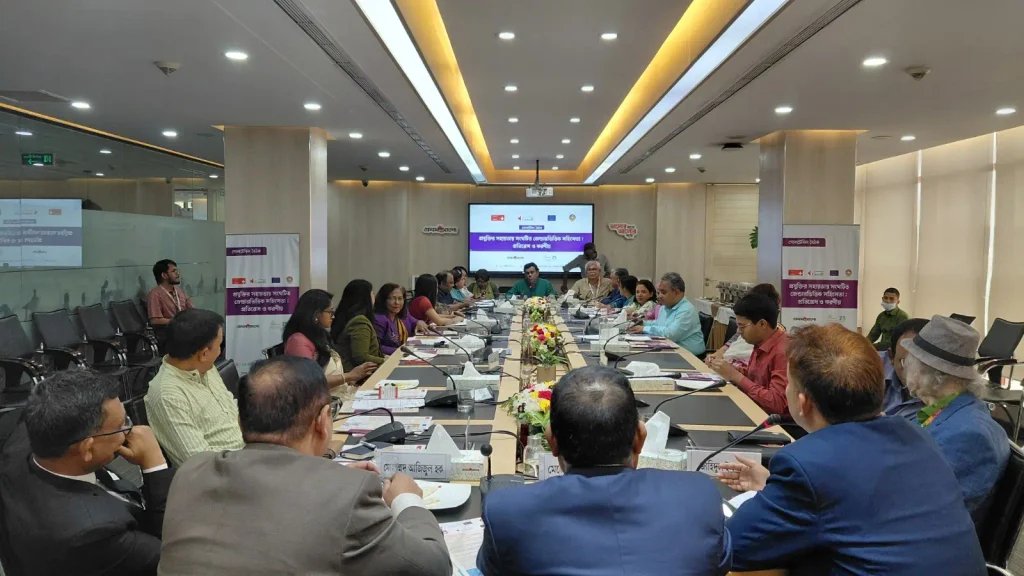
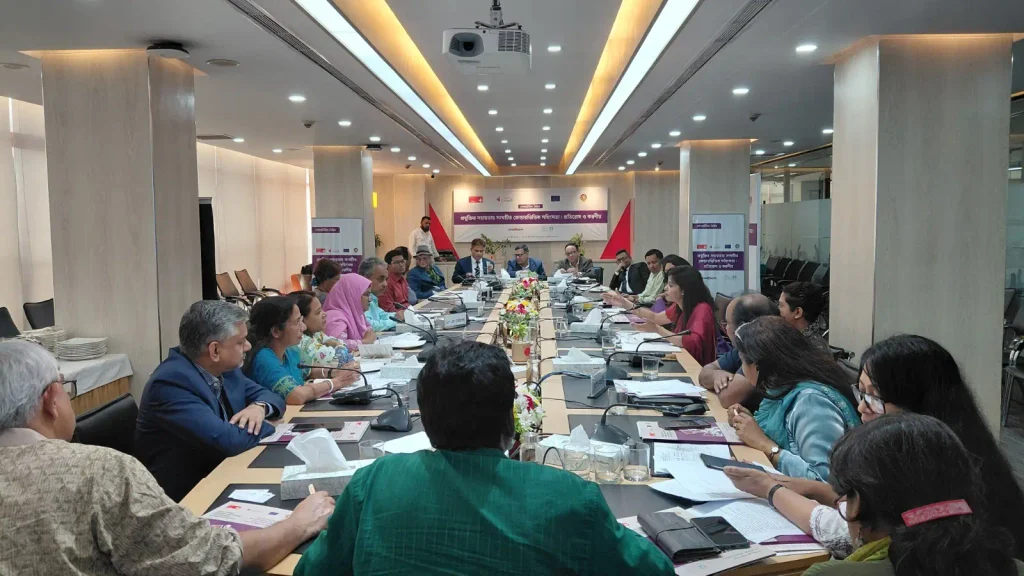
Recognising this urgent challenge, Daily national new paper Prothom Alo and the Bangladesh NGOs Network for Radio and Communication (BNNRC) jointly organised a national roundtable titled:
“Technology-Facilitated Gender-Based Violence: Time for Prevention and Mitigation”
The roundtable brought together approximately 50 representatives from government institutions, Parliament, law enforcement agencies, cybercrime units, regulatory bodies, academia, media, technology companies, civil society organisations, development partners, and youth-led organisations to develop a shared understanding and identify practical pathways for action.
The event was organised under BNNRC’s project:
“Strengthening Resilience Against Technology-Facilitated Gender-Based Violence (TFGBV) and Promoting Digital Development”
implemented through the Nagorikata: Civic Engagement Fund (CEF) Programme, funded by the Embassy of Switzerland, Global Affairs Canada (GAC), and the European Union (EU), with technical support from GFA Consulting Group.
The Growing Challenge: When Digital Progress Creates New Vulnerabilities
The discussion highlighted that technology itself is not the problem. Rather, the challenge lies in how digital tools are used, governed, and accessed.
Recent evidence demonstrates the growing scale of the issue. According to the Police Cyber Support for Women, as of May 2024, 60,808 women had sought support related to cyber-related incidents, including doxxing, Facebook account hacking, blackmail, impersonation, and cyberbullying.
A 2024 survey conducted by the Bangladesh Bureau of Statistics (BBS) and UNFPA also identified concerning patterns of technology-enabled gender-based violence, including sexual blackmail, image-based abuse, and digitally facilitated controlling behaviour.
Participants noted that many survivors continue to face barriers in accessing justice and support due to limited awareness of reporting mechanisms, social stigma, fear of retaliation, and gaps in institutional coordination.
The discussion emphasised that TFGBV must be addressed through a comprehensive approach combining prevention, awareness, accountability, legal protection, survivor support, and responsible technology governance.
From Concern to Action: A National Dialogue for Solutions
The roundtable created a platform where diverse stakeholders examined the changing nature of TFGBV and explored ways to build a safer digital environment.
The objectives of the dialogue were to:
deepen understanding of emerging forms, risks, and impacts of TFGBV;
identify rights-based approaches to protect women, youth, and marginalised communities;
review existing legal, policy, and institutional response mechanisms;
strengthen collaboration among government, technology actors, media, civil society, and communities.
During the discussion, participants explored several critical areas, including:
improving public awareness about digital safety;
strengthening cybercrime response mechanisms;
ensuring survivor-friendly support services;
enhancing legal and institutional coordination;
promoting responsible technology use;
encouraging ethical media coverage of digital violence.
A Shared Responsibility: Building Partnerships Across Sectors
The roundtable recognised that no single institution can address TFGBV alone.
Government agencies have a role in strengthening policy and institutional frameworks. Law enforcement agencies and justice institutions are essential for ensuring accountability. Technology companies must contribute to safer platforms and responsible digital ecosystems. Media organisations have the power to shape public understanding through accurate and sensitive reporting. Civil society and community organisations remain critical in reaching vulnerable populations and supporting survivors.
The initiative follows the Leave No One Behind (LNOB) principle by ensuring participation of women, youth, underserved communities, and marginalised groups.
Through BNNRC’s wider project activities, six civil society organisations and nine community radio stations across 14 districts are contributing to community-level awareness, digital literacy, and prevention initiatives.
Impact: Turning Dialogue into Policy and Community Action
The national roundtable strengthened collaboration among key actors and generated practical recommendations for future action.
Key recommendations included:
1. Strengthening Prevention and Awareness
Expand digital literacy and awareness initiatives at community levels.
Promote responsible online behaviour among children, youth, and adults.
Increase awareness about available support services.
2. Improving Response and Accountability
Strengthen coordination among law enforcement, service providers, NGOs, and communities.
Improve access to survivor-centred support mechanisms.
Enhance capacity for cyber investigation and digital evidence management.
3. Promoting Responsible Digital Development
Encourage technology stakeholders to contribute to safer online environments.
Promote ethical content creation and responsible media practices.
Ensure that digital transformation remains inclusive and rights-based.
The recommendations from the roundtable have been consolidated to support future policy discussions and programme interventions.
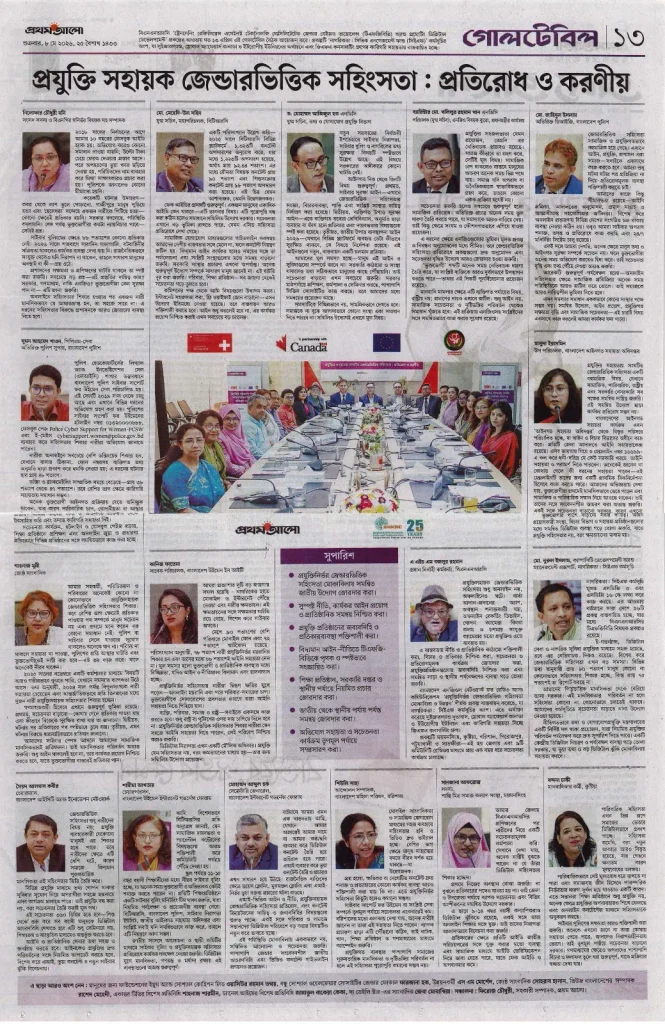
To expand public awareness, Prothom Alo published a special supplement highlighting the discussions and recommendations of the roundtable.
Call for Continued Action: Protecting Human Dignity in the Digital Age
The roundtable concluded with a shared understanding that the future of Bangladesh’s digital transformation depends not only on technological advancement but also on ensuring safety, equality, and human dignity.
Participants called for sustained cooperation among:
government institutions;
Parliament and policymakers;
law enforcement agencies;
judiciary and legal support institutions;
technology companies;
media organisations;
civil society organisations;
educational institutions;
youth and community leaders.
BNNRC and Prothom Alo emphasised that preventing technology-facilitated gender-based violence requires a long-term commitment to awareness, accountability, inclusion, and collaboration.
A safer digital Bangladesh will not be created by technology alone. It will be built through responsible innovation, informed citizens, effective institutions, and a collective commitment to ensuring that everyone can participate in digital spaces with confidence, security, and dignity.
Workshop empowers journalists with knowledge, ethical reporting approaches, and collaborative strategies to promote digital safety and inclusive development
The rapid expansion of digital technologies has transformed the media landscape, creating new opportunities for information sharing, public engagement, and social development. At the same time, digital platforms have also enabled new forms of violence, including Technology-Facilitated Gender-Based Violence (TFGBV), which threatens the safety, dignity, privacy, and rights of women and vulnerable communities.
Online harassment, cyber threats, misuse of personal information, digital fraud, and technology-enabled abuse are increasingly affecting people’s lives beyond the digital environment. Addressing these challenges requires not only stronger legal and institutional mechanisms but also informed journalism, responsible reporting, public awareness, and coordinated action among stakeholders.
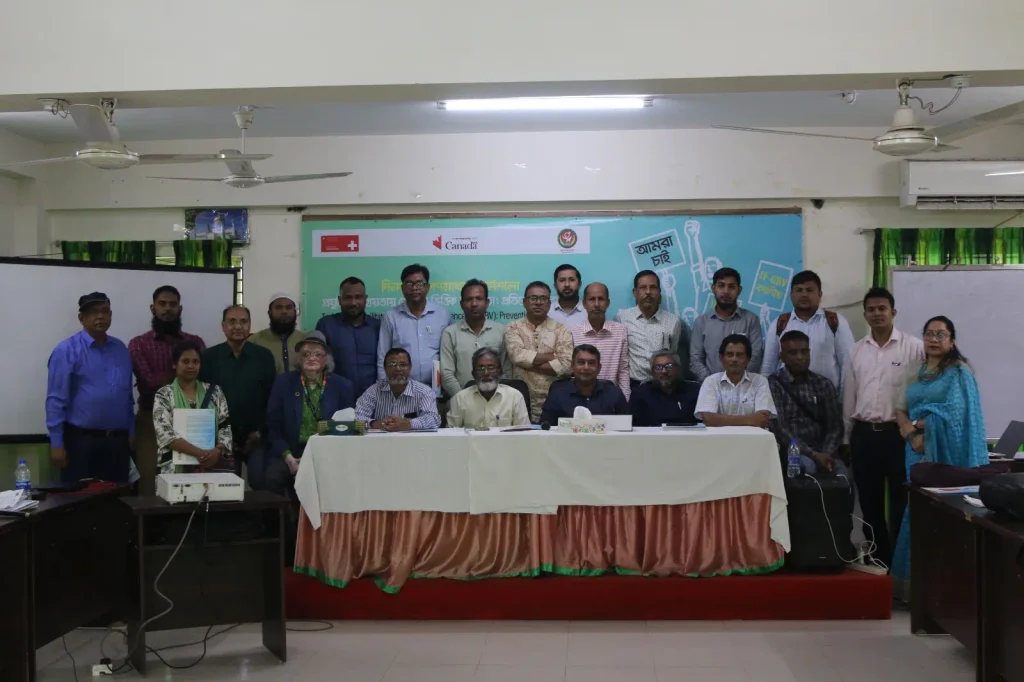
Recognising the vital role of media in shaping public understanding and promoting social change, the Bangladesh NGOs Network for Radio and Communication (BNNRC) organised a Capacity-Building Workshop for Local Media Professionals on “Prevention, Mitigation, and Response to Combat Technology-Facilitated Gender-Based Violence” in Mymensingh.
The workshop brought together 30 local media professionals from print, television, and online media platforms. Through this initiative, journalists strengthened their understanding of TFGBV, explored the role of media in prevention and response, and discussed ways to promote awareness and inclusive digital development.
The workshop was organised under the project “Strengthening Resilience Against Technology-Facilitated Gender-Based Violence (TFGBV) and Promoting Digital Development,” implemented through the Nagorikata: Civic Engagement Fund (CEF) Programme, with technical assistance from GFA Consulting Group and financial support from Switzerland and Global Affairs Canada.
The event was attended as the Chief Guest by Mr. Mir Akram Uddin Ahmed, Director, Department of Mass Communication, Mymensingh District Office, while Mr. Din Mohammad Dinu, Public Relations Officer, Bangladesh Agricultural University, attended as the Special Guest.
Strengthening Responsible Journalism and Public Awareness
The objective of the workshop was to enhance journalists’ understanding of:
the nature, forms, and impacts of TFGBV;
relevant laws, policies, and protection mechanisms;
the opportunities and challenges of Bangladesh’s digital transformation;
the role of media in prevention, awareness raising, and accountability.
The workshop also aimed to encourage media professionals to:
strengthen knowledge sharing and accountability within media institutions;
produce analytical reports on digital development and TFGBV prevention;
promote networking and experience exchange among journalists;
identify local TFGBV-related challenges and advocate for effective solutions.
Identifying Challenges and Building Local Solutions
The workshop began with a welcome address by Mr. Swadheen Chowdhury, District Focal Person of BNNRC and Executive Director of NISHTHA Unnayan Sangho, who outlined the objectives and expected outcomes of the programme.
In his keynote presentation, he highlighted the local context of violence in Mymensingh, including challenges related to legal response, coordination gaps among courts, police, NGOs, and other institutions, as well as the absence of an integrated digital case registry and reliable data systems.
He emphasised the need for stronger coordination, evidence-based reporting, and improved information management to address TFGBV effectively.
Building Media Capacity for Digital Safety and Inclusion
A.H.M. Bazlur Rahman, Chief Executive Officer of BNNRC, delivered a comprehensive presentation on the concept, forms, and impacts of Technology-Facilitated Gender-Based Violence.
He discussed the relationship between TFGBV and digital development, highlighting how media professionals can play a proactive role in:
raising public awareness;
promoting responsible digital behaviour;
identifying emerging risks and information sources;
connecting communities with relevant stakeholders and support mechanisms.
He emphasised that journalists have a crucial responsibility in ensuring accurate information flow, reducing misinformation, and reporting on digital issues through a human rights and public interest perspective.
Collaborative Dialogue on Prevention and Response
During the interactive sessions, participants shared their professional experiences and identified practical approaches to address TFGBV.
Journalists expressed their commitment to producing awareness-based media content on digital fraud, online violence, and responsible technology use. They highlighted the importance of engaging additional stakeholders, including:
Internet Service Providers (ISPs);
cable network representatives;
mobile financial service providers such as bKash and Rocket;
government and non-government support institutions.
Participants also discussed challenges faced by media professionals themselves in relation to digital harassment and proposed measures including:
developing a clearer typology of digital violence;
improving coordination with government and non-government institutions;
ensuring stronger support mechanisms for affected journalists.
Impact: Empowering Journalists as Digital Safety Advocates
The workshop strengthened the capacity of local media professionals to:
identify and report TFGBV-related issues responsibly;
promote digital literacy and public awareness;
contribute to evidence-based discussions on digital safety;
engage stakeholders for prevention and response;
support safer online environments through ethical journalism.
Participants recognised that media can serve as a bridge between communities, institutions, and decision-makers by highlighting challenges, sharing solutions, and amplifying voices affected by digital violence.
Call for Continued Action: Building an Informed and Safer Digital Society
Special Guest Mr. Din Mohammad Dinu, Public Relations Officer of Bangladesh Agricultural University, highlighted the experiences of rural communities in relation to digital development and TFGBV. He encouraged journalists to adopt context-based approaches and emphasised the importance of continuous learning and professional capacity building.
In his remarks, Chief Guest Mr. Mir Akram Uddin Ahmed, Director of the Department of Mass Communication, Mymensingh District Office, emphasised that journalists must continuously update their knowledge on emerging issues such as TFGBV and actively disseminate accurate information to the public.
He stated:
“Only through combating misinformation and ensuring a free, active, and factual flow of information can truth ultimately prevail.”
BNNRC believes that empowering media professionals with knowledge, ethical standards, and practical tools is essential for preventing technology-facilitated violence and promoting responsible digital development.
Through continued collaboration among journalists, government institutions, NGOs, civil society, technology stakeholders, and communities, Bangladesh can advance towards a safer, more inclusive, and rights-based digital society.
Digital influencers and online creators equipped with knowledge, ethical guidelines, and advocacy tools to use their platforms for safer, inclusive, and more responsible digital spaces
Digital platforms have transformed the way people create, share, and consume information. Content creators, influencers, and online communities now play an increasingly important role in shaping public conversations and social behaviours. However, the rapid growth of digital spaces has also created new risks, including Technology-Facilitated Gender-Based Violence (TFGBV), online harassment, misinformation, privacy violations, and harmful digital practices.
Women and girls, particularly those active in online spaces, remain disproportionately vulnerable to technology-enabled violence. Addressing these challenges requires not only stronger laws and institutional responses but also responsible digital participation, ethical content creation, and greater awareness among online communities.
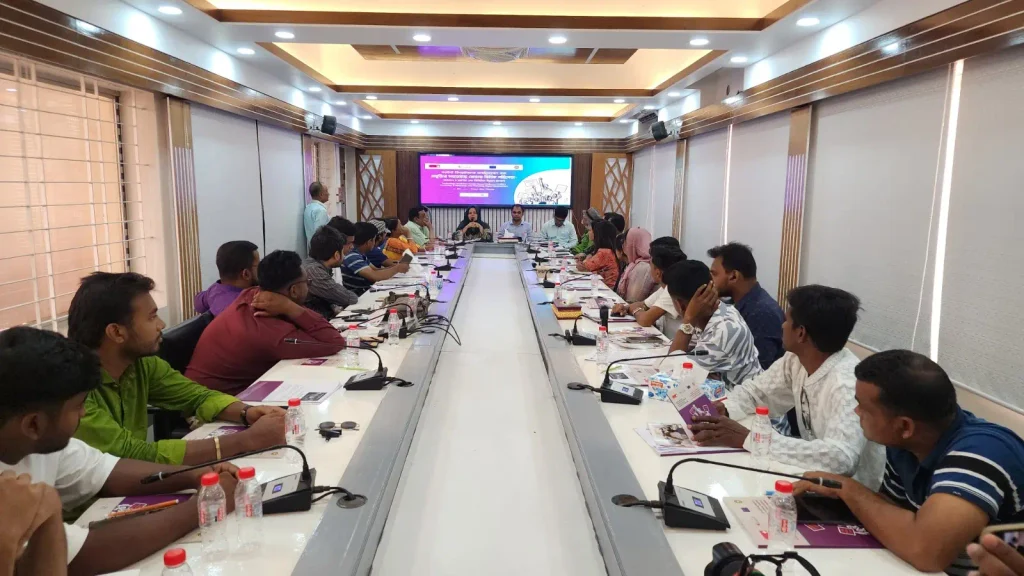
Recognising the growing influence and responsibility of digital content creators, the Bangladesh NGOs Network for Radio and Communication (BNNRC) and Pirojpur Gano Unnayan Samity jointly organised an orientation programme titled “The Role of Local Content Creators in Preventing and Mitigating TFGBV and Promoting Digital Development” on 23 April 2026 in Pirojpur.
The orientation brought together 30 local content creators from Pirojpur, whose combined follower base exceeds 2.6 million, to strengthen their understanding of TFGBV, promote responsible content creation, and encourage them to use their digital platforms for awareness raising and positive social change.
The programme was organised under BNNRC’s project “Strengthening Resilience Against Technology-Facilitated Gender-Based Violence and Promoting Digital Development.” The initiative is part of the NAGORIKATA: Civic Engagement Fund (CEF) Programme, funded by Switzerland, Global Affairs Canada, and the European Union, with technical support from GFA Consulting Group.
The event was attended as the Chief Guest by Ms. Tanzila Kabir Tropa, Additional Deputy Commissioner and Additional District Magistrate, Pirojpur.
Building Responsible Digital Voices for Safer Online Communities
The objective of the orientation was to enhance content creators’ understanding of:
different forms and impacts of Technology-Facilitated Gender-Based Violence;
prevention and response mechanisms;
ethical standards for digital content creation;
safe and inclusive communication practices;
available support services and pathways to justice.
Participants were encouraged to use their online influence to produce content that promotes dignity, respect, gender equality, digital safety, and responsible technology use.
In his welcome remarks, Ziaul Ahsan, Executive Director of Pirojpur Gano Unnayan Samity, highlighted the growing importance of content creators in shaping public opinion and digital culture.
He noted that the absence of clear guidelines and accountability mechanisms for content creators creates challenges in ensuring responsible digital practices. He expressed hope that existing and emerging cyber-related policies would contribute to developing clearer standards and guidance for digital creators.
Connecting Digital Development with Digital Responsibility
Speaking at the orientation, AHM Bazlur Rahman, Chief Executive Officer of BNNRC, highlighted Bangladesh’s significant progress in digital transformation over the past 25 years since the introduction of the ICT Policy in 2001.
However, he emphasised that digital inclusion remains a challenge, noting that a significant portion of the population still lacks meaningful access to the internet. He stressed that digital development must go beyond connectivity and focus on safe, inclusive, and responsible participation.
He called upon content creators to become partners in promoting digital literacy, combating harmful online practices, and ensuring that technology contributes to social development.
Md. Nurul Islam, Capacity Development and Management Expert of NAGORIKATA: Civic Engagement Fund (CEF), encouraged content creators to develop messages that uphold dignity and respect for all people, regardless of gender, ethnicity, religion, indigenous identity, age, or social background.
Promoting Ethical Content Creation and Information Integrity
The orientation included detailed discussions on:
creating safe, gender-sensitive, and inclusive digital content;
understanding Facebook and YouTube community guidelines;
preventing misinformation and harmful online behaviour;
maintaining information integrity and ethical responsibility.
Speakers highlighted the importance of increasing awareness about government support mechanisms, including the Police Cyber Support for Women service through the helpline 01320-000888 and email support cybersupport.women@police.gov.bd.
Participants discussed the challenges faced by victims of online harassment, including lack of awareness about complaint mechanisms, fear of social stigma, and limited confidence in seeking justice. They stressed the need for stronger awareness campaigns and survivor-friendly support systems.
Recognising the Role of Content Creators in Social Change
Al Amin, Acting Upazila Nirbahi Officer of Pirojpur Sadar, encouraged content creators to integrate awareness messages on cybercrime, financial fraud, and gender-based violence into entertainment and vlog content.
He noted that even small efforts by individual creators can contribute to building a safer and more informed society.
Saifuddin Al Madani, Assistant Director of the District Information Office, highlighted that harmful digital content can affect all sections of society. He cautioned against content that normalises disrespect or humiliation, noting that so-called entertainment content should also reflect social responsibility.
Abul Hasan, District ICT Officer, emphasised the importance of information integrity and responsible content creation. He stated that creators have a responsibility to verify information, maintain accuracy, and consider the ethical impact of their content before publication.
He also expressed commitment to advocating for greater recognition of content creators within local ICT and cybercrime prevention structures. He assured support in facilitating access to Freelancing Cards and recognised successful digital professionals as contributors to Bangladesh’s digital economy.
Impact: Creating a Network of Digital Safety Advocates
The orientation strengthened the capacity of local content creators to:
identify and address risks related to TFGBV;
produce responsible and inclusive digital content;
promote awareness on digital safety and available support services;
encourage positive online behaviour among followers;
contribute to a safer digital environment.
At the conclusion of the programme, participating content creators received certificates and a draft Code of Ethics for Content Creators developed by BNNRC.
Participants committed to using their digital platforms to promote responsible technology use, support TFGBV prevention initiatives, and create awareness-based content for their communities.
Call for Continued Action: Towards a Safer and More Inclusive Digital Bangladesh
In her remarks, Chief Guest Ms. Tanzila Kabir Tropa, Additional Deputy Commissioner and Additional District Magistrate, Pirojpur, emphasised the importance of understanding the challenges faced by women content creators, identifying perpetrators of online harassment, and ensuring appropriate action.
She highlighted that the respect and dignity extended to women within families should also be reflected in wider society and digital spaces.
BNNRC and Pirojpur Gano Unnayan Samity believe that content creators are becoming important actors in shaping digital culture. Their creativity, reach, and influence can contribute significantly to preventing technology-facilitated violence and promoting responsible digital citizenship.
Through continued collaboration among government institutions, civil society, media, technology stakeholders, and online communities, Bangladesh can advance towards a safer, more respectful, and inclusive digital future.
Government, NGOs, civil society, and community stakeholders unite to strengthen digital awareness, improve response mechanisms, and promote safer and more inclusive digital development
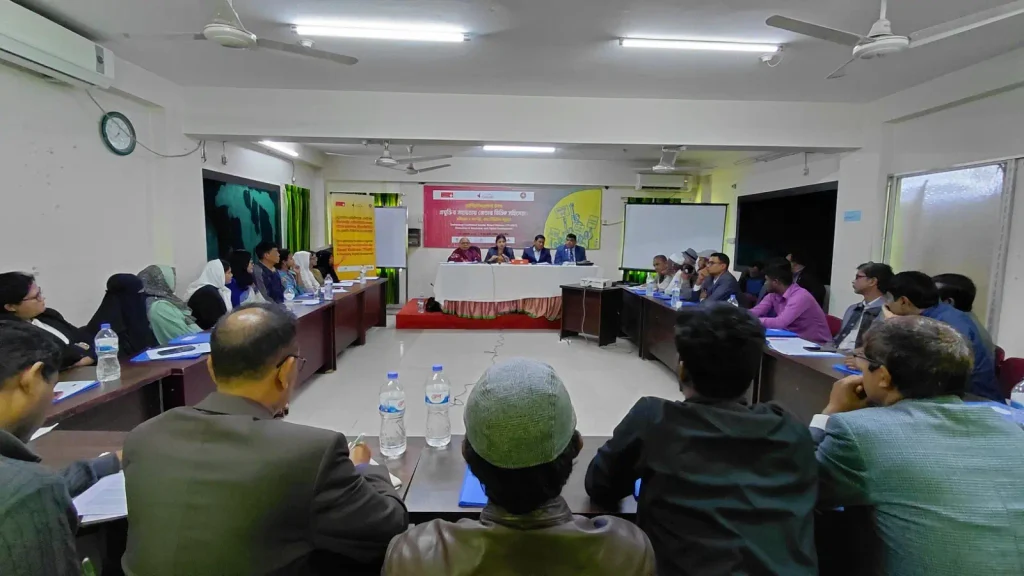
Digital transformation has created unprecedented opportunities for communication, education, economic participation, and social development. However, the rapid expansion of digital technologies has also introduced new forms of harm, with Technology-Facilitated Gender-Based Violence (TFGBV) emerging as a critical challenge affecting the safety, dignity, and rights of women and girls.
Technology-enabled harassment, online abuse, cyberstalking, misuse of personal information, and other forms of digital violence can have serious consequences beyond the online environment, affecting individuals’ mental well-being, social participation, and access to justice.
According to UNFPA, technology-facilitated violence against women has become a significant global concern, with Bangladesh also experiencing a high prevalence of technology-related gender-based violence. Addressing this growing challenge requires stronger awareness, effective prevention strategies, survivor-centred response mechanisms, and collaboration among government institutions, NGOs, civil society, media, technology providers, and communities.
Against this backdrop, the Bangladesh NGOs Network for Radio and Communication (BNNRC) and Nistha Unnayan Sangho jointly organised a Multi-Stakeholder Dialogue on “Preventing Technology-Facilitated Gender-Based Violence (TFGBV) through Technology” in Mymensingh.
The dialogue was organised under the project “Strengthening Resilience Against Technology-Facilitated Gender-Based Violence (TFGBV) and Promoting Digital Development,” implemented through the Nagorikata: Civic Engagement Fund (CEF) Programme, with technical assistance from GFA Consulting Group and financial support from Switzerland and Global Affairs Canada.
The event was attended as the Chief Guest by Ms. Umme Habiba Mira, Additional Deputy Commissioner (Development and Human Resource Management), Mymensingh District.
Building Awareness and Strengthening Local Response Mechanisms
The dialogue aimed to:
enhance understanding of the forms, causes, and impacts of TFGBV;
increase awareness of relevant laws, policies, and protection mechanisms;
encourage institutions to strengthen accountability and prevention measures;
promote coordinated action for safer digital participation and inclusive digital development.
In his welcome remarks, Mr. Swadheen Chowdhury, Executive Director of Nistha Unnayan Sangho, highlighted the objectives and expected outcomes of the dialogue.
He discussed the growing challenges of technology-facilitated violence, limitations in existing response mechanisms, gaps in information management, and the need for reliable data to support effective policymaking. He also shared the local context of Mymensingh, including progress, challenges, and recommendations for strengthening community-level action.
Strengthening Digital Literacy, Accountability, and Collective Responsibility
During the dialogue, Mr. AHM Bazlur Rahman, Chief Executive Officer of BNNRC, presented on TFGBV and digital development, covering its concepts, different forms, negative impacts, prevention approaches, and the responsibilities of different stakeholders.
He highlighted that digital development must be accompanied by digital responsibility, information awareness, and inclusive participation. He emphasised the important role of NGOs, civil society organisations, media, and local institutions in raising awareness and supporting communities to prevent and respond to TFGBV.
A total of 16 designated speakers participated in the discussion, while other participants actively contributed during the open forum session.
Participants shared practical experiences and commitments to undertake awareness initiatives within their respective organisations and communities. They highlighted the importance of expanding the prevention and response ecosystem by engaging additional stakeholders, including:
Internet Service Providers (ISPs);
cable network representatives;
mobile financial service providers such as bKash and Rocket agents;
legal professionals;
community organisations and local institutions.
Legal Awareness and the Need for Stronger Support Systems
Participants and speakers emphasised that increasing public awareness about digital safety and available support services is essential to preventing technology-enabled violence.
They highlighted the importance of promoting the Government’s Police Cyber Support for Women service, including the helpline 01320-000888 and email support service cybersupport.women@police.gov.bd, to ensure that affected individuals can access appropriate assistance.
The discussion also highlighted existing legal frameworks, including the Cyber Security Ordinance and the Pornography Control Act, while noting challenges such as limited cyber investigation capacity at the local level and gaps in survivor-friendly support services.
Impact: Strengthening Community Commitment for a Safer Digital Environment
The dialogue created an important platform for government officials, NGOs, CSOs, media representatives, and community stakeholders to exchange experiences and identify practical solutions.
Participants recognised that preventing TFGBV requires:
stronger digital literacy among citizens;
improved access to information and support services;
better coordination among institutions;
responsible use of technology;
greater engagement of communities and local stakeholders.
The dialogue strengthened local understanding of TFGBV and encouraged stakeholders to take proactive measures within their respective areas of work.
Call for Continued Action: Building a Responsible and Inclusive Digital Society
In her remarks, Ms. Umme Habiba Mira, Additional Deputy Commissioner (Development and Human Resource Management), Mymensingh District, emphasised the importance of collective responsibility in addressing emerging digital challenges.
She stated:
“All of us must learn about emerging issues such as technology-facilitated gender-based violence, and we must take initiatives to inform others. We cannot move forward without technology; we must ensure its proper use. It is critically important to strictly curb misinformation and disinformation and ensure the flow of accurate information, as this helps ensure the victory of truth.”
She called for coordinated efforts among families, educational institutions, media, NGOs, and government administration to raise awareness, prevent digital violence, and ensure responsible use of technology.
BNNRC and Nistha Unnayan Sangho believe that sustainable prevention of TFGBV requires continuous awareness, stronger partnerships, effective support systems, and meaningful participation from all sectors of society.
Through collective action, responsible digital practices, and inclusive development approaches, Bangladesh can build a safer digital environment where technology contributes to equality, dignity, and human well-being.
Strengthening responsible journalism, digital awareness, and community engagement to prevent online violence and promote a safer, inclusive digital society
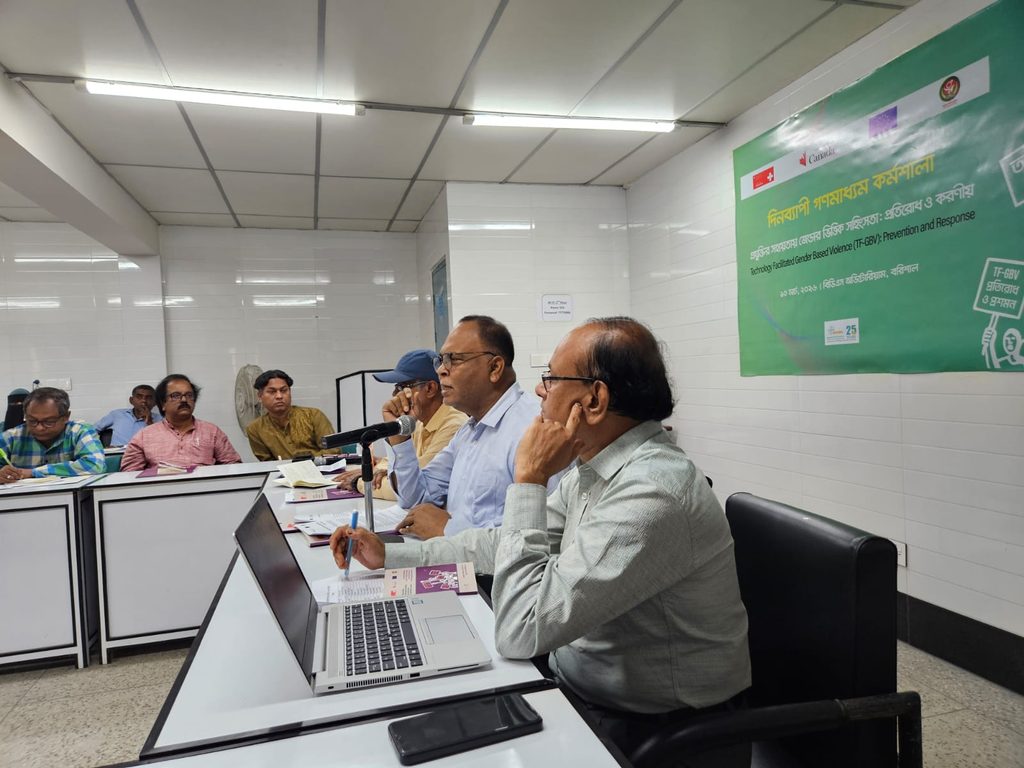
Digital technologies have transformed the way people communicate, access information, and participate in social and economic life. However, the rapid expansion of digital platforms has also created new forms of harm, including Technology-Facilitated Gender-Based Violence (TFGBV), which disproportionately affects women and girls through online harassment, abuse, privacy violations, cyber threats, and technology-enabled exploitation.
While technology offers immense opportunities for empowerment, a lack of digital awareness, responsible online behaviour, and effective support mechanisms can increase vulnerabilities. Addressing TFGBV requires not only legal and institutional responses but also informed communities, ethical journalism, and strong public awareness initiatives.
Recognising the critical role of media in shaping public understanding and promoting social change, the Bangladesh NGOs Network for Radio and Communication (BNNRC) organised a day-long Capacity Building Workshop for Local Media Professionals on “Technology-Facilitated Gender-Based Violence (TFGBV): Prevention and Response” at the BDS Auditorium, Sadar Road, Barishal.
The workshop brought together journalists and media professionals from local and national print, electronic, and online media outlets to strengthen their understanding of TFGBV, improve responsible reporting practices, and enhance their role in promoting digital safety and gender-responsive communication.
The initiative was organised under the project “Strengthening Resilience Against Technology-Facilitated Gender-Based Violence (TFGBV) and Promoting Digital Development.” The project is part of the Nagorikata: Civic Engagement Fund (CEF) Programme, funded by the Governments of Switzerland, Global Affairs Canada, and the European Union, with technical support from GFA Consulting Group.
Strengthening Media Capacity for Prevention and Awareness
The workshop was chaired by Mr. AHM Shamsul Islam Dipu, Mission Head of Speed Trust, Barishal, while Mr. Subhankar Chakraborty, Executive Director of MAP Barishal, facilitated the session and presented the keynote paper.
The event was attended as the Chief Guest by Mr. Md. Ahsan Habib, Additional Divisional Commissioner (General), Barishal.
In his welcome remarks, Mr. AHM Shamsul Islam Dipu highlighted the objectives and expected outcomes of the workshop. He emphasised that journalists have a vital responsibility in increasing public understanding of TFGBV, promoting ethical reporting, reducing misinformation, and supporting prevention efforts through evidence-based journalism.
He noted that the workshop aimed to enhance media professionals’ knowledge of the nature, impact, and prevention strategies of technology-facilitated violence and encourage responsible media engagement on digital rights and safety issues.
Media as a Catalyst for Digital Safety and Social Change
During the discussion, speakers highlighted that the rapid growth of digital technologies has been accompanied by increasing risks of online violence, particularly against women and girls.
They stressed that analytical journalism, accurate information dissemination, and awareness-focused reporting can play a significant role in challenging harmful social attitudes, reducing stigma, and connecting affected individuals with available support services.
The speakers also highlighted existing government support mechanisms, including the Police Cyber Support for Women Helpline (01320-000888) and email support service cybersupport.women@police.gov.bd, and encouraged media professionals to promote awareness about these services among communities.
Participants emphasised that preventing TFGBV requires collective efforts involving media, government institutions, civil society organisations, law enforcement agencies, technology stakeholders, and communities.
Expert Discussion on Challenges, Solutions, and Local Realities
The workshop featured discussions with distinguished speakers and media professionals, including SM Amzad Hossain, Azad Alauddin, Kamal Sengupta, Suman Chowdhury, Saidur Rahman Pantha, Khalid Saifullah, Zia Shahin, Prachurya Rana, Khan Rafiq, Marzina Begum, and Md. Humayun Kabir.
The open discussion session included active participation from Rajib Das, Murad Ahmed, Bidhan Sarkar, Jasim Ahmed, and Mehedi Hasan, among others.
During the “Deep Dive” session, participants discussed district-level challenges related to TFGBV, emerging digital risks, reporting challenges, and possible solutions. The session was moderated by Mr. Pankaj Roy Chowdhury.
Impact: Building Responsible Media Networks for Safer Digital Communities
The workshop strengthened the capacity of participating journalists and media professionals to:
understand different forms and impacts of TFGBV;
report on digital violence in a sensitive and responsible manner;
promote digital literacy and safe online practices;
increase public awareness about prevention and support mechanisms;
strengthen collaboration with relevant institutions and stakeholders.
Participants expressed their commitment to using their professional platforms to promote safer digital environments and contribute to preventing technology-facilitated violence at community levels.
Call for Continued Action: Advancing Responsible Journalism for Digital Safety
In his remarks, Chief Guest Mr. Md. Ahsan Habib, Additional Divisional Commissioner (General), Barishal, stated:
“Journalists are the mirror of society. As they work closely with communities, they can play a significant role in preventing digital gender-based violence. Women constitute half of our human resources; therefore, it is our collective responsibility to empower them digitally and enhance their awareness. Doing so will accelerate the overall development of the country.”
The organisers emphasised that continued investment in media capacity building, digital literacy, and multi-stakeholder collaboration is essential to address TFGBV effectively.
BNNRC believes that empowered and responsible media professionals can become powerful advocates for digital safety, gender equality, and human rights. Through stronger awareness, ethical reporting, and coordinated action, communities can work together to build a safer, more inclusive, and respectful digital Bangladesh.
Empowering local broadcasters with knowledge, skills, and strategies to use radio and social media as tools for awareness, prevention, and community resilience against technology-enabled violence
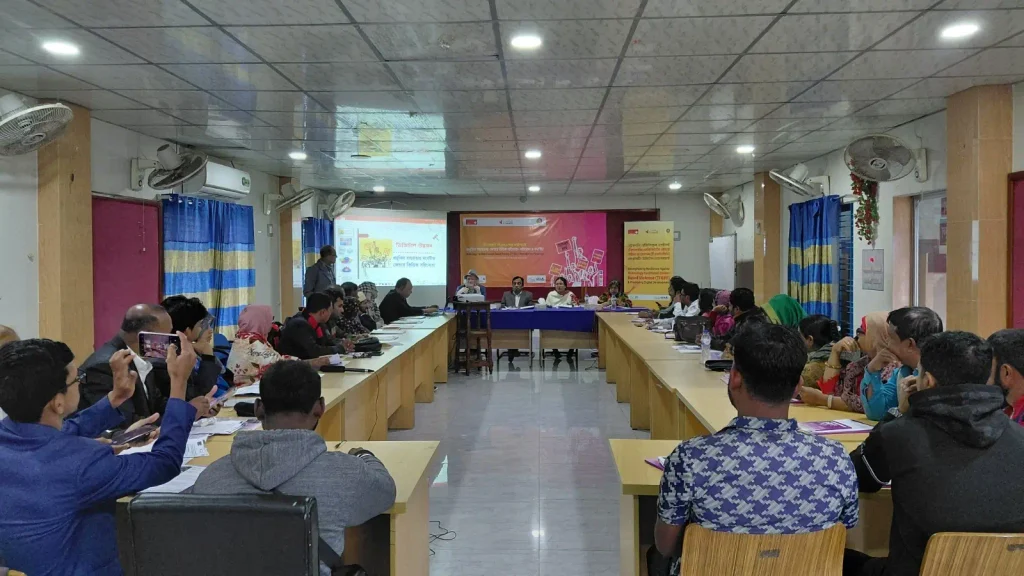
Digital transformation is reshaping how people communicate, access information, and participate in society. However, alongside these opportunities, technology has also created new forms of violence and exclusion, particularly affecting women, girls, and marginalized communities. Technology-Facilitated Gender-Based Violence (TFGBV) has become a growing concern, requiring stronger awareness, locally relevant information, and community-driven solutions.
In rural and underserved communities, where access to reliable information and support services remains uneven, community radio can play a critical role in bridging information gaps, promoting digital literacy, and connecting communities with available protection and support mechanisms.
Recognising the transformative role of community media, the Bangladesh NGOs Network for Radio and Communication (BNNRC) organised a two-day Content Development Planning Workshop on “Community Radio and Social Media on Technology-Facilitated Gender-Based Violence (TFGBV) and Digital Development” from 10–11 September 2025 at the YWCA Conference Room, Mohammadpur, Dhaka.
The workshop brought together 18 senior programme producers and station managers from nine community radio stations across Bangladesh to strengthen their capacity in developing audience-centred radio programmes and social media content addressing TFGBV prevention, digital safety, and inclusive digital development.
The participating community radio stations included:
Community Radio Nalta 99.2 FM, Kaliganj, Satkhira
Community Radio Lokobetar 99.2 FM, Barguna
Community Radio Pollikontho 99.2 FM, Moulvibazar
Community Radio Sagor Giri 99.2 FM, Sitakunda, Chattogram
Community Radio Chilmari 99.2 FM, Chilmari, Kurigram
Community Radio Jhenuk 99.2 FM, Jhenaidah
Community Radio Meghna 99.0 FM, Charfassion, Bhola
Community Radio Sagardwip 99.2 FM, Hatiya, Noakhali
Community Radio Sarabela 98.8 FM, Gaibandha
The workshop was organised under the project “Strengthening Resilience Against Technology-Facilitated Gender-Based Violence (TFGBV) & Promoting Digital Development.” The initiative is part of the Nagorikata: Civic Engagement Fund (CEF) Programme, implemented with technical support from GFA Consulting Group and funded by the Embassy of Switzerland and Global Affairs Canada (GAC).
Building Community Media Capacity for Digital Safety and Inclusion
The workshop began with a welcome address by AHM Bazlur Rahman, Chief Executive Officer of BNNRC, who highlighted the objectives, expected outcomes, and strategic importance of engaging community radio in addressing TFGBV and promoting responsible digital development.
The session was moderated by Rehan Uddin Ahmed Raju, Development Consultant.
During the opening session, Katharina König, Deputy Team Leader of CEF, presented an overview of the Nagorikata: Civic Engagement Fund (CEF) Programme, including its objectives, key outcomes, stakeholders, governance structure, and targeted beneficiaries.
She highlighted three core principles of CEF:
Collaborative partnership and co-creation as a shared practice;
Leaving No One Behind (LNOB) to the extent possible;
Being versatile and adapting to changing contexts.
Strengthening Knowledge, Content Innovation, and Community Engagement
The workshop featured interactive sessions on:
Understanding Technology-Facilitated Gender-Based Violence;
Digital development and its relationship with TFGBV;
Laws, regulations, and responsible social media use;
Gender concepts and their connection with development;
Community radio programme ideas and formats;
Social media integration planning;
Law enforcement mechanisms and support systems related to TFGBV.
Through these sessions, participants explored how community radio and digital platforms can be used not only for awareness raising but also for encouraging dialogue, reducing stigma, promoting safe online behaviour, and connecting communities with relevant services.
The expert facilitators included:
Mr. Abu Sayed Sumon, National Programme Officer – Gender & Human Rights, UNFPA;
Mr. AHM Bazlur Rahman, CEO, BNNRC;
Ms. Sharmin Khan, Legal Consultant, International Centre for Not-for-Profit Law (ICNL);
Mr. Imam Hossain, Steps Towards Development;
Mr. Shakil Ahmed, Head of Programme, Radio Shadhin Pvt. Ltd. (92.4 FM);
Ms. Mobashera Habib Khan, Police Super, Cyber Police Centre, CID, Bangladesh Police;
Mr. Amin Al Rasheed, Radio Expert;
Ms. Shahnaz Sharmeen, Radio Expert.
Impact: Community Radio as a Catalyst for Safer Digital Communities
The workshop strengthened the capacity of community broadcasters to design creative, inclusive, and audience-focused content on TFGBV prevention and digital development.
By combining traditional community media with social media platforms, participants developed strategies to:
create locally relevant awareness programmes;
promote digital literacy and responsible online behaviour;
strengthen community dialogue on gender equality and digital safety;
connect vulnerable communities with service providers and support mechanisms;
engage local stakeholders in preventing TFGBV.
The workshop also reinforced the importance of community radio as a trusted platform for reaching rural populations, including women, youth, and marginalized groups who may face barriers in accessing digital information and support services.
Call for Continued Action: Expanding Community-Led Digital Safety Initiatives
In the closing session, Md. Anwar Hossain, Director (Project-1), Joint Secretary, NGO Affairs Bureau, Chief Advisor’s Office, attended as the Chief Guest.
He emphasized that community radio, due to its strong presence in rural areas and connection with marginalized communities, has significant potential to raise awareness through radio programmes and social media content.
He encouraged community broadcasters to strengthen engagement with local administrations and relevant stakeholders to ensure greater impact, coordination, and sustainability of TFGBV prevention initiatives.
At the conclusion of the two-day workshop, participants committed to applying their newly acquired knowledge and skills to develop community-focused radio and social media campaigns addressing TFGBV and digital development.
BNNRC believes that empowering community media actors, strengthening digital literacy, and fostering collaboration among government institutions, civil society, law enforcement agencies, and local communities are essential steps toward building a safer, more inclusive, and resilient Digital Bangladesh.
Through the collective power of community voices and responsible digital engagement, community radio can become a stronger force for preventing technology-facilitated violence and advancing social development.
As digital transformation accelerates, legal professionals, government institutions, civil society, and community stakeholders emphasize awareness, accessible justice, and coordinated response mechanisms to protect women and girls from online violence
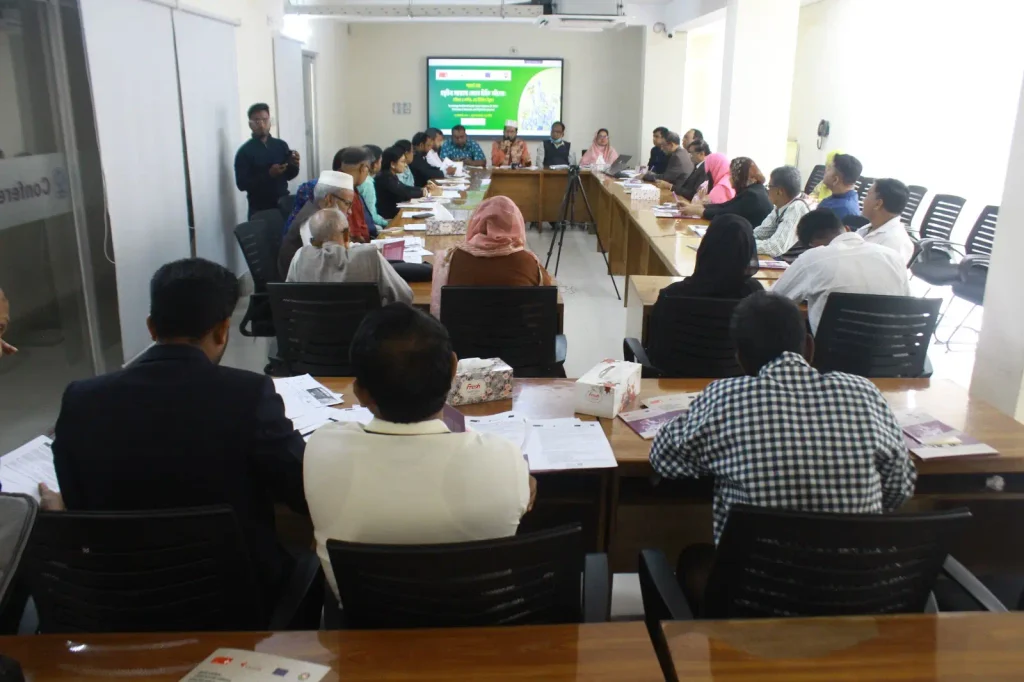
Digital technologies have created new opportunities for communication, education, economic participation, and social engagement. However, the rapid expansion of digital platforms has also introduced new forms of violence, including online harassment, cyberstalking, doxxing, identity misuse, image-based abuse, and other forms of Technology-Facilitated Gender-Based Violence (TFGBV).
Women and girls are disproportionately affected by these emerging threats. Technology-enabled violence often extends beyond the digital environment, creating serious social, psychological, economic, and legal consequences for survivors and their families. Addressing this growing challenge requires stronger legal awareness, accessible support services, effective referral mechanisms, and coordinated action among government institutions, legal aid providers, civil society organizations, media, technology stakeholders, and communities.
According to data presented during the consultation, TFGBV has become a significant global and national concern. The United Nations Population Fund (UNFPA) has highlighted the widespread impact of technology-facilitated violence against women, while Bangladesh continues to face increasing challenges related to online harassment, digital abuse, and misuse of technology.
Against this backdrop, the Bangladesh NGOs Network for Radio and Communication (BNNRC), in collaboration with SETU, organized a Legal Consultation Meeting on Technology-Facilitated Gender-Based Violence (TFGBV) in Kushtia.
The consultation brought together representatives from diverse sectors, including legal aid lawyers, panel lawyers, members of the District Committee for the Prevention of Violence Against Women and Children, human rights coalition members, representatives of the Bar Association, Internet Service Providers Association, local media professionals, human rights activists, women-led NGOs, cultural organizations, academics, and youth representatives.
The consultation was organized under BNNRC’s project titled “Strengthening Resilience Against Technology-Facilitated Gender-Based Violence (TFGBV) and Promoting Digital Development,” implemented under the Nagorikata: Civic Engagement Fund (CEF) Programme, with technical support from GFA Consulting Group and funding support from Switzerland, Global Affairs Canada, and the European Union.
The primary objective of the consultation was to integrate TFGBV-related concerns into district-level legal aid and violence prevention mechanisms. The discussion focused on strengthening collaboration between legal aid service providers, government institutions, civil society organizations, and community stakeholders to ensure timely prevention, mitigation, referral, and access to justice for survivors.
The event was attended as the Chief Guest by Mr. Md. Tariq Hasan, Senior Assistant Judge and District Legal Aid Officer, Kushtia.
In her welcome remarks, Ms. Nazmun Nahar, Coordinator of SETU, highlighted the objectives and expected outcomes of the consultation. She emphasized the importance of strengthening local-level coordination and creating effective mechanisms to address technology-facilitated violence.
During the consultation, Mr. Hiren Pandit, Programme Coordinator of BNNRC, delivered a presentation on the concepts, forms, impacts, and prevention strategies related to TFGBV and digital development. He discussed global and national trends, emerging risks, stakeholder responsibilities, and the importance of coordinated community-level action.
Mr. Sanjay Kumar Biswas presented the local context of TFGBV in Kushtia, highlighting challenges and opportunities for strengthening prevention and response mechanisms at the district level.
Fourteen designated speakers participated in the discussion, followed by an open-floor session where participants shared practical experiences, challenges, and recommendations. Participants committed to conducting awareness initiatives and strengthening community engagement on TFGBV prevention, mitigation, and response.
The consultation highlighted the importance of involving new and emerging stakeholders, including Internet Service Providers (ISPs), cable network operators, and mobile financial service providers such as bKash and Rocket, in awareness-building and preventive initiatives. Participants noted that technology platforms and service providers have an important role in reducing digital risks and promoting safer online environments.
Comprehensive discussions focused on the responsibilities of different stakeholders, including government agencies, legal professionals, law enforcement institutions, NGOs, CSOs, media organizations, educational institutions, private-sector actors, and community groups.
Participants emphasized that prevention of TFGBV requires collective responsibility. They committed to sharing knowledge from the consultation within their families, workplaces, professional networks, and communities to expand awareness and encourage responsible technology use.
The distinguished guests highlighted the importance of increasing public awareness about available support mechanisms, including the Police Cyber Support for Women (PCSW) Helpline: 01320-000888 and email support service cybersupport.women@police.gov.bd.
Speakers also raised concerns about the growing exposure of adolescents and young people to harmful online environments. They emphasized the need for collaboration among families, schools, NGOs, and community organizations to promote safe and responsible digital practices. Participants noted that early access to smartphones without adequate guidance can increase vulnerability to cyber risks.
Addressing the consultation, Chief Guest Mr. Md. Tariq Hasan stated that although mobile phone and internet use have expanded significantly in Bangladesh, many users still lack sufficient digital literacy. This gap contributes to risks such as cyber fraud, cyberbullying, cyberstalking, and other forms of technology-facilitated violence.
He highlighted that victims of hacking, online harassment, threats, or abusive digital behaviour can seek legal assistance through police stations, courts, and legal aid offices. He noted that if survivors face difficulties accessing justice, the Legal Aid Office can provide support through its panel lawyers.
Mr. Hasan emphasized that technology is essential for development, but responsible, ethical, and informed use must be ensured. He also stressed the importance of combating misinformation and disinformation while promoting accurate information flows to protect truth, justice, and social trust.
At the conclusion of the consultation, participants called for continued collaboration among families, educational institutions, legal service providers, government authorities, NGOs, media, and technology stakeholders to:
- strengthen district-level mechanisms for TFGBV prevention and response;
- improve awareness of legal rights and available support services;
- establish effective referral systems for survivors;
- promote digital literacy among children, youth, and communities;
- encourage responsible and ethical use of technology.
The consultation concluded with a shared commitment that building a safer digital society requires collective responsibility, stronger legal awareness, and coordinated action to ensure that technological progress contributes to inclusion, dignity, and human rights protection for all.
Empowering local broadcasters with knowledge, skills, and strategies to use radio and social media as tools for awareness, prevention, and community resilience against technology-enabled violence
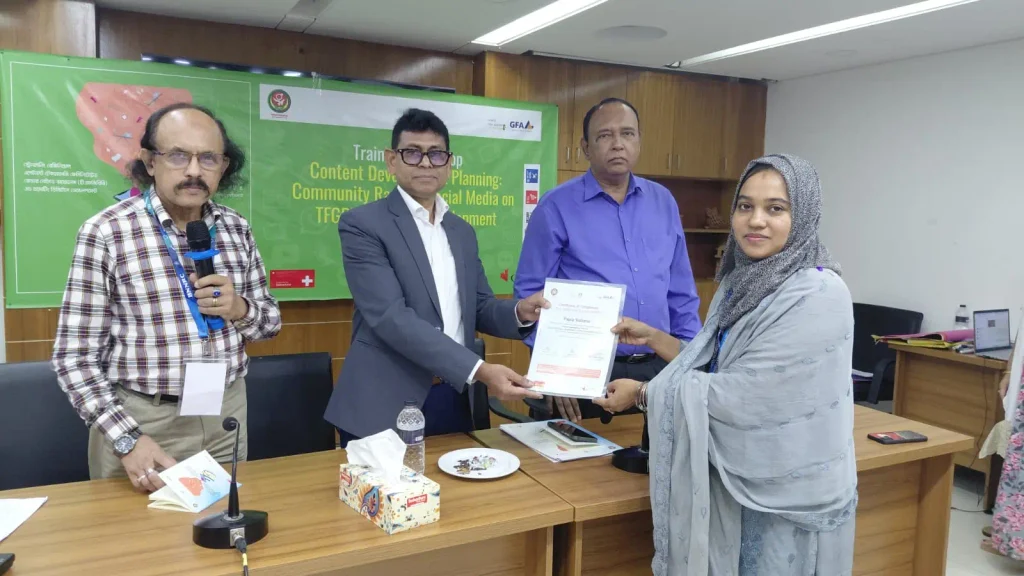
Digital transformation is reshaping how people communicate, access information, and participate in society. However, alongside these opportunities, technology has also created new forms of violence and exclusion, particularly affecting women, girls, and marginalized communities. Technology-Facilitated Gender-Based Violence (TFGBV) has become a growing concern, requiring stronger awareness, locally relevant information, and community-driven solutions.
In rural and underserved communities, where access to reliable information and support services remains uneven, community radio can play a critical role in bridging information gaps, promoting digital literacy, and connecting communities with available protection and support mechanisms.
Recognising the transformative role of community media, the Bangladesh NGOs Network for Radio and Communication (BNNRC) organised a two-day Content Development Planning Workshop on “Community Radio and Social Media on Technology-Facilitated Gender-Based Violence (TFGBV) and Digital Development” from 10–11 September 2025 at the YWCA Conference Room, Mohammadpur, Dhaka.
The workshop brought together 18 senior programme producers and station managers from nine community radio stations across Bangladesh to strengthen their capacity in developing audience-centred radio programmes and social media content addressing TFGBV prevention, digital safety, and inclusive digital development.
The participating community radio stations included:
Community Radio Nalta 99.2 FM, Kaliganj, Satkhira
Community Radio Lokobetar 99.2 FM, Barguna
Community Radio Pollikontho 99.2 FM, Moulvibazar
Community Radio Sagor Giri 99.2 FM, Sitakunda, Chattogram
Community Radio Chilmari 99.2 FM, Chilmari, Kurigram
Community Radio Jhenuk 99.2 FM, Jhenaidah
Community Radio Meghna 99.0 FM, Charfassion, Bhola
Community Radio Sagardwip 99.2 FM, Hatiya, Noakhali
Community Radio Sarabela 98.8 FM, Gaibandha
The workshop was organised under the project “Strengthening Resilience Against Technology-Facilitated Gender-Based Violence (TFGBV) & Promoting Digital Development.” The initiative is part of the Nagorikata: Civic Engagement Fund (CEF) Programme, implemented with technical support from GFA Consulting Group and funded by the Embassy of Switzerland and Global Affairs Canada (GAC).
Building Community Media Capacity for Digital Safety and Inclusion
The workshop began with a welcome address by AHM Bazlur Rahman, Chief Executive Officer of BNNRC, who highlighted the objectives, expected outcomes, and strategic importance of engaging community radio in addressing TFGBV and promoting responsible digital development.
The session was moderated by Rehan Uddin Ahmed Raju, Development Consultant.
During the opening session, Katharina König, Deputy Team Leader of CEF, presented an overview of the Nagorikata: Civic Engagement Fund (CEF) Programme, including its objectives, key outcomes, stakeholders, governance structure, and targeted beneficiaries.
She highlighted three core principles of CEF:
Collaborative partnership and co-creation as a shared practice;
Leaving No One Behind (LNOB) to the extent possible;
Being versatile and adapting to changing contexts.
Strengthening Knowledge, Content Innovation, and Community Engagement
The workshop featured interactive sessions on:
Understanding Technology-Facilitated Gender-Based Violence;
Digital development and its relationship with TFGBV;
Laws, regulations, and responsible social media use;
Gender concepts and their connection with development;
Community radio programme ideas and formats;
Social media integration planning;
Law enforcement mechanisms and support systems related to TFGBV.
Through these sessions, participants explored how community radio and digital platforms can be used not only for awareness raising but also for encouraging dialogue, reducing stigma, promoting safe online behaviour, and connecting communities with relevant services.
The expert facilitators included:
Mr. Abu Sayed Sumon, National Programme Officer – Gender & Human Rights, UNFPA;
Mr. AHM Bazlur Rahman, CEO, BNNRC;
Ms. Sharmin Khan, Legal Consultant, International Centre for Not-for-Profit Law (ICNL);
Mr. Imam Hossain, Steps Towards Development;
Mr. Shakil Ahmed, Head of Programme, Radio Shadhin Pvt. Ltd. (92.4 FM);
Ms. Mobashera Habib Khan, Police Super, Cyber Police Centre, CID, Bangladesh Police;
Mr. Amin Al Rasheed, Radio Expert;
Ms. Shahnaz Sharmeen, Radio Expert.
Impact: Community Radio as a Catalyst for Safer Digital Communities
The workshop strengthened the capacity of community broadcasters to design creative, inclusive, and audience-focused content on TFGBV prevention and digital development.
By combining traditional community media with social media platforms, participants developed strategies to:
create locally relevant awareness programmes;
promote digital literacy and responsible online behaviour;
strengthen community dialogue on gender equality and digital safety;
connect vulnerable communities with service providers and support mechanisms;
engage local stakeholders in preventing TFGBV.
The workshop also reinforced the importance of community radio as a trusted platform for reaching rural populations, including women, youth, and marginalized groups who may face barriers in accessing digital information and support services.
Call for Continued Action: Expanding Community-Led Digital Safety Initiatives
In the closing session, Md. Anwar Hossain, Director (Project-1), Joint Secretary, NGO Affairs Bureau, Chief Advisor’s Office, attended as the Chief Guest.
He emphasized that community radio, due to its strong presence in rural areas and connection with marginalized communities, has significant potential to raise awareness through radio programmes and social media content.
He encouraged community broadcasters to strengthen engagement with local administrations and relevant stakeholders to ensure greater impact, coordination, and sustainability of TFGBV prevention initiatives.
At the conclusion of the two-day workshop, participants committed to applying their newly acquired knowledge and skills to develop community-focused radio and social media campaigns addressing TFGBV and digital development.
BNNRC believes that empowering community media actors, strengthening digital literacy, and fostering collaboration among government institutions, civil society, law enforcement agencies, and local communities are essential steps toward building a safer, more inclusive, and resilient Digital Bangladesh.
Through the collective power of community voices and responsible digital engagement, community radio can become a stronger force for preventing technology-facilitated violence and advancing social development.