
UN First Global Dialogue on AI Governance Opens with a Call for Safe, Inclusive and Human-Centred Artificial Intelligence
Governments, technology leaders, researchers, civil society and Global South voices gather in Geneva to shape a shared future for AI based on safety, accountability, human oversight and equitable access
Artificial intelligence is rapidly transforming societies, economies, and the way people access information, services, and opportunities. From healthcare and education to scientific research, agriculture, disaster preparedness, and public services, AI has the potential to accelerate progress and support sustainable development.
However, the speed and scale of AI advancement have also created urgent questions about safety, accountability, fairness, human rights, and unequal access. Without inclusive governance, the benefits of AI risk becoming concentrated among a limited number of countries, institutions, and communities, while many others remain excluded from shaping the technologies that will influence their future.
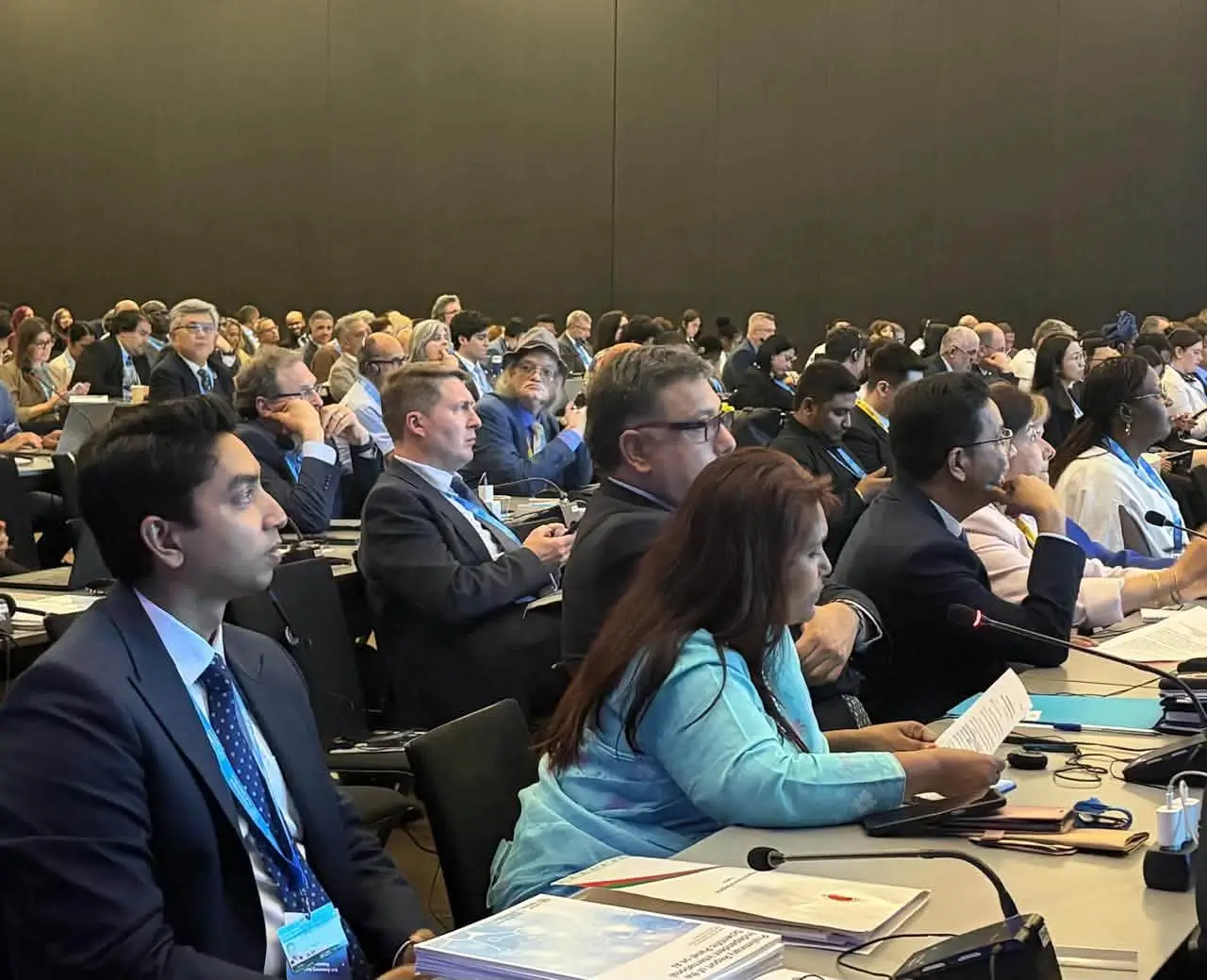
Against this backdrop, the United Nations today opened the first Global Dialogue on AI Governance in Geneva, bringing together governments, technology companies, academia, civil society, and the technical community to establish a more inclusive and cooperative approach to artificial intelligence governance.
The Global Dialogue aims to ensure that AI governance reflects the priorities and experiences of all nations, not only those with advanced technological capabilities, and that the benefits of AI contribute to the well-being of people everywhere.
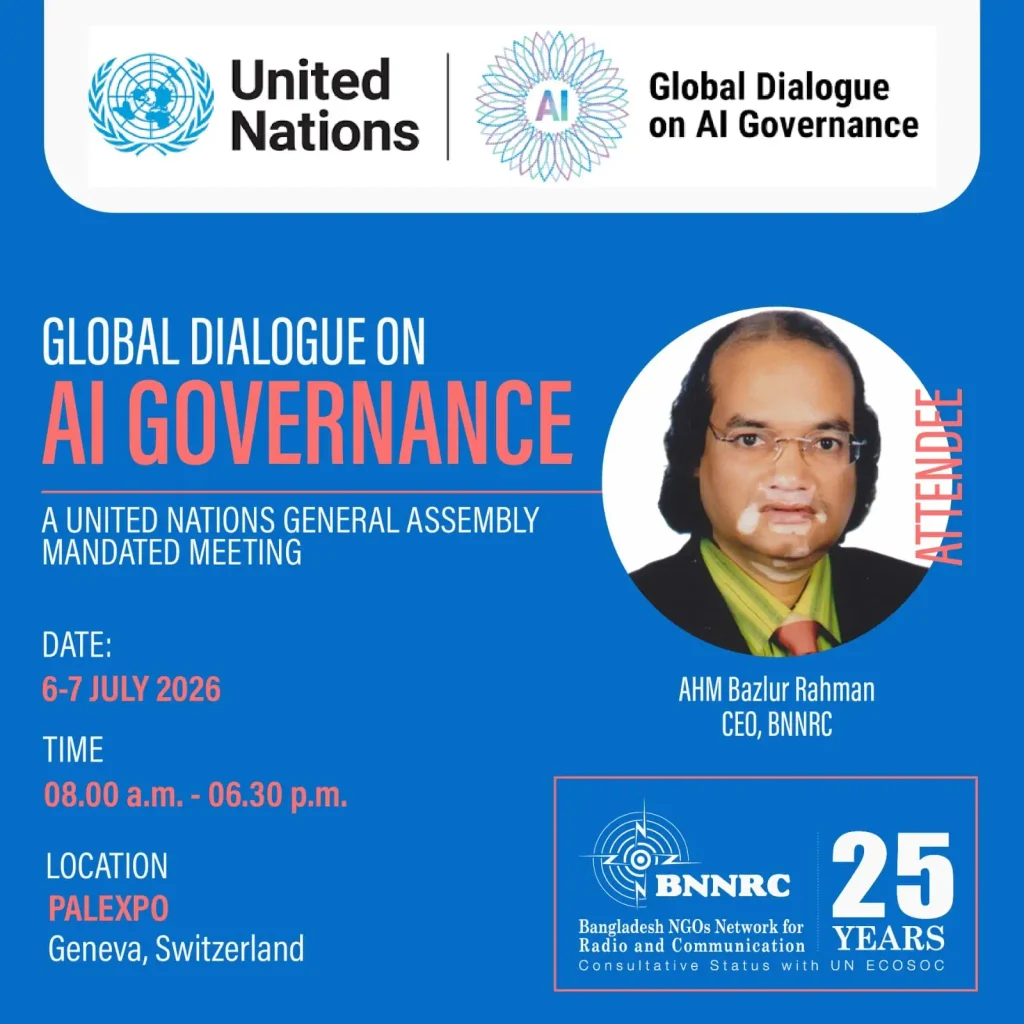
AHM Bazlur Rahman, Specialist in Digital Democracy, Information Integrity & Media Development, Chief Executive Officer of Bangladesh NGOs Network for Radio and Communication (BNNRC), and Ambassador for Responsible Artificial Intelligence (AI) & Antimicrobial Resistance (AMR) for Bangladesh, participated as a speaker at the United Nations Global Dialogue on AI Governance.
Why Global AI Governance Matters Now
AI is already being shaped through national regulations, technical standards, procurement policies, and international agreements. However, these approaches remain uneven, with many governance frameworks historically influenced by countries with advanced AI ecosystems.
The Global Dialogue represents a significant step toward addressing this imbalance by creating a universal platform where every country has an opportunity to contribute to discussions on AI governance.
For developing countries and the Global South, meaningful participation is essential to ensure that AI systems respond to diverse social, cultural, linguistic, economic, and development contexts.
The Dialogue seeks to move beyond discussions about technology alone and focus on a broader question:
How can humanity ensure that artificial intelligence develops in a way that protects human dignity, advances equality, and benefits all people?
From AI Advancement to Responsible AI Action
Opening the Dialogue, UN Secretary-General António Guterres emphasised the urgency of collective action:
“AI is advancing at runaway speed. The question is whether we will govern it together – or let it govern us.”
He highlighted that the Global Dialogue provides every country with a seat at the table and called for global participation to be transformed into meaningful action to make AI safer, fairer, more accessible, and more ethical.
Annalena Baerbock, President of the UN General Assembly, stressed that responsible AI governance is not only about regulating technology but about defining a shared vision where innovation is aligned with human dignity, equity, and sustainable development.
She noted that, when governed responsibly and collectively, AI can contribute significantly to achieving the Sustainable Development Goals by supporting progress in areas such as healthcare, education, research, agriculture, and disaster preparedness.
Key Areas of Discussion: Building Safe and Inclusive AI Ecosystems
The Global Dialogue addresses four major thematic areas developed through an open global consultation process involving governments, academia, private sector actors, technical experts, and civil society organisations.
1. AI Opportunities and Implications
Participants are examining the social, economic, ethical, cultural, linguistic, and technical dimensions of AI, including how different societies can benefit from AI innovation while addressing emerging risks.
2. Bridging AI Divides
The Dialogue focuses on reducing inequalities in AI access by strengthening:
capacity-building initiatives;
digital foundations;
access to AI applications;
high-performance computing capabilities;
open-source software, open data, and open AI models.
The discussion recognises that equitable AI development requires investment in skills, infrastructure, and institutional capacity, particularly in developing countries.
3. Safe, Secure and Trustworthy AI
Participants are exploring approaches to strengthen:
safe and secure AI systems;
interoperability between governance frameworks;
compatibility of international approaches;
responsible innovation practices.
The objective is to promote AI systems that are reliable, transparent, and aligned with public interest.
4. Human Rights, Transparency, Accountability and Human Oversight
The Dialogue places strong emphasis on ensuring that AI development respects and protects human rights.
Key issues include:
transparency in AI systems;
accountability of AI developers and deployers;
meaningful human oversight;
compliance with international law.
Bangladesh Perspective: Strengthening Responsible AI for Inclusive Development
The participation of AHM Bazlur Rahman from BNNRC reflects Bangladesh’s growing engagement in global discussions on responsible AI, digital democracy, information integrity, and inclusive technology development.
As AI increasingly influences communication, governance, education, media, and development processes, perspectives from countries like Bangladesh are essential to ensure that global AI governance reflects diverse realities, including the needs of developing economies, marginalised communities, and emerging digital societies.
The discussion highlights the importance of ensuring that AI development is not limited to technological advancement alone but also considers:
accessibility;
social inclusion;
ethical responsibility;
information integrity;
human-centred innovation.
Impact: Towards a Shared Global Framework for AI Governance
The first Global Dialogue on AI Governance creates a foundation for stronger international cooperation by bringing together different sectors and regions around a common goal: ensuring that AI serves humanity.
The Dialogue provides an opportunity to:
strengthen international cooperation on AI governance;
share diverse experiences and perspectives;
identify practical solutions for safe and inclusive AI;
promote responsible innovation;
support equitable participation in the AI ecosystem.
Call for Continued Action: Making AI a Global Public Good
Participants emphasised that the future of artificial intelligence must be shaped through cooperation, transparency, and shared responsibility.
Building trustworthy AI requires continued collaboration among:
governments;
technology companies;
researchers;
civil society;
international organisations;
communities.
The Global Dialogue represents an important step toward transforming AI into a global public good that supports sustainable development while protecting human rights and ensuring meaningful human oversight.
The next Global Dialogue on AI Governance will take place in New York on 3–4 May 2027, alongside the 11th Multi-stakeholder Forum on Science, Technology and Innovation for the Sustainable Development Goals (STI Forum).
As AI continues to evolve, the central challenge remains clear: ensuring that technological progress advances together with human dignity, inclusion, safety, and shared prosperity.