
Capacity Building Workshop Empowers Media Professionals in Barishal to Combat Technology-Facilitated Gender-Based Violence
Strengthening responsible journalism, digital awareness, and community engagement to prevent online violence and promote a safer, inclusive digital society
Digital technologies have transformed the way people communicate, access information, and participate in social and economic life. However, the rapid expansion of digital platforms has also created new forms of harm, including Technology-Facilitated Gender-Based Violence (TFGBV), which disproportionately affects women and girls through online harassment, abuse, privacy violations, cyber threats, and technology-enabled exploitation.
While technology offers immense opportunities for empowerment, a lack of digital awareness, responsible online behaviour, and effective support mechanisms can increase vulnerabilities. Addressing TFGBV requires not only legal and institutional responses but also informed communities, ethical journalism, and strong public awareness initiatives.
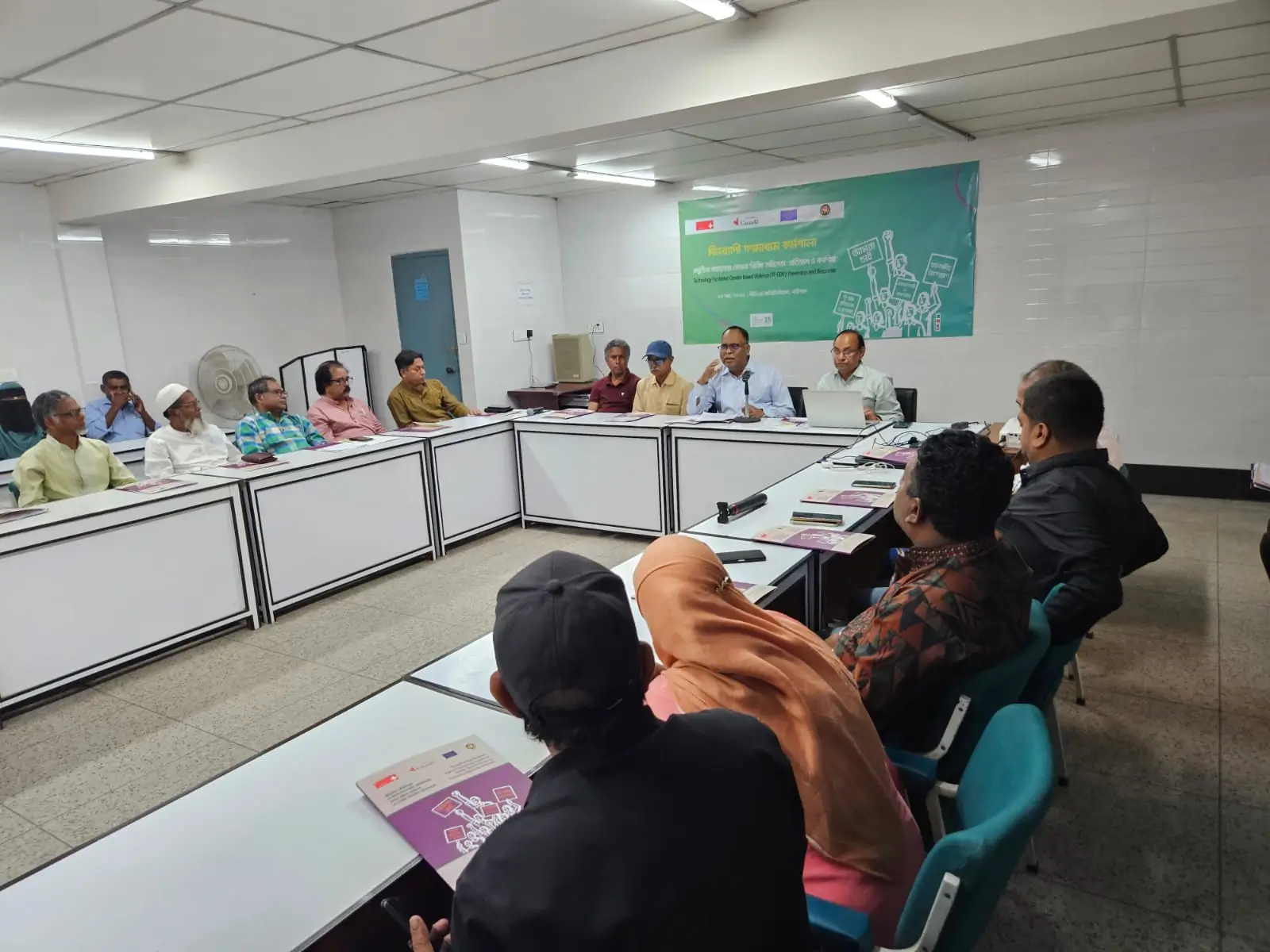
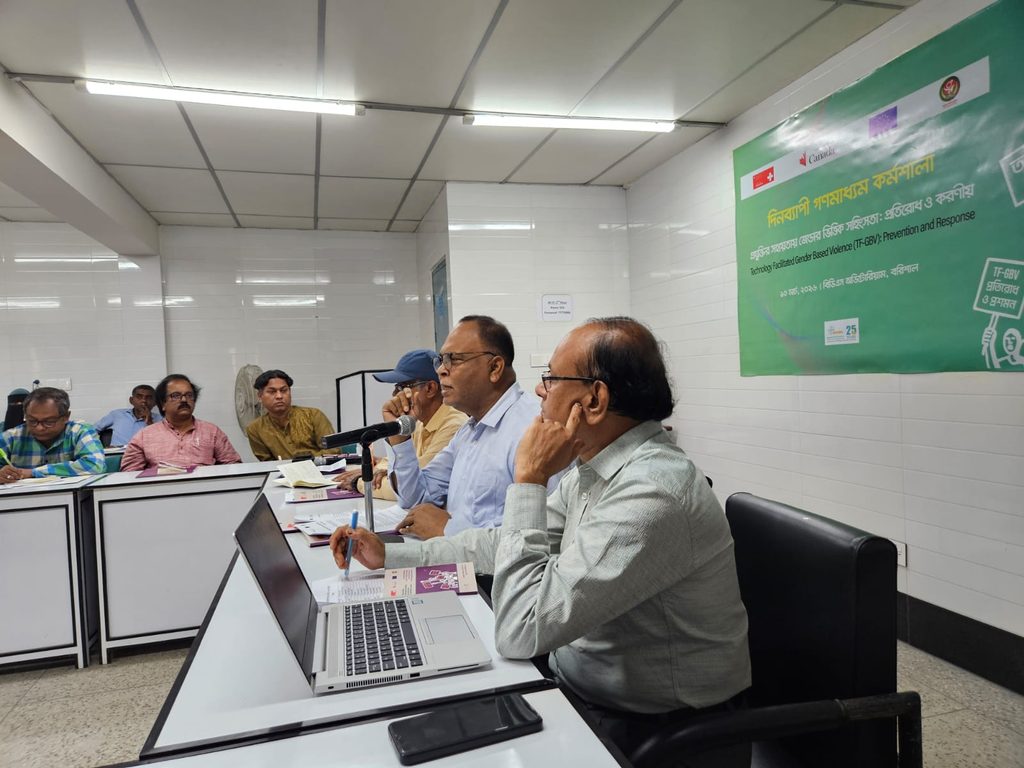
Recognising the critical role of media in shaping public understanding and promoting social change, the Bangladesh NGOs Network for Radio and Communication (BNNRC) organised a day-long Capacity Building Workshop for Local Media Professionals on “Technology-Facilitated Gender-Based Violence (TFGBV): Prevention and Response” at the BDS Auditorium, Sadar Road, Barishal.
The workshop brought together journalists and media professionals from local and national print, electronic, and online media outlets to strengthen their understanding of TFGBV, improve responsible reporting practices, and enhance their role in promoting digital safety and gender-responsive communication.
The initiative was organised under the project “Strengthening Resilience Against Technology-Facilitated Gender-Based Violence (TFGBV) and Promoting Digital Development.” The project is part of the Nagorikata: Civic Engagement Fund (CEF) Programme, funded by the Governments of Switzerland, Global Affairs Canada, and the European Union, with technical support from GFA Consulting Group.
Strengthening Media Capacity for Prevention and Awareness
The workshop was chaired by Mr. AHM Shamsul Islam Dipu, Mission Head of Speed Trust, Barishal, while Mr. Subhankar Chakraborty, Executive Director of MAP Barishal, facilitated the session and presented the keynote paper.
The event was attended as the Chief Guest by Mr. Md. Ahsan Habib, Additional Divisional Commissioner (General), Barishal.
In his welcome remarks, Mr. AHM Shamsul Islam Dipu highlighted the objectives and expected outcomes of the workshop. He emphasised that journalists have a vital responsibility in increasing public understanding of TFGBV, promoting ethical reporting, reducing misinformation, and supporting prevention efforts through evidence-based journalism.
He noted that the workshop aimed to enhance media professionals’ knowledge of the nature, impact, and prevention strategies of technology-facilitated violence and encourage responsible media engagement on digital rights and safety issues.
Media as a Catalyst for Digital Safety and Social Change
During the discussion, speakers highlighted that the rapid growth of digital technologies has been accompanied by increasing risks of online violence, particularly against women and girls.
They stressed that analytical journalism, accurate information dissemination, and awareness-focused reporting can play a significant role in challenging harmful social attitudes, reducing stigma, and connecting affected individuals with available support services.
The speakers also highlighted existing government support mechanisms, including the Police Cyber Support for Women Helpline (01320-000888) and email support service cybersupport.women@police.gov.bd, and encouraged media professionals to promote awareness about these services among communities.
Participants emphasised that preventing TFGBV requires collective efforts involving media, government institutions, civil society organisations, law enforcement agencies, technology stakeholders, and communities.
Expert Discussion on Challenges, Solutions, and Local Realities
The workshop featured discussions with distinguished speakers and media professionals, including SM Amzad Hossain, Azad Alauddin, Kamal Sengupta, Suman Chowdhury, Saidur Rahman Pantha, Khalid Saifullah, Zia Shahin, Prachurya Rana, Khan Rafiq, Marzina Begum, and Md. Humayun Kabir.
The open discussion session included active participation from Rajib Das, Murad Ahmed, Bidhan Sarkar, Jasim Ahmed, and Mehedi Hasan, among others.
During the “Deep Dive” session, participants discussed district-level challenges related to TFGBV, emerging digital risks, reporting challenges, and possible solutions. The session was moderated by Mr. Pankaj Roy Chowdhury.
Impact: Building Responsible Media Networks for Safer Digital Communities
The workshop strengthened the capacity of participating journalists and media professionals to:
understand different forms and impacts of TFGBV;
report on digital violence in a sensitive and responsible manner;
promote digital literacy and safe online practices;
increase public awareness about prevention and support mechanisms;
strengthen collaboration with relevant institutions and stakeholders.
Participants expressed their commitment to using their professional platforms to promote safer digital environments and contribute to preventing technology-facilitated violence at community levels.
Call for Continued Action: Advancing Responsible Journalism for Digital Safety
In his remarks, Chief Guest Mr. Md. Ahsan Habib, Additional Divisional Commissioner (General), Barishal, stated:
“Journalists are the mirror of society. As they work closely with communities, they can play a significant role in preventing digital gender-based violence. Women constitute half of our human resources; therefore, it is our collective responsibility to empower them digitally and enhance their awareness. Doing so will accelerate the overall development of the country.”
The organisers emphasised that continued investment in media capacity building, digital literacy, and multi-stakeholder collaboration is essential to address TFGBV effectively.
BNNRC believes that empowered and responsible media professionals can become powerful advocates for digital safety, gender equality, and human rights. Through stronger awareness, ethical reporting, and coordinated action, communities can work together to build a safer, more inclusive, and respectful digital Bangladesh.