
Local Content Creators and YouTubers Mobilized to Promote Safer Digital Spaces and Prevent TFGBV in Patuakhali
As online platforms increasingly influence public attitudes and behaviour, digital creators are called upon to produce responsible, inclusive, and awareness-driven content to prevent technology-facilitated gender-based violence
Digital platforms have become powerful spaces for communication, creativity, entrepreneurship, and social change. However, the rapid expansion of online platforms has also created new risks, including harassment, misinformation, abuse, and Technology-Facilitated Gender-Based Violence (TFGBV), which disproportionately affects women, girls, and vulnerable communities.
Technology-enabled violence does not remain confined to the online world. It can have serious consequences for individuals’ dignity, mental well-being, personal security, and social participation. Addressing this challenge requires not only legal and institutional responses but also responsible digital practices, public awareness, and active engagement from influential online communities.
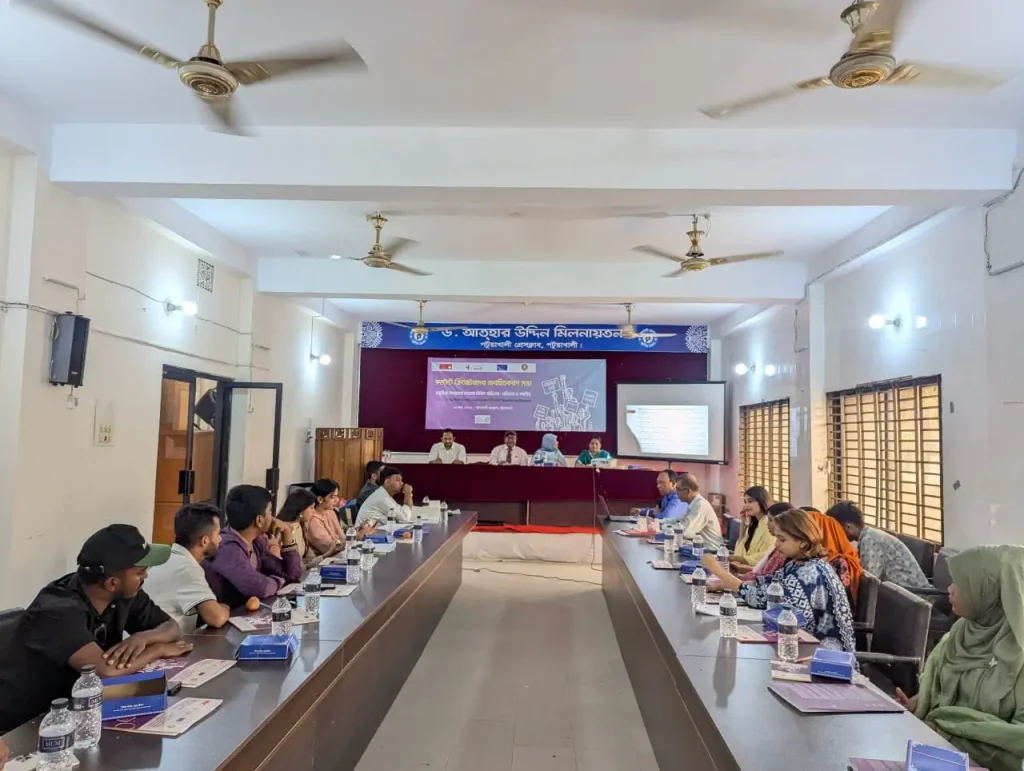
Recognizing the growing role of digital creators in shaping online culture, the Bangladesh NGOs Network for Radio and Communication (BNNRC) organized an orientation titled “The Role of Local Content Creators and YouTubers in Preventing and Mitigating Technology-Facilitated Gender-Based Violence (TFGBV) and Promoting Positive Digital Movements” at the Patuakhali Press Club.
The orientation brought together local YouTubers, content creators, and online entrepreneurs from the Patuakhali region to enhance their understanding of TFGBV, responsible content creation, digital ethics, and the role of online platforms in promoting a safer and more inclusive digital environment.
The orientation was organized under BNNRC’s project titled “Strengthening Resilience Against Technology-Facilitated Gender-Based Violence (TFGBV) and Promoting Digital Development.” The project is implemented under the Nagorikata: Civic Engagement Fund (CEF) Programme, funded by Switzerland, Global Affairs Canada, and the European Union, with technical assistance from GFA Consulting Group.
The event was chaired by Ms. Mahfuza Islam and moderated by Senior Journalist Firoz Ahmed, who presented the local context of TFGBV in Patuakhali, including its different forms, impacts, and challenges.
Mr. Mohammad Tarek Howlader, Additional Deputy Commissioner (ICT & Education), Patuakhali, attended the event as the Chief Guest.
During the orientation, participants discussed strategies for developing safe, gender-sensitive, and inclusive digital content. The session focused on ethical online behaviour, responsible storytelling, community standards of platforms such as YouTube and Facebook, and ways content creators can use their platforms to promote awareness and positive social change.
The discussion highlighted the growing scale of technology-facilitated violence. Speakers referred to data presented during the session indicating that TFGBV has become a significant concern in Bangladesh, with women and girls experiencing various forms of online abuse, including harassment, threats, privacy violations, and image-based violence.
Speakers emphasized that content creators and YouTubers have a unique opportunity to challenge harmful narratives, promote digital literacy, encourage respectful online behaviour, and connect communities with available support services.
The orientation included contributions from three panel speakers and 18 designated speakers, followed by an open discussion where participants shared their experiences, challenges, and recommendations. Participants committed to creating awareness-oriented content on their respective platforms to prevent and respond to TFGBV.
The session also highlighted available support mechanisms, including the Police Cyber Support for Women (PCSW) Helpline: 01320-000888 and email service cybersupport.women@police.gov.bd, encouraging creators to disseminate information about these services among their audiences.
In his remarks, Chief Guest Mr. Mohammad Tarek Howlader, Additional Deputy Commissioner (ICT & Education), Patuakhali, emphasized that addressing TFGBV requires collective action involving families, educational institutions, communities, administration, and digital platform users.
He highlighted the changing nature and complexity of technology-facilitated violence and stressed the importance of continuous awareness initiatives in schools, colleges, universities, and communities. He called upon YouTubers and content creators to become responsible digital ambassadors by producing positive, informative, and socially responsible content.
He further encouraged creators to avoid harmful or misleading content and focus on materials that contribute to public awareness and social development. He noted that many people become victims of cyber risks due to insufficient digital awareness, including unsafe practices such as clicking suspicious links or engaging with harmful online content.
The Chief Guest urged content creators to use respectful language, continuously improve their digital knowledge, and contribute positively to society through their online platforms.
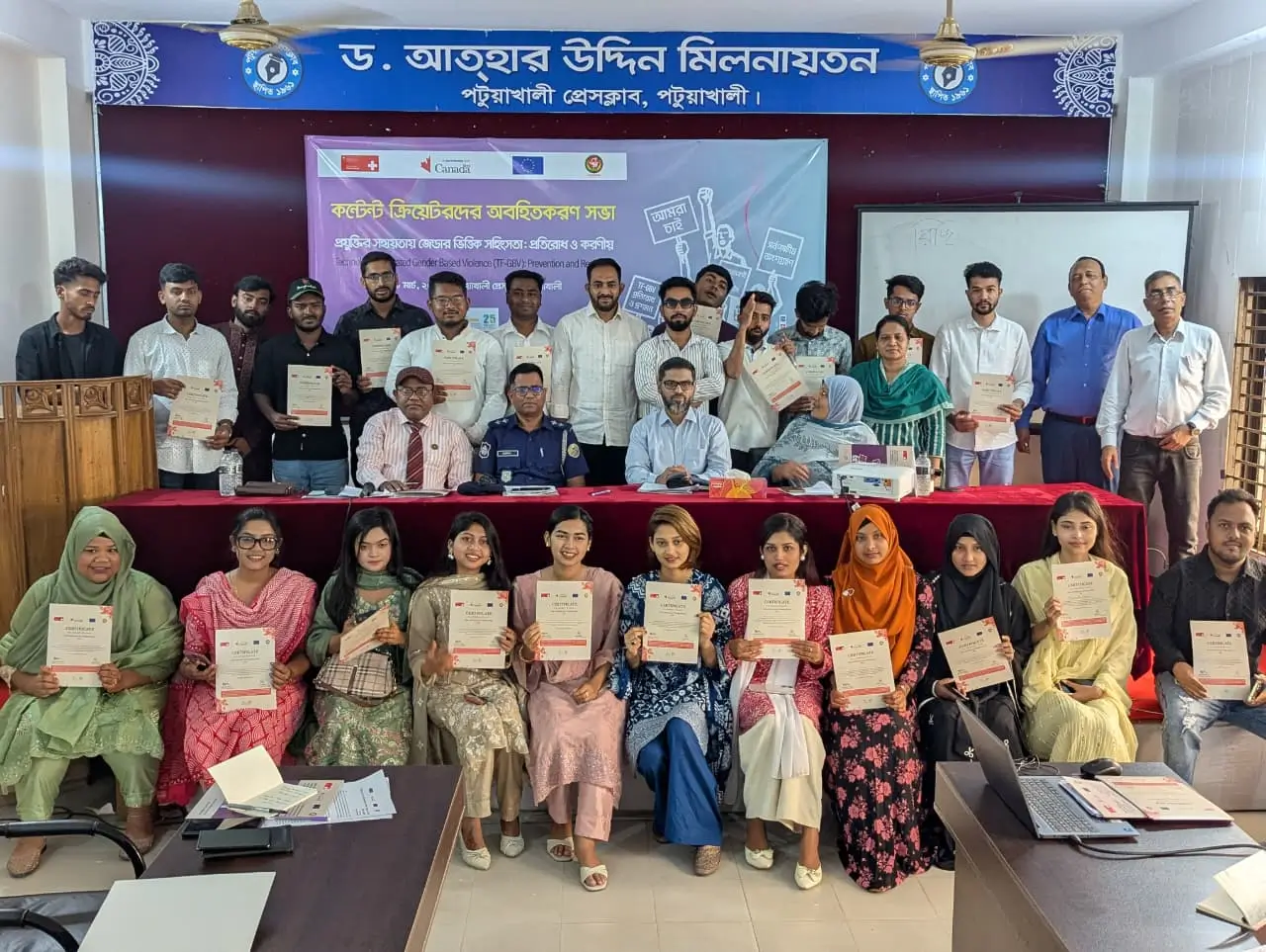
At the conclusion of the orientation, participating content creators received certificates and expressed their commitment to using their digital platforms to:
raise awareness about TFGBV prevention and response;
promote responsible and ethical online behaviour;
create positive and inclusive digital content;
support safer online environments for women and girls;
contribute to digital development through meaningful engagement.
The orientation concluded with a shared commitment that local content creators and YouTubers can become powerful agents of change by transforming digital platforms into spaces for awareness, inclusion, respect, and social progress.