
Pirojpur Content Creators Mobilised to Prevent Technology-Facilitated Gender-Based Violence and Promote Responsible Digital Development
Digital influencers and online creators equipped with knowledge, ethical guidelines, and advocacy tools to use their platforms for safer, inclusive, and more responsible digital spaces
Digital platforms have transformed the way people create, share, and consume information. Content creators, influencers, and online communities now play an increasingly important role in shaping public conversations and social behaviours. However, the rapid growth of digital spaces has also created new risks, including Technology-Facilitated Gender-Based Violence (TFGBV), online harassment, misinformation, privacy violations, and harmful digital practices.
Women and girls, particularly those active in online spaces, remain disproportionately vulnerable to technology-enabled violence. Addressing these challenges requires not only stronger laws and institutional responses but also responsible digital participation, ethical content creation, and greater awareness among online communities.
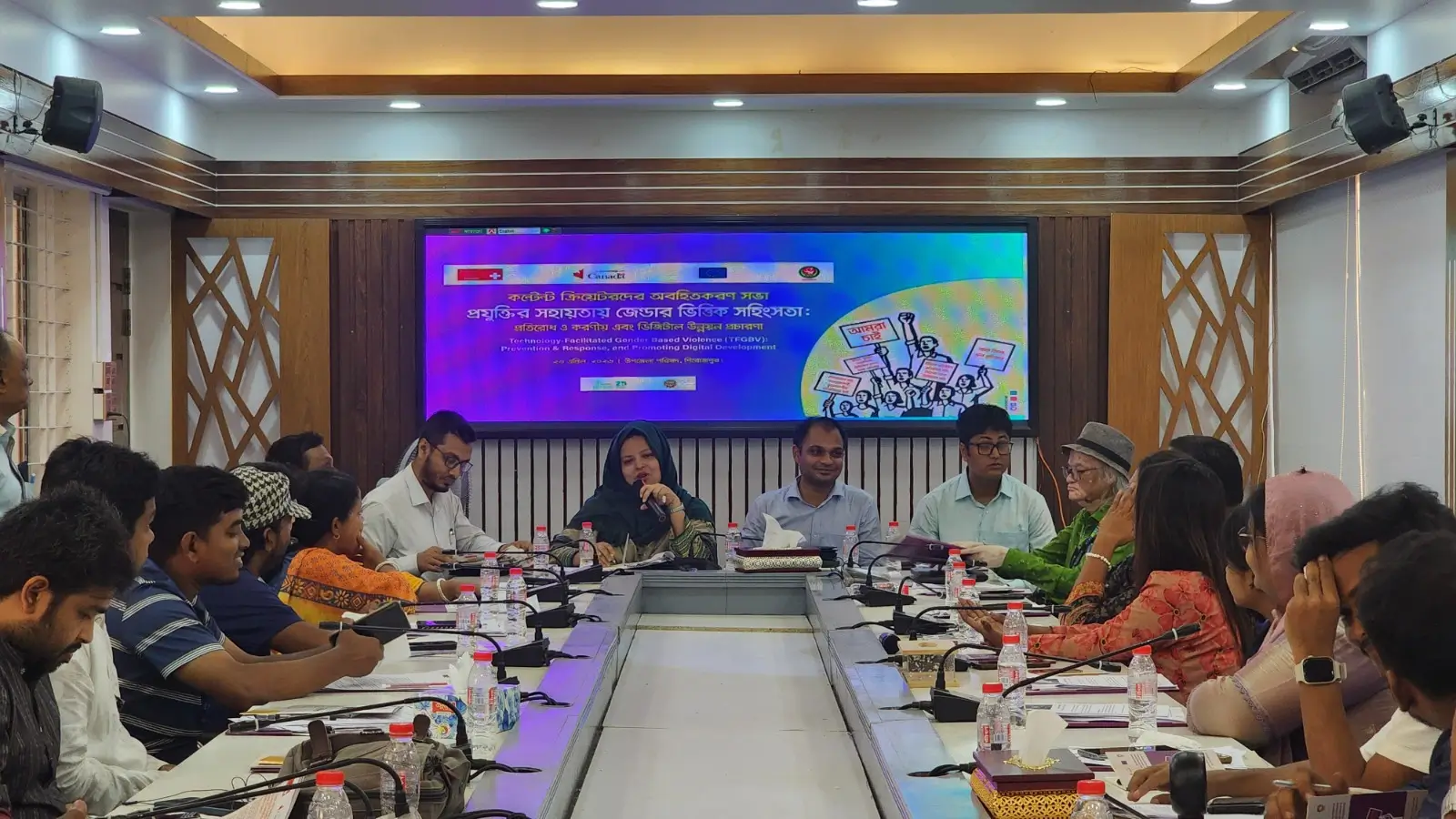
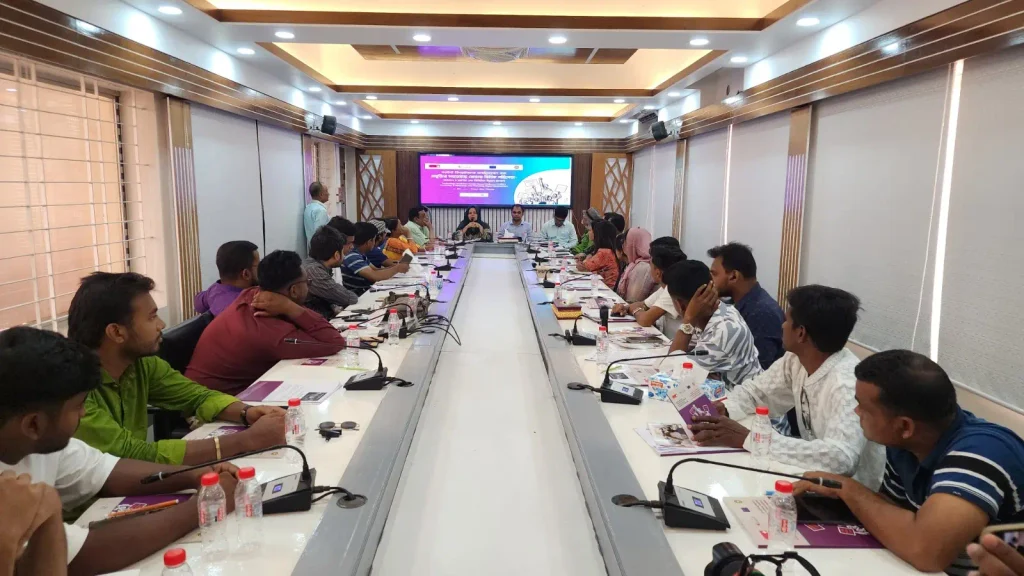
Recognising the growing influence and responsibility of digital content creators, the Bangladesh NGOs Network for Radio and Communication (BNNRC) and Pirojpur Gano Unnayan Samity jointly organised an orientation programme titled “The Role of Local Content Creators in Preventing and Mitigating TFGBV and Promoting Digital Development” on 23 April 2026 in Pirojpur.
The orientation brought together 30 local content creators from Pirojpur, whose combined follower base exceeds 2.6 million, to strengthen their understanding of TFGBV, promote responsible content creation, and encourage them to use their digital platforms for awareness raising and positive social change.
The programme was organised under BNNRC’s project “Strengthening Resilience Against Technology-Facilitated Gender-Based Violence and Promoting Digital Development.” The initiative is part of the NAGORIKATA: Civic Engagement Fund (CEF) Programme, funded by Switzerland, Global Affairs Canada, and the European Union, with technical support from GFA Consulting Group.
The event was attended as the Chief Guest by Ms. Tanzila Kabir Tropa, Additional Deputy Commissioner and Additional District Magistrate, Pirojpur.
Building Responsible Digital Voices for Safer Online Communities
The objective of the orientation was to enhance content creators’ understanding of:
different forms and impacts of Technology-Facilitated Gender-Based Violence;
prevention and response mechanisms;
ethical standards for digital content creation;
safe and inclusive communication practices;
available support services and pathways to justice.
Participants were encouraged to use their online influence to produce content that promotes dignity, respect, gender equality, digital safety, and responsible technology use.
In his welcome remarks, Ziaul Ahsan, Executive Director of Pirojpur Gano Unnayan Samity, highlighted the growing importance of content creators in shaping public opinion and digital culture.
He noted that the absence of clear guidelines and accountability mechanisms for content creators creates challenges in ensuring responsible digital practices. He expressed hope that existing and emerging cyber-related policies would contribute to developing clearer standards and guidance for digital creators.
Connecting Digital Development with Digital Responsibility
Speaking at the orientation, AHM Bazlur Rahman, Chief Executive Officer of BNNRC, highlighted Bangladesh’s significant progress in digital transformation over the past 25 years since the introduction of the ICT Policy in 2001.
However, he emphasised that digital inclusion remains a challenge, noting that a significant portion of the population still lacks meaningful access to the internet. He stressed that digital development must go beyond connectivity and focus on safe, inclusive, and responsible participation.
He called upon content creators to become partners in promoting digital literacy, combating harmful online practices, and ensuring that technology contributes to social development.
Md. Nurul Islam, Capacity Development and Management Expert of NAGORIKATA: Civic Engagement Fund (CEF), encouraged content creators to develop messages that uphold dignity and respect for all people, regardless of gender, ethnicity, religion, indigenous identity, age, or social background.
Promoting Ethical Content Creation and Information Integrity
The orientation included detailed discussions on:
creating safe, gender-sensitive, and inclusive digital content;
understanding Facebook and YouTube community guidelines;
preventing misinformation and harmful online behaviour;
maintaining information integrity and ethical responsibility.
Speakers highlighted the importance of increasing awareness about government support mechanisms, including the Police Cyber Support for Women service through the helpline 01320-000888 and email support cybersupport.women@police.gov.bd.
Participants discussed the challenges faced by victims of online harassment, including lack of awareness about complaint mechanisms, fear of social stigma, and limited confidence in seeking justice. They stressed the need for stronger awareness campaigns and survivor-friendly support systems.
Recognising the Role of Content Creators in Social Change
Al Amin, Acting Upazila Nirbahi Officer of Pirojpur Sadar, encouraged content creators to integrate awareness messages on cybercrime, financial fraud, and gender-based violence into entertainment and vlog content.
He noted that even small efforts by individual creators can contribute to building a safer and more informed society.
Saifuddin Al Madani, Assistant Director of the District Information Office, highlighted that harmful digital content can affect all sections of society. He cautioned against content that normalises disrespect or humiliation, noting that so-called entertainment content should also reflect social responsibility.
Abul Hasan, District ICT Officer, emphasised the importance of information integrity and responsible content creation. He stated that creators have a responsibility to verify information, maintain accuracy, and consider the ethical impact of their content before publication.
He also expressed commitment to advocating for greater recognition of content creators within local ICT and cybercrime prevention structures. He assured support in facilitating access to Freelancing Cards and recognised successful digital professionals as contributors to Bangladesh’s digital economy.
Impact: Creating a Network of Digital Safety Advocates
The orientation strengthened the capacity of local content creators to:
identify and address risks related to TFGBV;
produce responsible and inclusive digital content;
promote awareness on digital safety and available support services;
encourage positive online behaviour among followers;
contribute to a safer digital environment.
At the conclusion of the programme, participating content creators received certificates and a draft Code of Ethics for Content Creators developed by BNNRC.
Participants committed to using their digital platforms to promote responsible technology use, support TFGBV prevention initiatives, and create awareness-based content for their communities.
Call for Continued Action: Towards a Safer and More Inclusive Digital Bangladesh
In her remarks, Chief Guest Ms. Tanzila Kabir Tropa, Additional Deputy Commissioner and Additional District Magistrate, Pirojpur, emphasised the importance of understanding the challenges faced by women content creators, identifying perpetrators of online harassment, and ensuring appropriate action.
She highlighted that the respect and dignity extended to women within families should also be reflected in wider society and digital spaces.
BNNRC and Pirojpur Gano Unnayan Samity believe that content creators are becoming important actors in shaping digital culture. Their creativity, reach, and influence can contribute significantly to preventing technology-facilitated violence and promoting responsible digital citizenship.
Through continued collaboration among government institutions, civil society, media, technology stakeholders, and online communities, Bangladesh can advance towards a safer, more respectful, and inclusive digital future.