
BNNRC Builds Local Capacity to Combat Technology-Facilitated Gender-Based Violence Through Training of Trainers
As digital spaces expand and new forms of online harm emerge, empowering journalists, civil society actors, and community leaders with knowledge and skills has become essential to creating a safer, inclusive, and rights-based digital society
The rapid growth of digital technologies has transformed the way people communicate, access information, and participate in society. However, this digital transformation has also created new challenges, including Technology-Facilitated Gender-Based Violence (TFGBV), which increasingly affects women, girls, and vulnerable communities through online harassment, abuse, threats, exploitation, and violations of privacy.
Addressing TFGBV requires more than technological solutions alone. It demands informed communities, skilled local actors, stronger awareness mechanisms, effective referral systems, and coordinated action among government institutions, civil society organizations, media professionals, legal practitioners, and human rights defenders.
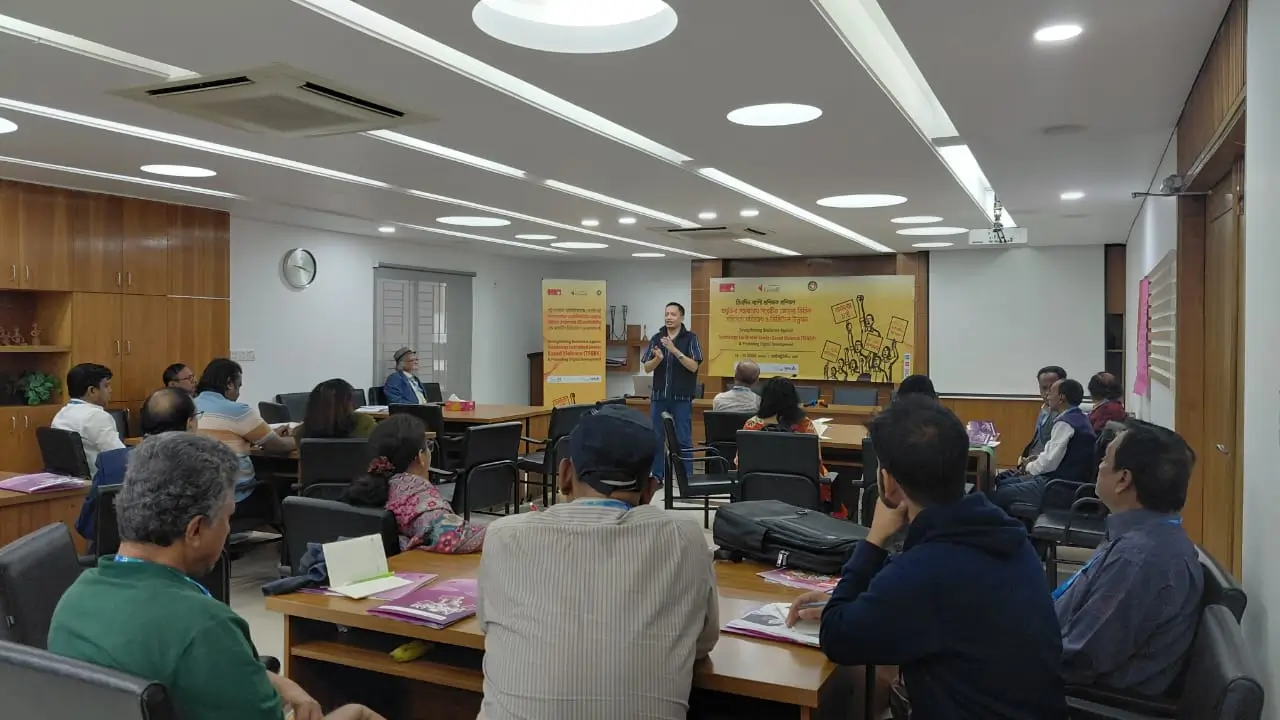
Recognizing this need, the Bangladesh NGOs Network for Radio and Communication (BNNRC) organized a three-day Training of Trainers (ToT) on “Strengthening Resilience Against Technology-Facilitated Gender-Based Violence (TFGBV) and Promoting Digital Development.” The training brought together 26 journalists, local NGO and CSO representatives, lawyers, and human rights activists from Dhaka, Pirojpur, Barishal, Patuakhali, Mymensingh, Satkhira, Kushtia, and other districts.
The training aimed to develop a skilled group of trainers who can contribute to TFGBV prevention, mitigation, and response initiatives at the local level. Participants were equipped with knowledge and practical skills to conduct awareness sessions, mentoring programmes, consultations, advocacy activities, and community-level capacity-building initiatives.
The training was organized under the project “Strengthening Resilience Against Technology-Facilitated Gender-Based Violence (TFGBV) & Promoting Digital Development,” implemented by BNNRC through the Nagorikata: Civic Engagement Fund (CEF) Programme, with technical support from GFA Consulting Group and financial support from Switzerland and Global Affairs Canada.
In the opening session, Rehan Uddin Ahmed Raju, Course Coordinator, highlighted the objectives and expected outcomes of the training. He stated that the programme was designed to build a network of skilled trainers capable of supporting TFGBV prevention and digital development initiatives in their respective communities.
He emphasized that the training covered key areas including training facilitation skills, workshop management, advocacy and lobbying approaches, public hearings, stakeholder identification, Bangladesh’s constitutional framework, and relevant legal provisions, including the Nari o Shishu Nirjatan Protirodh Ain and the Cybersecurity Ordinance 2025.
During the training, AHM Bazlur Rahman, Chief Executive Officer of BNNRC, delivered a comprehensive session on TFGBV, covering its concepts, forms, impacts, prevention strategies, digital development, and the responsibilities of different stakeholders.
In his presentation, he discussed the broader context of the Fourth Industrial Revolution, digital transformation, the World Summit on the Information Society (WSIS), digital security, information access, and the role of local civil society organizations, NGOs, and journalists in promoting safe and responsible use of digital technologies.
He emphasized that preventing TFGBV requires expanding the role of local actors, identifying emerging areas of intervention, and building partnerships among relevant stakeholders.
Abu Sayed Suman, National Programme Officer, UNFPA, discussed the global and national context of TFGBV, including its forms, prevention approaches, mitigation strategies, and survivor-centred response mechanisms. He also highlighted UNFPA’s initiatives and Bangladesh’s evolving legal and institutional frameworks addressing technology-related violence.
On the second day of the training, Md. Nurul Islam, Capacity Development Expert, GFA Consulting Group and Nagorikata: Civic Engagement Fund Programme, joined the opening session and discussed the purpose, learning outcomes, and future application of the training. He encouraged participants to expand their engagement and apply their knowledge within their respective professional and community contexts.
Hiren Pandit, Project Coordinator, BNNRC, conducted a session on Information Integrity, focusing on misinformation, disinformation, and mal-information, their social consequences, and strategies to identify and counter harmful information in digital environments.
Sadia Tasneem, Consultant, UN Women, shared insights on national and international initiatives addressing TFGBV and discussed the role of UN Women in supporting policy development, legal frameworks, and institutional responses to prevent violence against women and girls in digital spaces.
Throughout the three-day training, participants developed practical understanding of TFGBV prevention, digital safety, advocacy, stakeholder engagement, and community-based response approaches. The programme also included practical exercises on facilitation skills, allowing participants to strengthen their ability to conduct future training sessions at the local level.
At the conclusion of the training, participants emphasized the importance of continuing local advocacy, strengthening community awareness, engaging relevant stakeholders, and promoting responsible digital practices to prevent TFGBV and advance inclusive digital development.
The training concluded with an evaluation session and certificate distribution, marking an important step toward building a network of local trainers committed to creating safer digital spaces for all.