
Building Safer Digital Spaces: BNNRC Organises Capacity-Building Programme on TFGBV Prevention
As technology-facilitated violence continues to challenge online safety, the initiative empowers multi-stakeholder actors with knowledge, legal awareness, and practical skills to prevent, mitigate, and respond to Technology-Facilitated Gender-Based Violence (TFGBV)
Digital technologies have transformed the way people communicate, learn, work, and participate in society. However, the rapid growth of digital platforms has also created new risks, including Technology-Facilitated Gender-Based Violence (TFGBV), which threatens the safety, dignity, privacy, and rights of women, girls, and vulnerable communities.
Online harassment, abuse, privacy violations, cyberstalking, and technology-enabled exploitation are no longer limited to the virtual world. Their consequences often affect individuals’ mental well-being, social relationships, security, and participation in public life. Addressing these challenges requires stronger digital literacy, legal awareness, survivor-centred support systems, and collective action among government institutions, civil society, media, communities, and technology stakeholders.
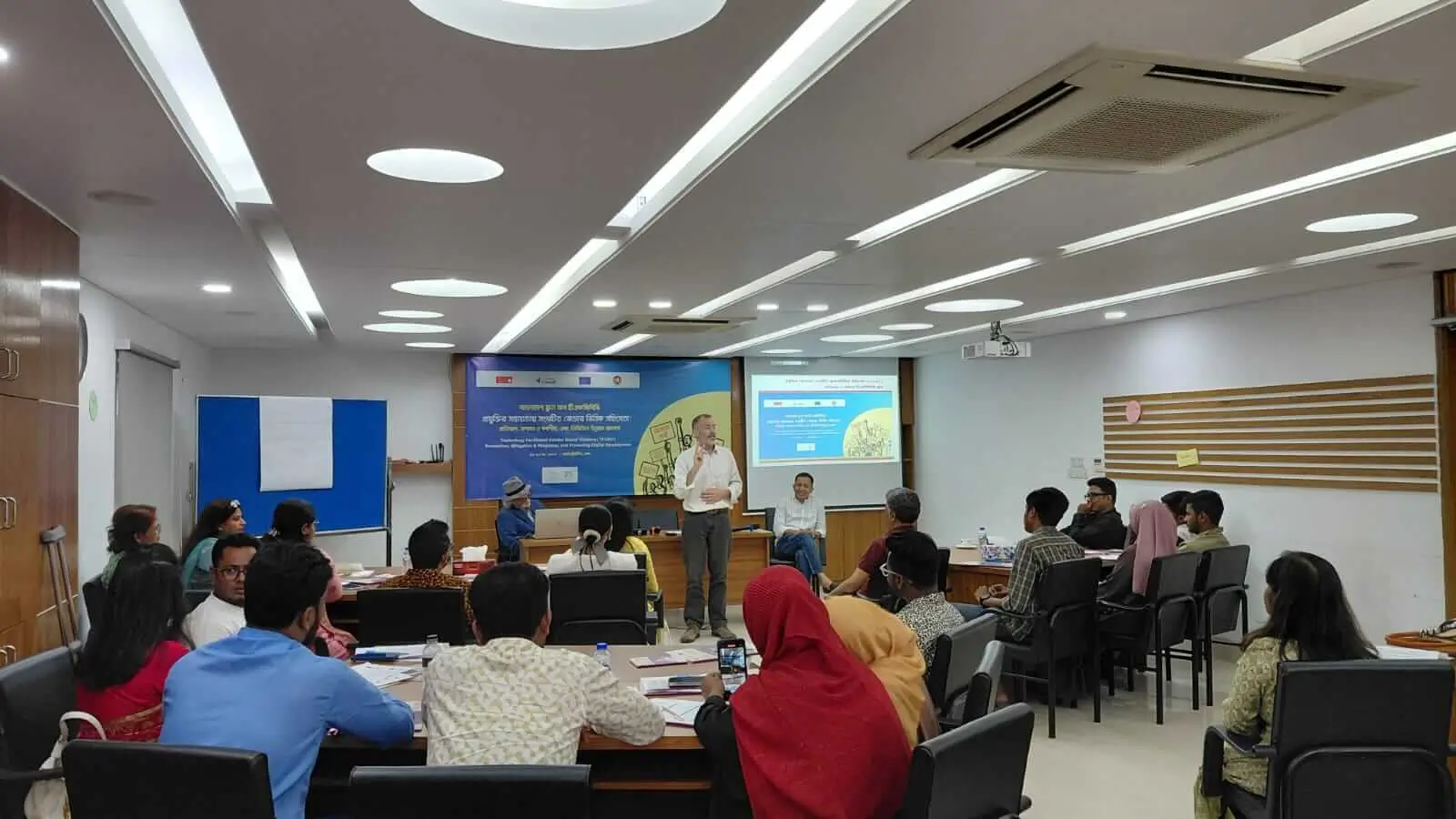
Recognising the urgent need to strengthen capacities for prevention and response, the Bangladesh NGOs Network for Radio and Communication (BNNRC) organised a two-day specialised training programme titled “School of TFGBV: Technology-Facilitated Gender-Based Violence — Prevention, Mitigation, Response and Digital Development Campaign” on 12–13 May 2026 at a training centre in Dhaka.
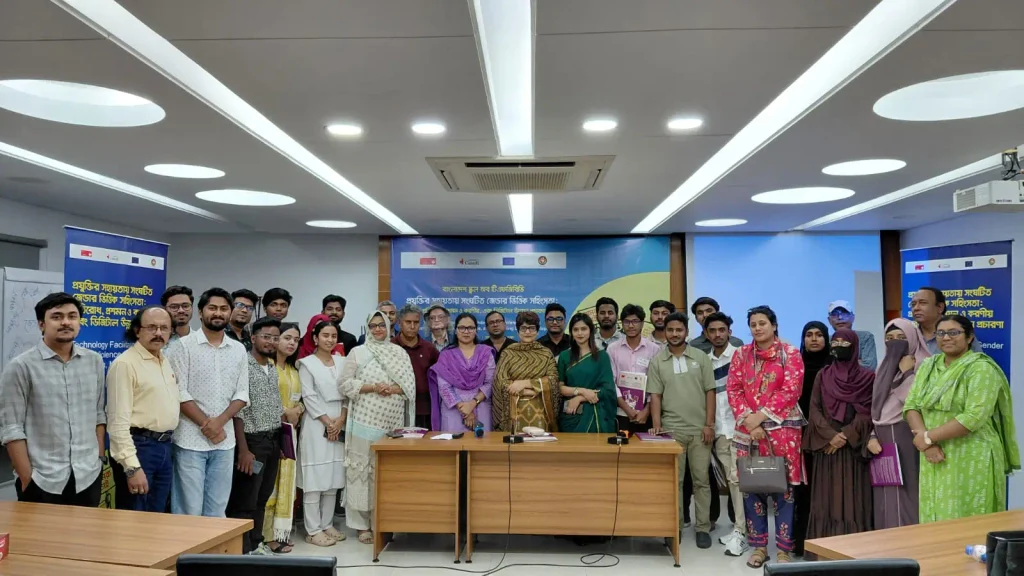
The programme brought together 90 participants from Dhaka and different districts across Bangladesh, including representatives from civil society organisations, NGOs, media, professionals, and community-level stakeholders.
The training was organised under the project “Strengthening Resilience Against Technology-Facilitated Gender-Based Violence and Promoting Digital Development,” implemented by BNNRC through the Nagorikata: Civic Engagement Fund (CEF) Programme, funded by Switzerland, Global Affairs Canada, and the European Union, with technical support from GFA Consulting Group.
Building Knowledge, Partnerships, and Local Capacity for Digital Safety
Representatives from the Nagorikata: CEF Programme, including Dr. Adi Walker, Team Leader; Md. Nurul Islam, Capacity Development and Management Expert; Zarrin Tasnim, Communication and Outreach Expert; and Faridul Haque, Gender and Advocacy Expert, attended the programme.
In her remarks, Zarrin Tasnim highlighted the objectives of the Nagorikata: CEF Programme and emphasised the importance of protecting civic space, promoting responsible digital participation, and safeguarding freedom of expression in the digital age.
Dr. Adi Walker, Team Leader of the Nagorikata: CEF Programme, noted that digital violence against women and girls remains a significant global concern. He stressed that addressing TFGBV requires action at multiple levels, including holding perpetrators accountable, transforming harmful social attitudes and institutional practices, and promoting collective responsibility for creating safer digital environments.
The objectives and background of the programme were presented by Rehan Uddin Ahmed Raju, Course Coordinator and Development Consultant. He explained that the School of TFGBV was designed to strengthen the capacity of multi-stakeholder actors to understand the nature, risks, impacts, and prevention strategies related to technology-facilitated gender-based violence.
He further highlighted that the programme aimed to enhance understanding of relevant laws, policies, protection mechanisms, and practical actions needed to create a safe, inclusive, and rights-based digital environment. The initiative also focused on strengthening dialogue, partnerships, and coordinated responses among stakeholders.
Expert Sessions on Gender, Digital Development, Information Integrity, and Legal Response
The training included expert sessions covering gender equality, digital development, information integrity, cyber laws, and institutional response mechanisms.
Selina Keya, Gender Specialist, conducted a session on “Fundamental Concepts of Gender and the Impact of Gender in Development Interventions,” focusing on gender perspectives and their relevance in development programmes.
A session titled “Inclusive Digital Development and Social Media: Concepts and Types” was facilitated by AHM Bazlur Rahman, Chief Executive Officer of BNNRC, who discussed digital transformation, social media ecosystems, opportunities and risks of digital participation, and the importance of inclusive and responsible technology use.
Shahnaz Munni, Senior Journalist and BNNRC TFGBV Training of Trainers (ToT) Graduate Trainer, conducted a session on “TFGBV: Definitions, Types, Negative Impacts and Challenges,” highlighting the changing patterns of technology-enabled violence and its social consequences.
Hiren Pandit, Project Coordinator of BNNRC, facilitated a session on “Information Integrity and Fact-Checking,” focusing on misinformation, disinformation, mal-information, and the importance of responsible information sharing in digital spaces.
Strengthening Legal Awareness and Institutional Response
Addressing the legal dimensions of TFGBV, Deputy Attorney General Barrister Tasnuva Shelly discussed cybercrime-related legal challenges, the importance of digital forensic evidence, and the factors affecting effective prosecution of cyber offences.
She highlighted that strengthening legal systems, improving investigative capacity, and addressing victim-blaming attitudes are essential to ensuring justice for survivors of technology-facilitated violence.
Advocate Jeba Mobashwira also discussed cyber offences, relevant legal provisions, punishment frameworks, and available support services. She emphasised that survivors should not be blamed for violence committed against them and reaffirmed the importance of ensuring access to justice and protection mechanisms.
Additional DIG of Bangladesh Police Md. Jahidul Islam highlighted the importance of digital awareness and responsible online behaviour. He encouraged expanding awareness initiatives from national platforms to district and grassroots levels.
He noted that many incidents involving the misuse or leakage of personal information online are connected with interpersonal conflicts and lack of awareness. He emphasised that public awareness, alongside legal measures, is critical for strengthening digital safety.
Fatema Tul Zannat, Deputy Secretary of the ICT Division, highlighted that addressing TFGBV requires coordinated action at individual, family, social, institutional, and state levels. She stressed the importance of understanding “netiquette” or digital etiquette, noting that lack of awareness may unintentionally contribute to misinformation, harmful online behaviour, or digital offences.
Impact: Creating a Network of Digital Safety Advocates
During the closing session, participants from different districts shared their experiences and reflections on the training. They expressed that the knowledge and skills gained through the programme would support their future awareness campaigns, advocacy initiatives, and community-level interventions to prevent TFGBV.
Participants highlighted that the training provided new perspectives on gender-based discrimination, digital rights, legal remedies, online safety practices, and the importance of collaborative approaches in addressing technology-enabled violence.
Certificates were distributed among participants at the conclusion of the programme.
Call for Continued Action: Towards a Safer and Inclusive Digital Bangladesh
BNNRC believes that preventing Technology-Facilitated Gender-Based Violence requires continuous investment in awareness, digital literacy, legal empowerment, and multi-stakeholder collaboration.
The School of TFGBV represents an important step toward building a network of informed and skilled actors who can promote safer digital practices, support community awareness, and contribute to a more inclusive digital society.
BNNRC calls upon government institutions, NGOs, civil society organisations, media, educational institutions, technology stakeholders, and communities to work together to ensure that digital transformation advances human dignity, equality, and safety for all.
Together, through knowledge, collaboration, and responsible digital engagement, Bangladesh can build a safer, more humane, and inclusive Digital Bangladesh.