
Journalists Commit to Strengthening the Fight Against Technology-Facilitated Gender-Based Violence
As digital platforms reshape communication and public life, media professionals emphasize the need for awareness, responsible reporting, survivor-centred approaches, and collective action to create safer digital spaces
The digital age has transformed the way people communicate, access information, and participate in society. However, alongside these opportunities, technology has also enabled new forms of gender-based violence, creating serious challenges for women, girls, and vulnerable communities. Technology-Facilitated Gender-Based Violence (TFGBV) is no longer limited to online spaces; its consequences often affect survivors’ dignity, mental well-being, social participation, and physical safety.
Preventing TFGBV requires more than responding after incidents occur. It demands proactive awareness, responsible information sharing, stronger digital literacy, supportive social environments, and coordinated efforts among media, civil society, government institutions, technology stakeholders, and communities.
Recognizing the critical role of media in shaping public understanding and social change, the Bangladesh NGOs Network for Radio and Communication (BNNRC) organized a Dialogue with Journalists on “Technology-Facilitated Gender-Based Violence (TFGBV): Prevention and Response and Promoting Digital Development.”
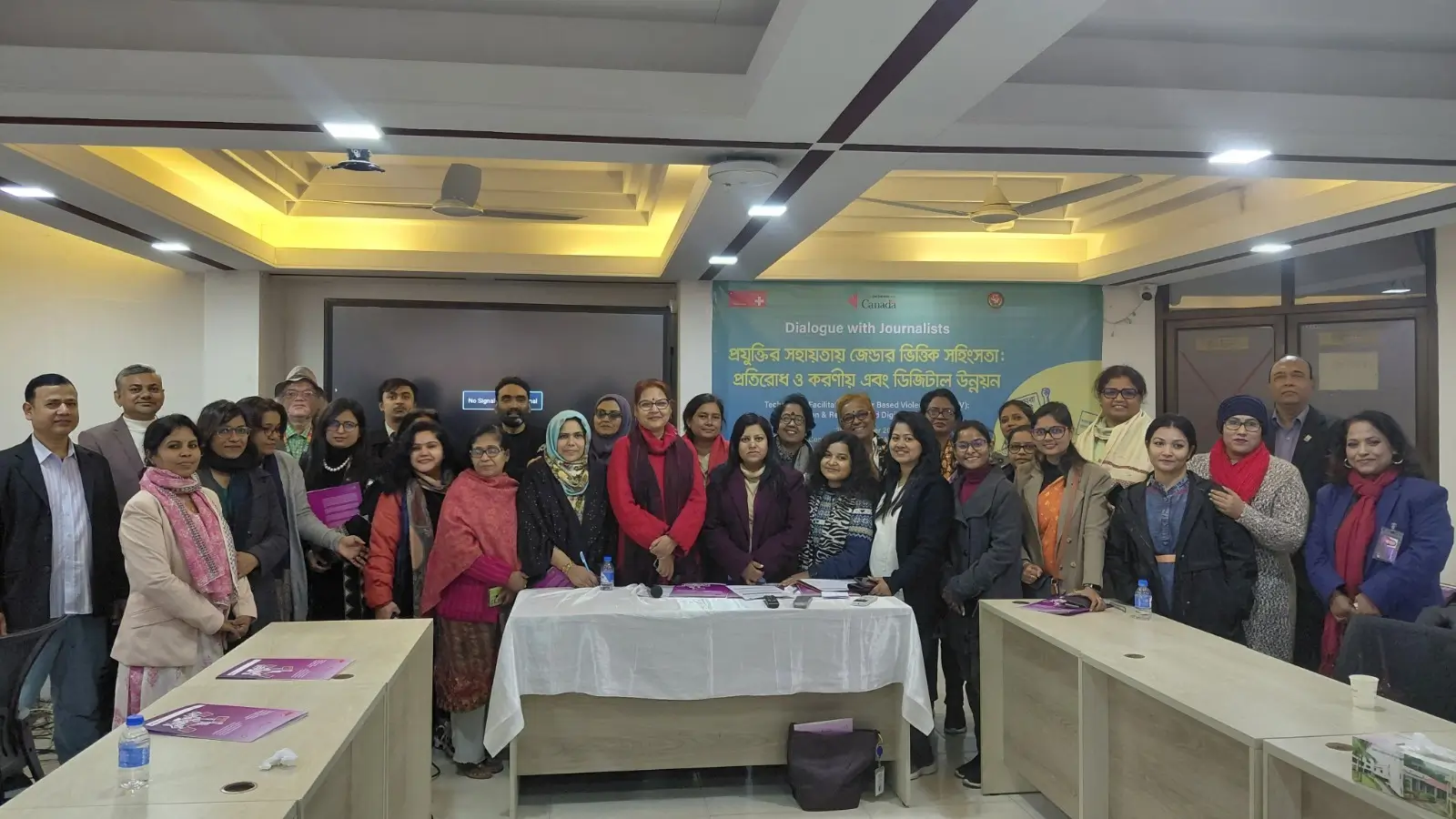
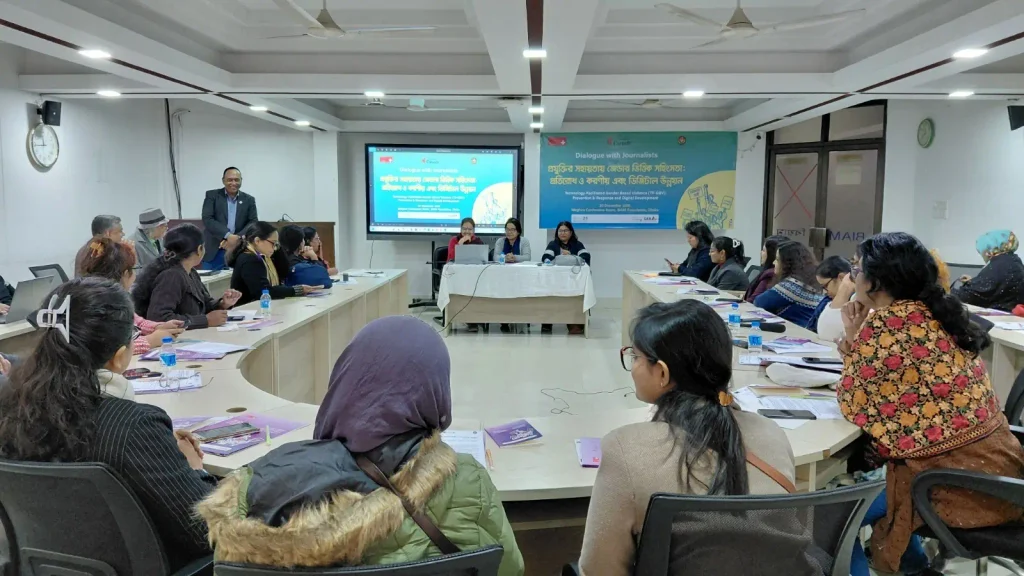
The interactive dialogue brought together 30 journalists from national-level print, electronic, and online media based in Dhaka to strengthen their understanding of TFGBV, explore prevention and response mechanisms, and identify the role of media in promoting safer and more inclusive digital development.
The dialogue was organized under BNNRC’s project titled “Strengthening Resilience Against Technology-Facilitated Gender-Based Violence (TFGBV) and Promoting Digital Development.” The project is part of the Nagorikata: Civic Engagement Fund (CEF) Programme, with technical assistance from GFA Consulting Group and financial support from Switzerland and Global Affairs Canada.
During the dialogue, journalists committed to using their professional platforms to raise awareness about TFGBV, promote responsible digital practices, highlight survivor support mechanisms, and contribute to evidence-based reporting. Participants also pledged to extend awareness efforts within their families, workplaces, and communities.
In his welcome address, AHM Bazlur Rahman, Chief Executive Officer of BNNRC, highlighted the growing importance of addressing TFGBV within the broader context of digital transformation. He explained the concept, forms, and impacts of TFGBV and emphasized the responsibility of media professionals in promoting awareness, accountability, and digital safety.
The objective of the dialogue was to enhance the capacity of women media professionals to understand the context, types, risks, and impacts of TFGBV, while strengthening their knowledge of relevant laws, policies, prevention strategies, and response mechanisms. The session also encouraged journalists to produce analytical reports and investigative stories on TFGBV and digital development issues.
Shahnaz Munni, Senior Journalist, delivered a presentation on the concept, forms, and negative impacts of TFGBV, as well as the opportunities and responsibilities associated with digital development. She discussed the role of journalists in identifying emerging issues, engaging relevant stakeholders, strengthening public awareness, and promoting constructive social dialogue through responsible reporting.
She also highlighted the importance of expanding media coverage beyond individual incidents by exploring underlying social, technological, and institutional factors contributing to TFGBV.
During the session, Shahnaz Sharmeen, Special Correspondent, Ekattor TV, facilitated a discussion on the experiences of women media professionals regarding technology-related harassment and violence in both online and offline environments. Participants shared their experiences, challenges, and perspectives on possible solutions and support mechanisms.
A special dialogue session involving 15 designated speakers from among the participants was moderated by Zannatul Bakiya Keka, Special Correspondent, Channel i. Journalists discussed their professional responsibilities, ethical considerations, and practical approaches for reporting TFGBV-related issues while ensuring sensitivity, accuracy, and respect for survivors.
During the open discussion, participants emphasized that prevention must begin before violence occurs. They highlighted the importance of increasing awareness at individual, family, workplace, and community levels rather than relying only on post-incident responses.
Participants also stressed the need for stronger action against misinformation, disinformation, and harmful online narratives. They emphasized that accurate, responsible, and timely information dissemination by media can play a vital role in protecting individuals, strengthening public trust, and promoting information integrity.
The journalists further called for wider dissemination of information about available government and institutional support services for survivors of technology-facilitated violence. They noted that access to support often remains limited due to lack of awareness, social barriers, and fear of stigma.
At the conclusion of the dialogue, participants agreed that building a safer digital society begins with personal awareness and responsible digital behaviour. They highlighted that families, communities, media organizations, and institutions must work together to challenge harmful attitudes and create supportive environments for survivors.
The participating journalists expressed their commitment to continued collaboration, knowledge sharing, networking, and responsible reporting on TFGBV-related issues. They emphasized that through informed journalism, public awareness, and collective action, the media can become a powerful force in preventing technology-facilitated violence and advancing inclusive digital development.