
Building Safer Digital Communities: Legal Experts and Stakeholders Discuss Response to TFGBV in Kushtia
As digital transformation accelerates, legal professionals, government institutions, civil society, and community stakeholders emphasize awareness, accessible justice, and coordinated response mechanisms to protect women and girls from online violence
Digital technologies have created new opportunities for communication, education, economic participation, and social engagement. However, the rapid expansion of digital platforms has also introduced new forms of violence, including online harassment, cyberstalking, doxxing, identity misuse, image-based abuse, and other forms of Technology-Facilitated Gender-Based Violence (TFGBV).
Women and girls are disproportionately affected by these emerging threats. Technology-enabled violence often extends beyond the digital environment, creating serious social, psychological, economic, and legal consequences for survivors and their families. Addressing this growing challenge requires stronger legal awareness, accessible support services, effective referral mechanisms, and coordinated action among government institutions, legal aid providers, civil society organizations, media, technology stakeholders, and communities.
According to data presented during the consultation, TFGBV has become a significant global and national concern. The United Nations Population Fund (UNFPA) has highlighted the widespread impact of technology-facilitated violence against women, while Bangladesh continues to face increasing challenges related to online harassment, digital abuse, and misuse of technology.
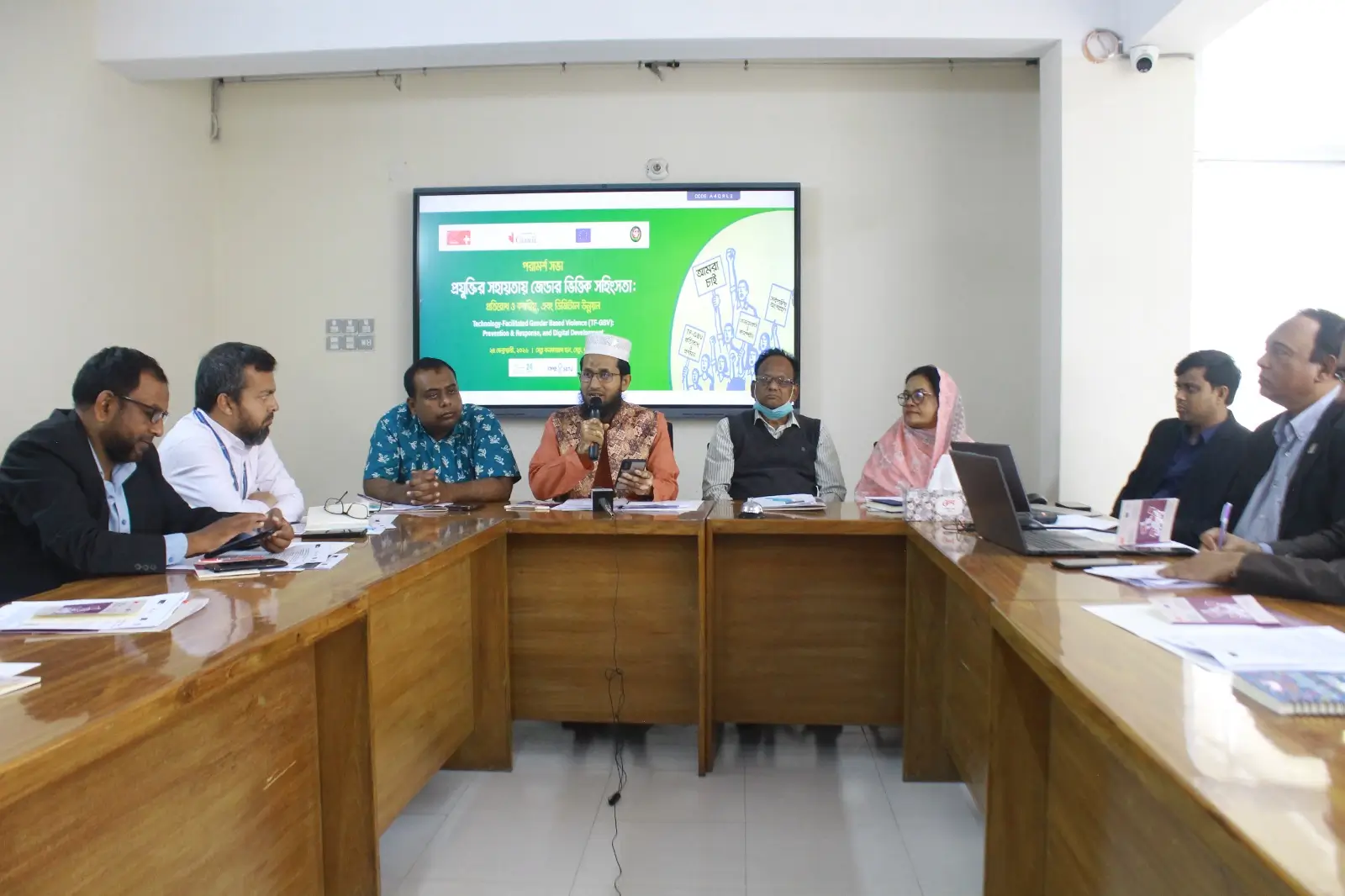
Against this backdrop, the Bangladesh NGOs Network for Radio and Communication (BNNRC), in collaboration with SETU, organized a Legal Consultation Meeting on Technology-Facilitated Gender-Based Violence (TFGBV) in Kushtia.
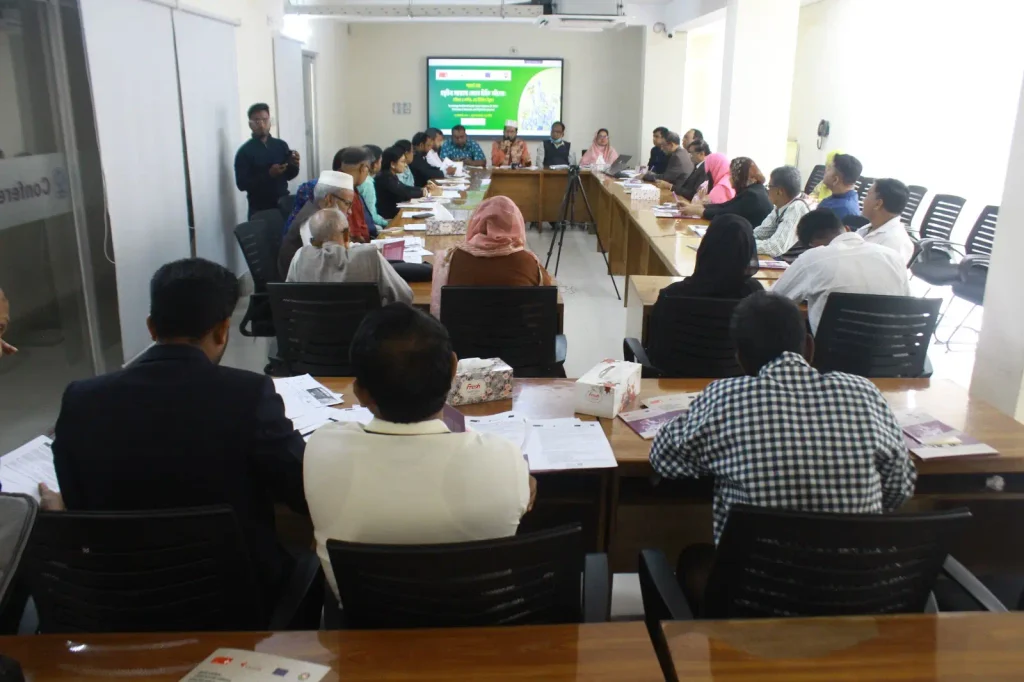
The consultation brought together representatives from diverse sectors, including legal aid lawyers, panel lawyers, members of the District Committee for the Prevention of Violence Against Women and Children, human rights coalition members, representatives of the Bar Association, Internet Service Providers Association, local media professionals, human rights activists, women-led NGOs, cultural organizations, academics, and youth representatives.
The consultation was organized under BNNRC’s project titled “Strengthening Resilience Against Technology-Facilitated Gender-Based Violence (TFGBV) and Promoting Digital Development,” implemented under the Nagorikata: Civic Engagement Fund (CEF) Programme, with technical support from GFA Consulting Group and funding support from Switzerland, Global Affairs Canada, and the European Union.
The primary objective of the consultation was to integrate TFGBV-related concerns into district-level legal aid and violence prevention mechanisms. The discussion focused on strengthening collaboration between legal aid service providers, government institutions, civil society organizations, and community stakeholders to ensure timely prevention, mitigation, referral, and access to justice for survivors.
The event was attended as the Chief Guest by Mr. Md. Tariq Hasan, Senior Assistant Judge and District Legal Aid Officer, Kushtia.
In her welcome remarks, Ms. Nazmun Nahar, Coordinator of SETU, highlighted the objectives and expected outcomes of the consultation. She emphasized the importance of strengthening local-level coordination and creating effective mechanisms to address technology-facilitated violence.
During the consultation, Mr. Hiren Pandit, Programme Coordinator of BNNRC, delivered a presentation on the concepts, forms, impacts, and prevention strategies related to TFGBV and digital development. He discussed global and national trends, emerging risks, stakeholder responsibilities, and the importance of coordinated community-level action.
Mr. Sanjay Kumar Biswas presented the local context of TFGBV in Kushtia, highlighting challenges and opportunities for strengthening prevention and response mechanisms at the district level.
Fourteen designated speakers participated in the discussion, followed by an open-floor session where participants shared practical experiences, challenges, and recommendations. Participants committed to conducting awareness initiatives and strengthening community engagement on TFGBV prevention, mitigation, and response.
The consultation highlighted the importance of involving new and emerging stakeholders, including Internet Service Providers (ISPs), cable network operators, and mobile financial service providers such as bKash and Rocket, in awareness-building and preventive initiatives. Participants noted that technology platforms and service providers have an important role in reducing digital risks and promoting safer online environments.
Comprehensive discussions focused on the responsibilities of different stakeholders, including government agencies, legal professionals, law enforcement institutions, NGOs, CSOs, media organizations, educational institutions, private-sector actors, and community groups.
Participants emphasized that prevention of TFGBV requires collective responsibility. They committed to sharing knowledge from the consultation within their families, workplaces, professional networks, and communities to expand awareness and encourage responsible technology use.
The distinguished guests highlighted the importance of increasing public awareness about available support mechanisms, including the Police Cyber Support for Women (PCSW) Helpline: 01320-000888 and email support service cybersupport.women@police.gov.bd.
Speakers also raised concerns about the growing exposure of adolescents and young people to harmful online environments. They emphasized the need for collaboration among families, schools, NGOs, and community organizations to promote safe and responsible digital practices. Participants noted that early access to smartphones without adequate guidance can increase vulnerability to cyber risks.
Addressing the consultation, Chief Guest Mr. Md. Tariq Hasan stated that although mobile phone and internet use have expanded significantly in Bangladesh, many users still lack sufficient digital literacy. This gap contributes to risks such as cyber fraud, cyberbullying, cyberstalking, and other forms of technology-facilitated violence.
He highlighted that victims of hacking, online harassment, threats, or abusive digital behaviour can seek legal assistance through police stations, courts, and legal aid offices. He noted that if survivors face difficulties accessing justice, the Legal Aid Office can provide support through its panel lawyers.
Mr. Hasan emphasized that technology is essential for development, but responsible, ethical, and informed use must be ensured. He also stressed the importance of combating misinformation and disinformation while promoting accurate information flows to protect truth, justice, and social trust.
At the conclusion of the consultation, participants called for continued collaboration among families, educational institutions, legal service providers, government authorities, NGOs, media, and technology stakeholders to:
- strengthen district-level mechanisms for TFGBV prevention and response;
- improve awareness of legal rights and available support services;
- establish effective referral systems for survivors;
- promote digital literacy among children, youth, and communities;
- encourage responsible and ethical use of technology.
The consultation concluded with a shared commitment that building a safer digital society requires collective responsibility, stronger legal awareness, and coordinated action to ensure that technological progress contributes to inclusion, dignity, and human rights protection for all.