
Building Safer Digital Communities: Multi-Stakeholder Dialogue Addresses TFGBV Challenges in Mymensingh: Local actors commit to awareness, coordination, and responsible digital development initiatives
Government, NGOs, civil society, and community stakeholders unite to strengthen digital awareness, improve response mechanisms, and promote safer and more inclusive digital development
Digital transformation has created unprecedented opportunities for communication, education, economic participation, and social development. However, the rapid expansion of digital technologies has also introduced new forms of harm, with Technology-Facilitated Gender-Based Violence (TFGBV) emerging as a critical challenge affecting the safety, dignity, and rights of women and girls.
Technology-enabled harassment, online abuse, cyberstalking, misuse of personal information, and other forms of digital violence can have serious consequences beyond the online environment, affecting individuals’ mental well-being, social participation, and access to justice.
According to UNFPA, technology-facilitated violence against women has become a significant global concern, with Bangladesh also experiencing a high prevalence of technology-related gender-based violence. Addressing this growing challenge requires stronger awareness, effective prevention strategies, survivor-centred response mechanisms, and collaboration among government institutions, NGOs, civil society, media, technology providers, and communities.
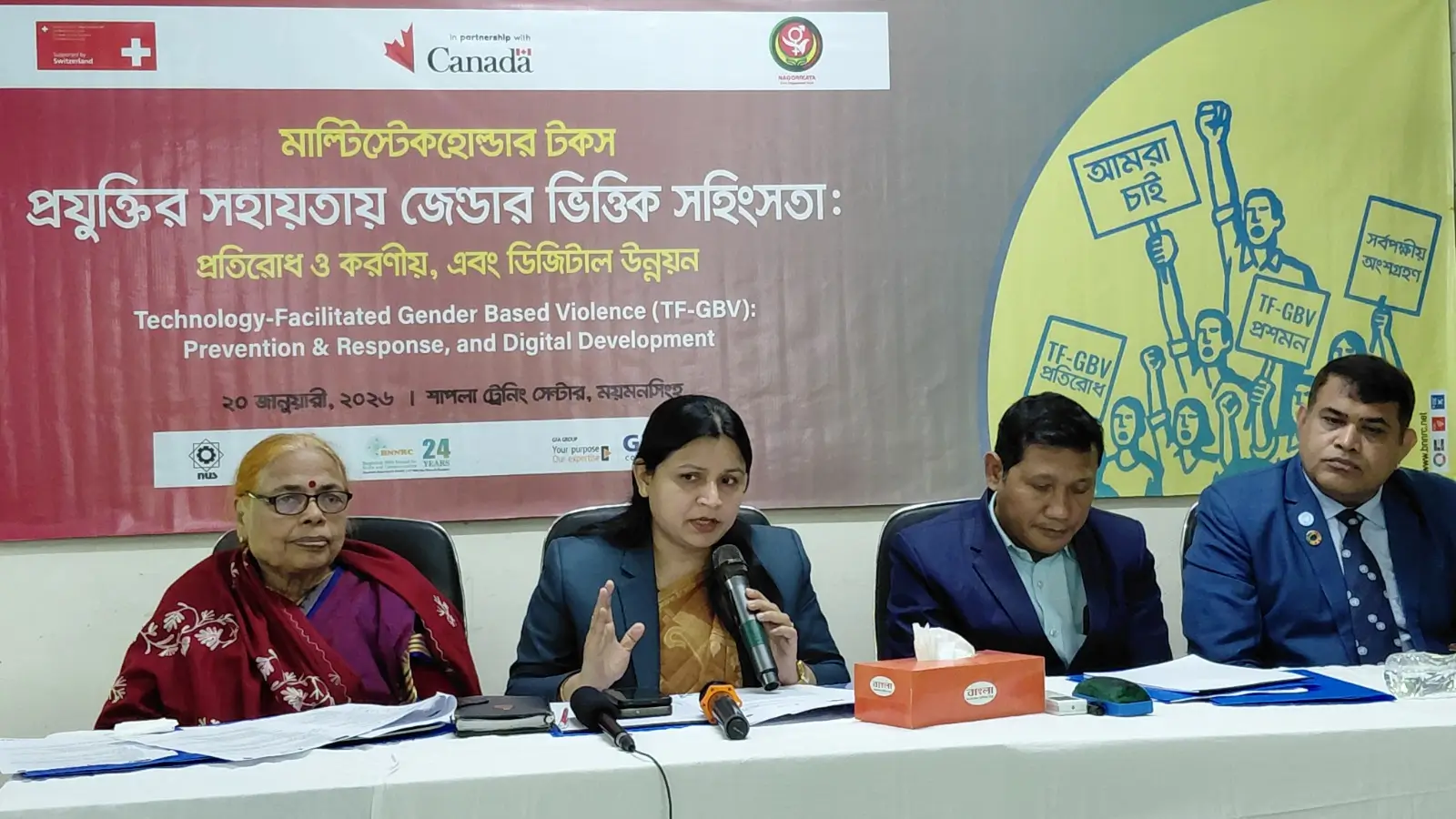
Against this backdrop, the Bangladesh NGOs Network for Radio and Communication (BNNRC) and Nistha Unnayan Sangho jointly organised a Multi-Stakeholder Dialogue on “Preventing Technology-Facilitated Gender-Based Violence (TFGBV) through Technology” in Mymensingh.
The dialogue was organised under the project “Strengthening Resilience Against Technology-Facilitated Gender-Based Violence (TFGBV) and Promoting Digital Development,” implemented through the Nagorikata: Civic Engagement Fund (CEF) Programme, with technical assistance from GFA Consulting Group and financial support from Switzerland and Global Affairs Canada.
The event was attended as the Chief Guest by Ms. Umme Habiba Mira, Additional Deputy Commissioner (Development and Human Resource Management), Mymensingh District.
Building Awareness and Strengthening Local Response Mechanisms
The dialogue aimed to:
enhance understanding of the forms, causes, and impacts of TFGBV;
increase awareness of relevant laws, policies, and protection mechanisms;
encourage institutions to strengthen accountability and prevention measures;
promote coordinated action for safer digital participation and inclusive digital development.
In his welcome remarks, Mr. Swadheen Chowdhury, Executive Director of Nistha Unnayan Sangho, highlighted the objectives and expected outcomes of the dialogue.
He discussed the growing challenges of technology-facilitated violence, limitations in existing response mechanisms, gaps in information management, and the need for reliable data to support effective policymaking. He also shared the local context of Mymensingh, including progress, challenges, and recommendations for strengthening community-level action.
Strengthening Digital Literacy, Accountability, and Collective Responsibility
During the dialogue, Mr. AHM Bazlur Rahman, Chief Executive Officer of BNNRC, presented on TFGBV and digital development, covering its concepts, different forms, negative impacts, prevention approaches, and the responsibilities of different stakeholders.
He highlighted that digital development must be accompanied by digital responsibility, information awareness, and inclusive participation. He emphasised the important role of NGOs, civil society organisations, media, and local institutions in raising awareness and supporting communities to prevent and respond to TFGBV.
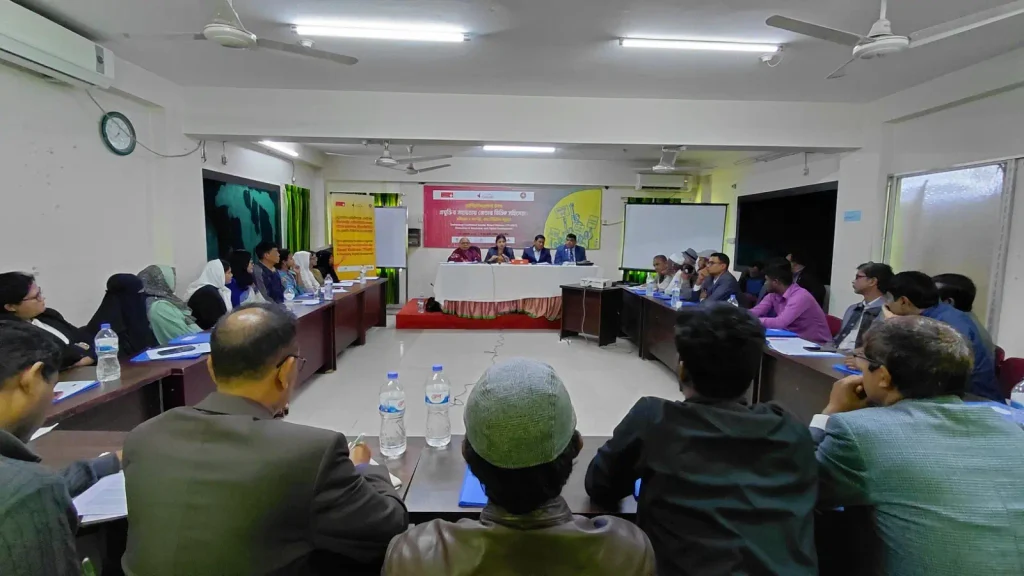
A total of 16 designated speakers participated in the discussion, while other participants actively contributed during the open forum session.
Participants shared practical experiences and commitments to undertake awareness initiatives within their respective organisations and communities. They highlighted the importance of expanding the prevention and response ecosystem by engaging additional stakeholders, including:
Internet Service Providers (ISPs);
cable network representatives;
mobile financial service providers such as bKash and Rocket agents;
legal professionals;
community organisations and local institutions.
Legal Awareness and the Need for Stronger Support Systems
Participants and speakers emphasised that increasing public awareness about digital safety and available support services is essential to preventing technology-enabled violence.
They highlighted the importance of promoting the Government’s Police Cyber Support for Women service, including the helpline 01320-000888 and email support service cybersupport.women@police.gov.bd, to ensure that affected individuals can access appropriate assistance.
The discussion also highlighted existing legal frameworks, including the Cyber Security Ordinance and the Pornography Control Act, while noting challenges such as limited cyber investigation capacity at the local level and gaps in survivor-friendly support services.
Impact: Strengthening Community Commitment for a Safer Digital Environment
The dialogue created an important platform for government officials, NGOs, CSOs, media representatives, and community stakeholders to exchange experiences and identify practical solutions.
Participants recognised that preventing TFGBV requires:
stronger digital literacy among citizens;
improved access to information and support services;
better coordination among institutions;
responsible use of technology;
greater engagement of communities and local stakeholders.
The dialogue strengthened local understanding of TFGBV and encouraged stakeholders to take proactive measures within their respective areas of work.
Call for Continued Action: Building a Responsible and Inclusive Digital Society
In her remarks, Ms. Umme Habiba Mira, Additional Deputy Commissioner (Development and Human Resource Management), Mymensingh District, emphasised the importance of collective responsibility in addressing emerging digital challenges.
She stated:
“All of us must learn about emerging issues such as technology-facilitated gender-based violence, and we must take initiatives to inform others. We cannot move forward without technology; we must ensure its proper use. It is critically important to strictly curb misinformation and disinformation and ensure the flow of accurate information, as this helps ensure the victory of truth.”
She called for coordinated efforts among families, educational institutions, media, NGOs, and government administration to raise awareness, prevent digital violence, and ensure responsible use of technology.
BNNRC and Nistha Unnayan Sangho believe that sustainable prevention of TFGBV requires continuous awareness, stronger partnerships, effective support systems, and meaningful participation from all sectors of society.
Through collective action, responsible digital practices, and inclusive development approaches, Bangladesh can build a safer digital environment where technology contributes to equality, dignity, and human well-being.