
Mymensingh Media Professionals Strengthen Capacity to Prevent and Respond to Technology-Facilitated Gender-Based Violence(TFGBV)
Workshop empowers journalists with knowledge, ethical reporting approaches, and collaborative strategies to promote digital safety and inclusive development
The rapid expansion of digital technologies has transformed the media landscape, creating new opportunities for information sharing, public engagement, and social development. At the same time, digital platforms have also enabled new forms of violence, including Technology-Facilitated Gender-Based Violence (TFGBV), which threatens the safety, dignity, privacy, and rights of women and vulnerable communities.
Online harassment, cyber threats, misuse of personal information, digital fraud, and technology-enabled abuse are increasingly affecting people’s lives beyond the digital environment. Addressing these challenges requires not only stronger legal and institutional mechanisms but also informed journalism, responsible reporting, public awareness, and coordinated action among stakeholders.
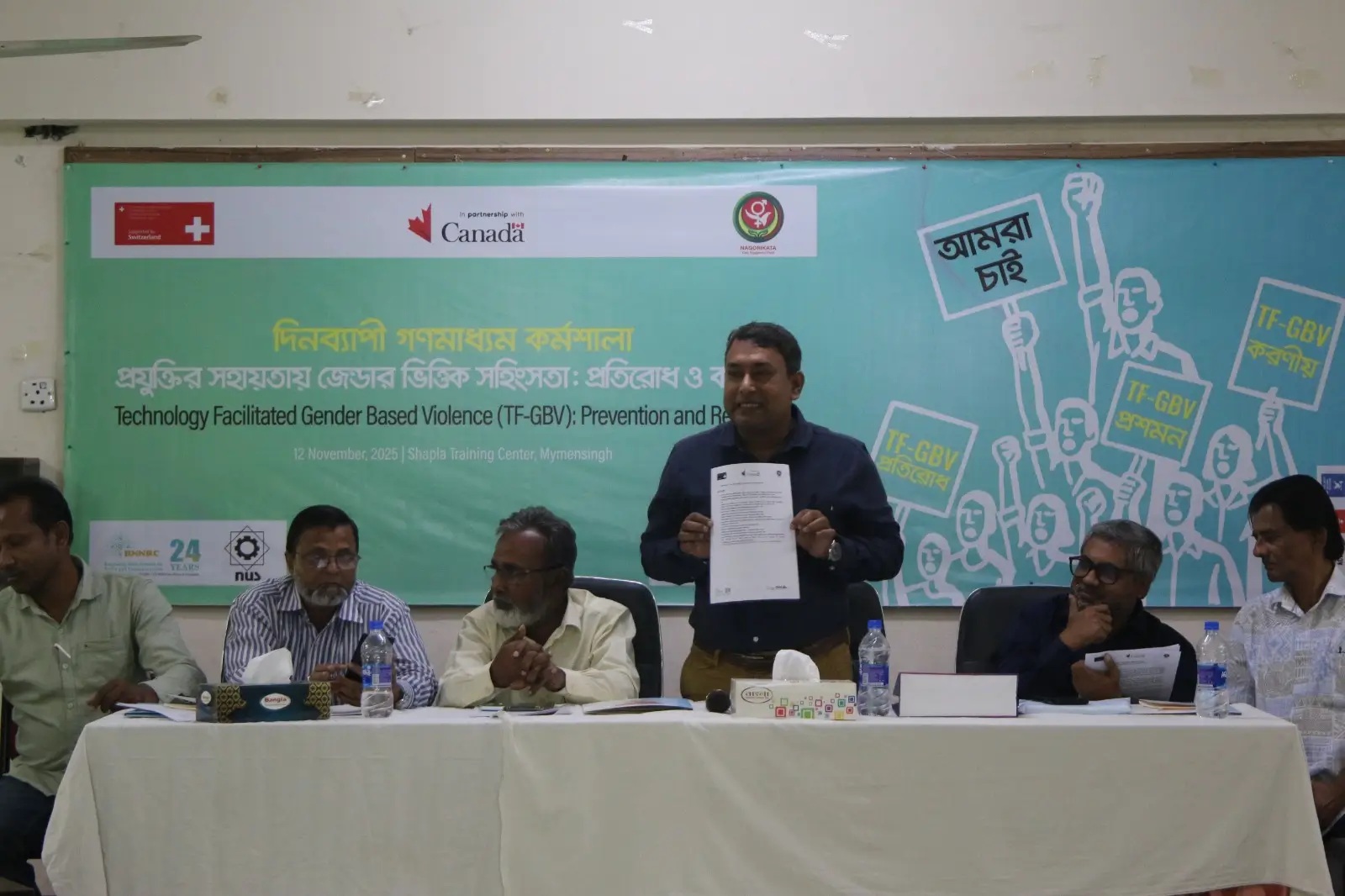
Recognising the vital role of media in shaping public understanding and promoting social change, the Bangladesh NGOs Network for Radio and Communication (BNNRC) organised a Capacity-Building Workshop for Local Media Professionals on “Prevention, Mitigation, and Response to Combat Technology-Facilitated Gender-Based Violence” in Mymensingh.
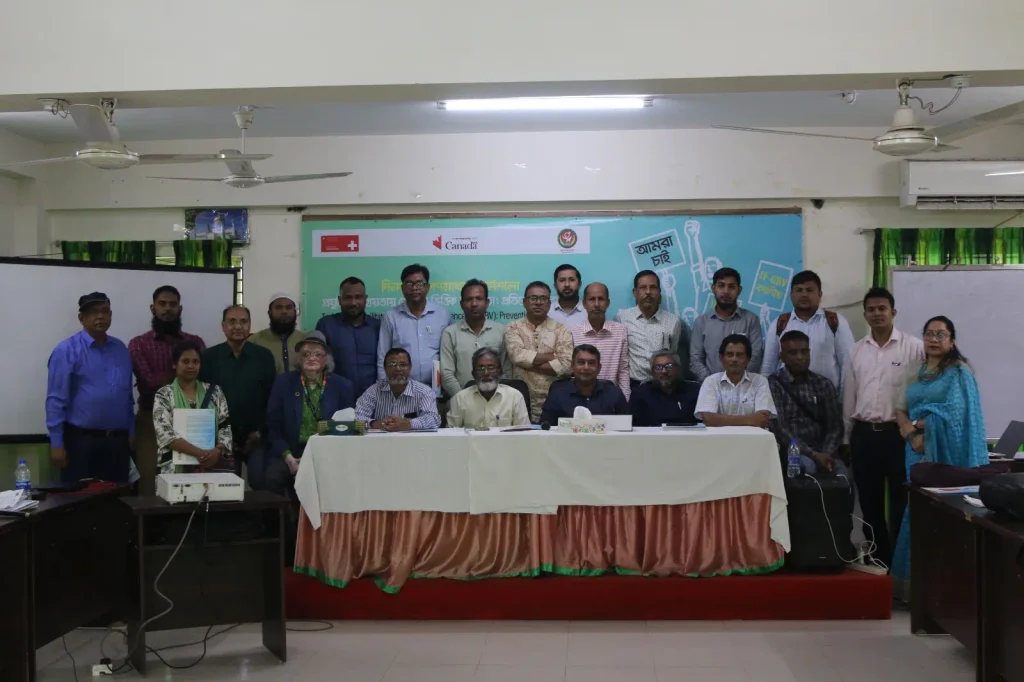
The workshop brought together 30 local media professionals from print, television, and online media platforms. Through this initiative, journalists strengthened their understanding of TFGBV, explored the role of media in prevention and response, and discussed ways to promote awareness and inclusive digital development.
The workshop was organised under the project “Strengthening Resilience Against Technology-Facilitated Gender-Based Violence (TFGBV) and Promoting Digital Development,” implemented through the Nagorikata: Civic Engagement Fund (CEF) Programme, with technical assistance from GFA Consulting Group and financial support from Switzerland and Global Affairs Canada.
The event was attended as the Chief Guest by Mr. Mir Akram Uddin Ahmed, Director, Department of Mass Communication, Mymensingh District Office, while Mr. Din Mohammad Dinu, Public Relations Officer, Bangladesh Agricultural University, attended as the Special Guest.
Strengthening Responsible Journalism and Public Awareness
The objective of the workshop was to enhance journalists’ understanding of:
the nature, forms, and impacts of TFGBV;
relevant laws, policies, and protection mechanisms;
the opportunities and challenges of Bangladesh’s digital transformation;
the role of media in prevention, awareness raising, and accountability.
The workshop also aimed to encourage media professionals to:
strengthen knowledge sharing and accountability within media institutions;
produce analytical reports on digital development and TFGBV prevention;
promote networking and experience exchange among journalists;
identify local TFGBV-related challenges and advocate for effective solutions.
Identifying Challenges and Building Local Solutions
The workshop began with a welcome address by Mr. Swadheen Chowdhury, District Focal Person of BNNRC and Executive Director of NISHTHA Unnayan Sangho, who outlined the objectives and expected outcomes of the programme.
In his keynote presentation, he highlighted the local context of violence in Mymensingh, including challenges related to legal response, coordination gaps among courts, police, NGOs, and other institutions, as well as the absence of an integrated digital case registry and reliable data systems.
He emphasised the need for stronger coordination, evidence-based reporting, and improved information management to address TFGBV effectively.
Building Media Capacity for Digital Safety and Inclusion
A.H.M. Bazlur Rahman, Chief Executive Officer of BNNRC, delivered a comprehensive presentation on the concept, forms, and impacts of Technology-Facilitated Gender-Based Violence.
He discussed the relationship between TFGBV and digital development, highlighting how media professionals can play a proactive role in:
raising public awareness;
promoting responsible digital behaviour;
identifying emerging risks and information sources;
connecting communities with relevant stakeholders and support mechanisms.
He emphasised that journalists have a crucial responsibility in ensuring accurate information flow, reducing misinformation, and reporting on digital issues through a human rights and public interest perspective.
Collaborative Dialogue on Prevention and Response
During the interactive sessions, participants shared their professional experiences and identified practical approaches to address TFGBV.
Journalists expressed their commitment to producing awareness-based media content on digital fraud, online violence, and responsible technology use. They highlighted the importance of engaging additional stakeholders, including:
Internet Service Providers (ISPs);
cable network representatives;
mobile financial service providers such as bKash and Rocket;
government and non-government support institutions.
Participants also discussed challenges faced by media professionals themselves in relation to digital harassment and proposed measures including:
developing a clearer typology of digital violence;
improving coordination with government and non-government institutions;
ensuring stronger support mechanisms for affected journalists.
Impact: Empowering Journalists as Digital Safety Advocates
The workshop strengthened the capacity of local media professionals to:
identify and report TFGBV-related issues responsibly;
promote digital literacy and public awareness;
contribute to evidence-based discussions on digital safety;
engage stakeholders for prevention and response;
support safer online environments through ethical journalism.
Participants recognised that media can serve as a bridge between communities, institutions, and decision-makers by highlighting challenges, sharing solutions, and amplifying voices affected by digital violence.
Call for Continued Action: Building an Informed and Safer Digital Society
Special Guest Mr. Din Mohammad Dinu, Public Relations Officer of Bangladesh Agricultural University, highlighted the experiences of rural communities in relation to digital development and TFGBV. He encouraged journalists to adopt context-based approaches and emphasised the importance of continuous learning and professional capacity building.
In his remarks, Chief Guest Mr. Mir Akram Uddin Ahmed, Director of the Department of Mass Communication, Mymensingh District Office, emphasised that journalists must continuously update their knowledge on emerging issues such as TFGBV and actively disseminate accurate information to the public.
He stated:
“Only through combating misinformation and ensuring a free, active, and factual flow of information can truth ultimately prevail.”
BNNRC believes that empowering media professionals with knowledge, ethical standards, and practical tools is essential for preventing technology-facilitated violence and promoting responsible digital development.
Through continued collaboration among journalists, government institutions, NGOs, civil society, technology stakeholders, and communities, Bangladesh can advance towards a safer, more inclusive, and rights-based digital society.