
BNNRC Reviews First-Year Learning and Sets Second-Year Priorities for Addressing Technology-Facilitated Gender-Based Violence (TFGBV)
Dhaka, 30 September 2026: Digital technology is now part of everyday life in Bangladesh, shaping how people communicate, learn, work, access services and participate in public life. But the same digital space is also being used to harass, threaten, shame, blackmail and silence women, adolescent girls and other vulnerable groups.
Technology-facilitated gender-based violence, or TFGBV, is therefore not only a digital safety concern. It is a question of dignity, rights, access to justice and equal participation. If online violence is left unaddressed, it can push women and girls out of digital spaces, restrict their voices and deepen existing gender inequalities.
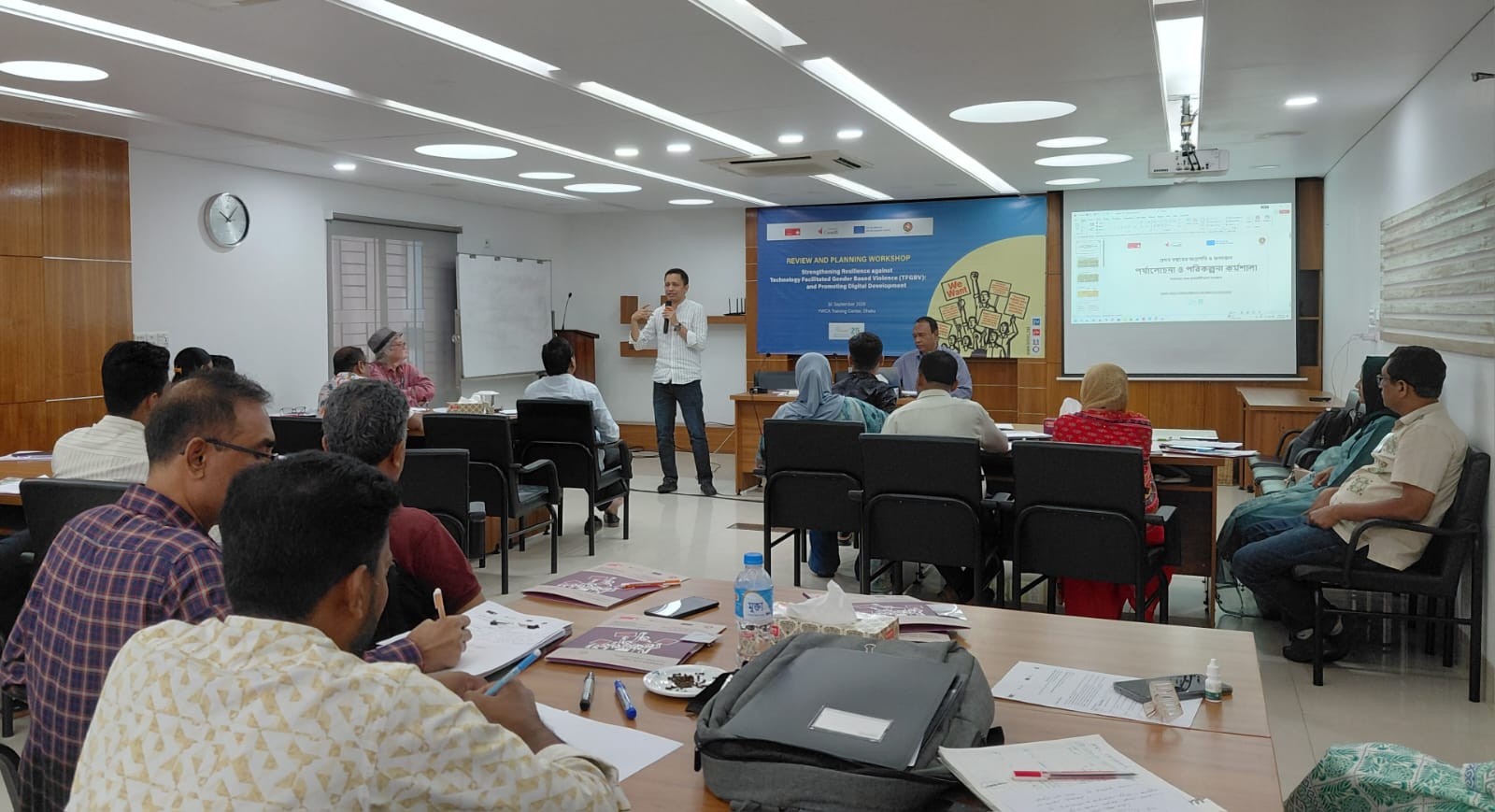
Against this backdrop, Bangladesh NGOs Network for Radio and Communication (BNNRC) organised a day-long review and planning workshop on Wednesday at the YWCA Training Centre in Mohammadpur, Dhaka. The workshop reviewed first-year experiences, achievements, challenges and lessons, and identified practical priorities for stronger implementation in the second year.
The workshop was organised under the project “Strengthening Resilience Against Technology-Facilitated Gender-Based Violence and Promoting Digital Development,” implemented under Nagorikata: Civic Engagement Fund (CEF) with funding from the Embassy of Switzerland, Global Affairs Canada and the European Union, and technical support from GFA Consulting Group.
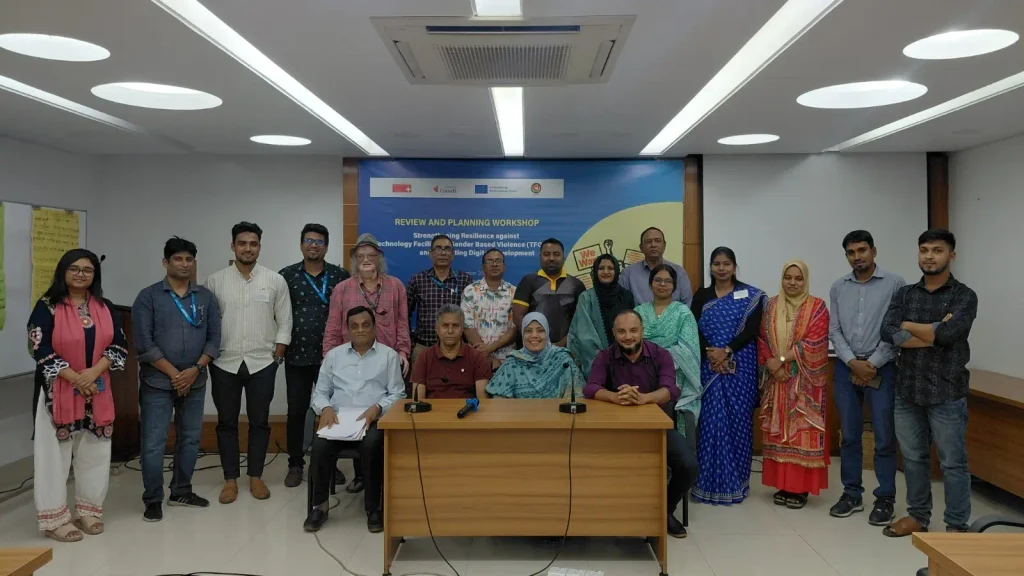
The workshop brought together representatives from BNNRC, Nagorikata/GFA, local implementing partners from six districts and nine community radio stations. Participants assessed the effectiveness of community radio interventions, district-level activities and national-level engagement. They also worked on a practical second-year work plan, including responsibilities, timelines, coordination needs and follow-up mechanisms.
BNNRC Project Coordinator Hiren Pandit opened the workshop by presenting the day’s agenda and facilitating participant introductions. He then invited BNNRC Chief Executive Officer AHM Bazlur Rahman to deliver the opening remarks.
In his remarks, AHM Bazlur Rahman said that the second year of implementation should be guided by field realities, participant experience and lessons from the first year. He highlighted the importance of turning awareness into practical action at community level. He thanked Md. Nurul Islam, Capacity Development and Management Expert at Nagorikata: Civic Engagement Fund, for joining the workshop and sharing observations to strengthen the next phase of implementation. He also expressed appreciation to Nagorikata for its continued financial and technical support.
Md. Nurul Islam encouraged participants to share practical field experience, examples of positive change and implementation challenges. He noted that gender-based violence is no longer limited to physical or face-to-face spaces. With the expansion of technology, violence, harassment and harmful content are increasingly taking place through digital platforms and online communication.
He further observed that technology companies and social media platforms regularly revise their policies, making stronger coordination among government, civil society, media, technology actors and communities essential. Referring to digital content that ridicules, demeans or objectifies women, he cautioned that even when individual consent is present, such content can have wider social consequences by normalising discriminatory attitudes towards women.
During the experience-sharing session, district and community radio representatives presented examples of progress observed during the first year.
Mehedi Hasan, Senior Station Manager of Radio Pollikontho, said guests who participated in TFGBV-focused radio programmes responded positively and recognised the importance of continued public discussion on the issue.
Ziaul Ahsan of Pirojpur Gana Unnayan Samity proposed establishing a formal or informal coordination mechanism involving district and upazila administrations, BNNRC’s local network and relevant stakeholders. He said such a mechanism could help coordinate TFGBV-related initiatives and support services more effectively at local level.
Swadheen Chowdhury of Nishtha Unnayan Sangho in Mymensingh noted that participants are applying the knowledge gained through project activities, including preserving digital evidence, seeking legal assistance and creating awareness-raising content. He added that local administration representatives also highlighted the need to extend such activities to educational institutions, parents and young people.
Shubhankar Chakraborty of MAP Barishal drew attention to the limited representation of women in local journalism. He noted that, based on his observation, six of the eight women journalists working locally had participated in BNNRC’s district-level activities. He called for sustained learning opportunities for women journalists on TFGBV, sensitive reporting, digital safety and related issues.
Kamal Barman of Radio Sarabela shared an experience from Gaibandha, where a district ICT officer began discussing online violence with students at local schools and colleges after participating in a radio programme. The officer also encouraged students to listen to TFGBV-focused radio programmes. Participants identified this as a promising example of how community radio can connect local government actors with educational institutions.
Mamun Hossain of Radio Nalta reported that 45 local listeners’ clubs had been reactivated through engagement with BNNRC’s activities. Participants observed that listeners’ clubs and local volunteers can help take TFGBV messages beyond radio broadcasts and into communities.
Md. Shahed Uddin of Radio Sagargiri shared the case of a woman online entrepreneur who faced blackmail after her business Facebook page was hacked. When she approached the station for support, she was advised to contact Police Cyber Support for Women. She later regained access to her business page. The case showed how local media and community radio can connect affected individuals with relevant support services and complaint mechanisms.
Following the experience-sharing session, Md. Nurul Islam provided guidance on making BNNRC’s activities more structured, participatory and results-oriented during the second year and in future project phases.
BNNRC then presented an overview of first-year activities and progress. Focal representatives from six districts and nine community radio stations delivered two joint presentations covering achievements, challenges, lessons and future priorities.
The district-level presentation highlighted the need for sustained engagement with journalists and content creators, increased participation of women journalists, and systematic follow-up and documentation of commitments made by government officials. It also called for more structured engagement with local civil society organisations, community-based organisations, young people and volunteers, alongside broader outreach to remote areas and communities.
Community radio representatives emphasised the importance of using clear language and local examples, incorporating listeners’ questions and experiences into content planning, and producing short messages suitable for repeat broadcasts. They also highlighted the need to strengthen links with educational institutions, enhance the capacity of radio staff, and further activate listeners’ clubs and local networks.
After the lunch break, district-level civil society representatives and community radio representatives worked in separate groups. Through poster presentations, they identified second-year priorities, necessary adjustments and possible implementation approaches. The proposals were then consolidated and discussed in relation to responsibilities, timelines and activity priorities.
At the end of the workshop, one woman and one man participant shared their reflections on the day’s discussions. In the closing session, Ziaul Ahsan of Pirojpur Gana Unnayan Samity reaffirmed his commitment to improving the quality and effectiveness of activities in the coming year.
Participants agreed that the first year has helped create awareness, build local engagement and demonstrate the value of community radio in addressing TFGBV. At the same time, they stressed that awareness alone is not enough. Continued action is needed to strengthen referral information, promote responsible reporting, engage local authorities, support women journalists, activate youth and listeners’ clubs, and connect affected persons with appropriate services.
BNNRC and its partners will use the learning from the workshop to strengthen second-year implementation, with a focus on practical community engagement, better coordination, stronger documentation of results and continued advocacy for safer, more inclusive digital spaces for all.